AI Coach Experience
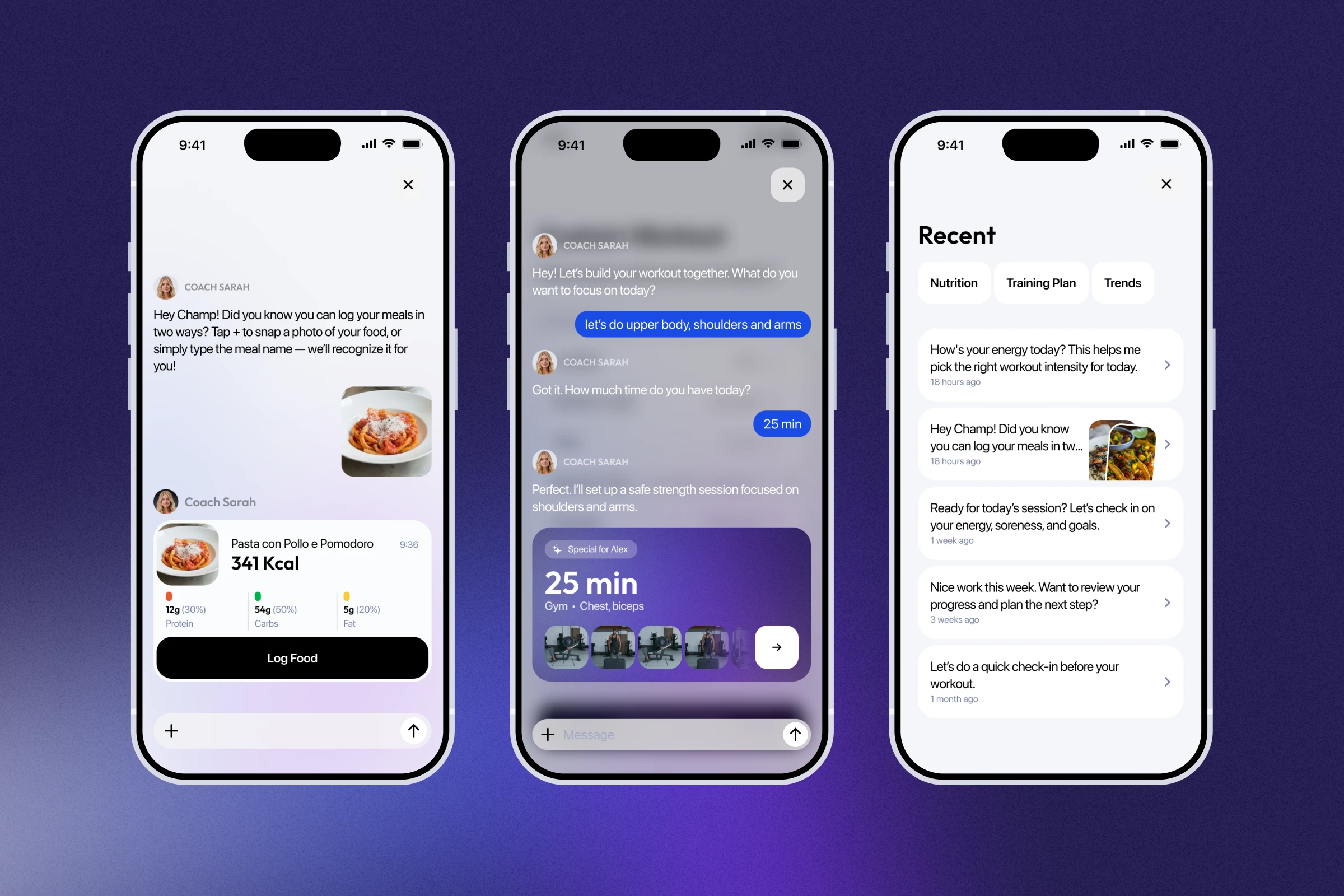
More than half of subscribers never started a workout. The problem was not a lack of fitness content — it was the gap between intention and action. At Zing Coach, we redesigned the AI experience from a generic fitness chat into a contextual coaching layer that helps users start training, adjust their plan, understand progress, and keep going when real life gets in the way.
- Role
- Product Design Lead
- Timeline
- 2023 — Now
- Contribution
- AI Coaching UX, Fitness Retention, Product Strategy
Key numbers
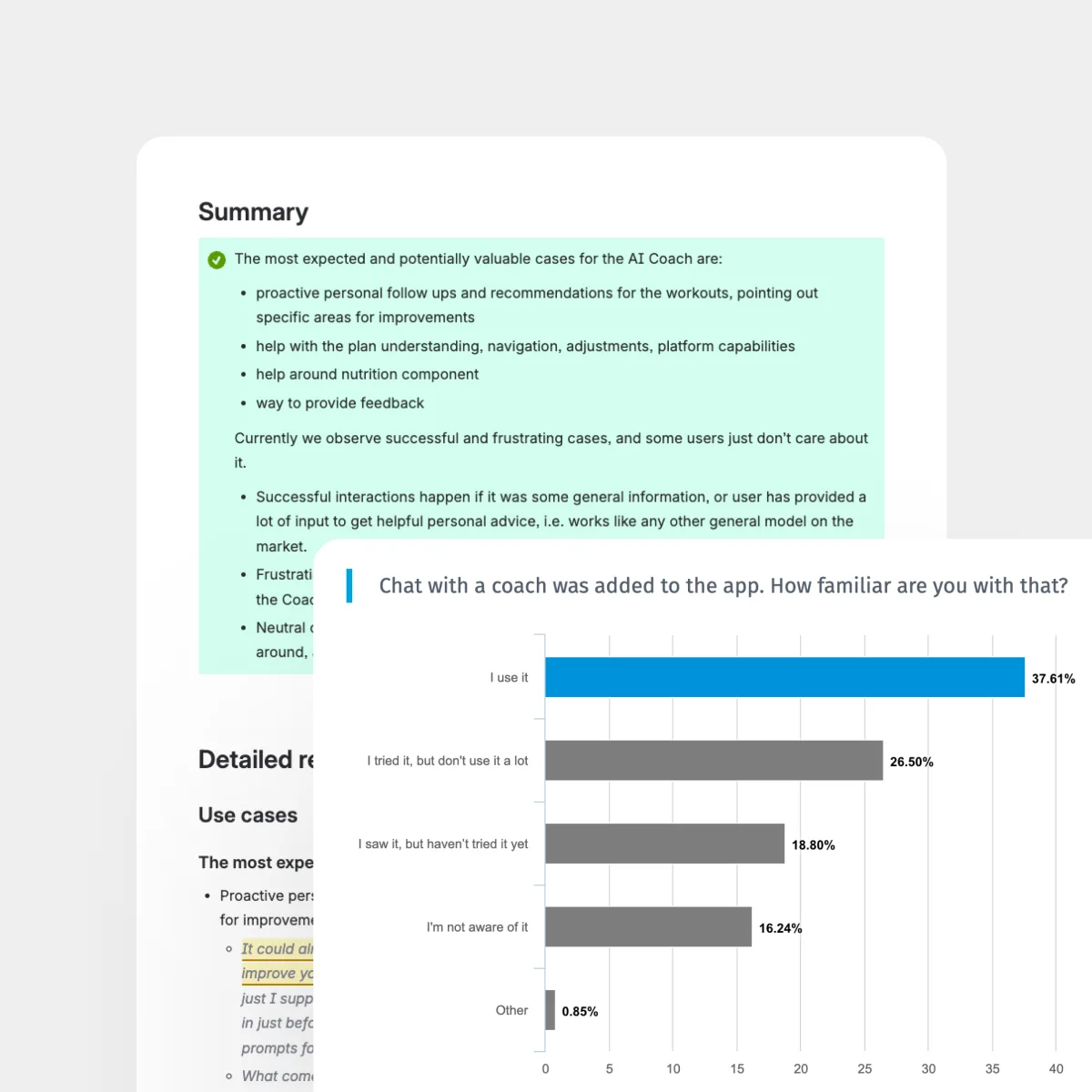
The baseline behind the redesign: activation data from product analytics and research with 56 gym-focused Zing users.
- 55%
- Subscribers who never start a workout
- 2
- Workouts — the activation milestone tied to churn
- 68%
- Gym users who find AI Coach guidance relevant
- 57%
- Want AI to adapt programming to progress
- 30%
- Want AI to respond to their feedback better
The plan was not enough
People did not quit Zing because the workouts were bad. They quit before the workouts even happened. Users joined with a clear goal, then stalled: doubted the plan fit them, felt unsure after a hard session, or lost sight of progress.
So the problem to solve was activation, not content. A generic fitness chat could not fix it — the AI Coach had to show up at the exact moments people drop off: before the first workout, after a missed session, when the plan feels too hard, when progress is invisible.
Our question became: how might Zing behave less like a static plan and more like a coach — someone who notices what is happening, explains the next step, adapts when life changes, and keeps you accountable without judging?
Users wanted adaptation
Users were not asking for more fitness advice. They wanted the coach to understand their actual plan and help them adjust it — adaptive programming was the top request in our research, ahead of better answers.
That exposed the product gap: the assistant could not stop at answering questions. It needed to remember context, respond to feedback, and turn that feedback into practical changes — giving users confidence that today's next step was right for their body, goal, schedule, and progress.
The softer gap mattered too: only 21% said the experience felt genuinely personalized. Better coaching required better context — sleep, nutrition, wearables, and body signals beyond the workout plan.
Coaching moments, not chat
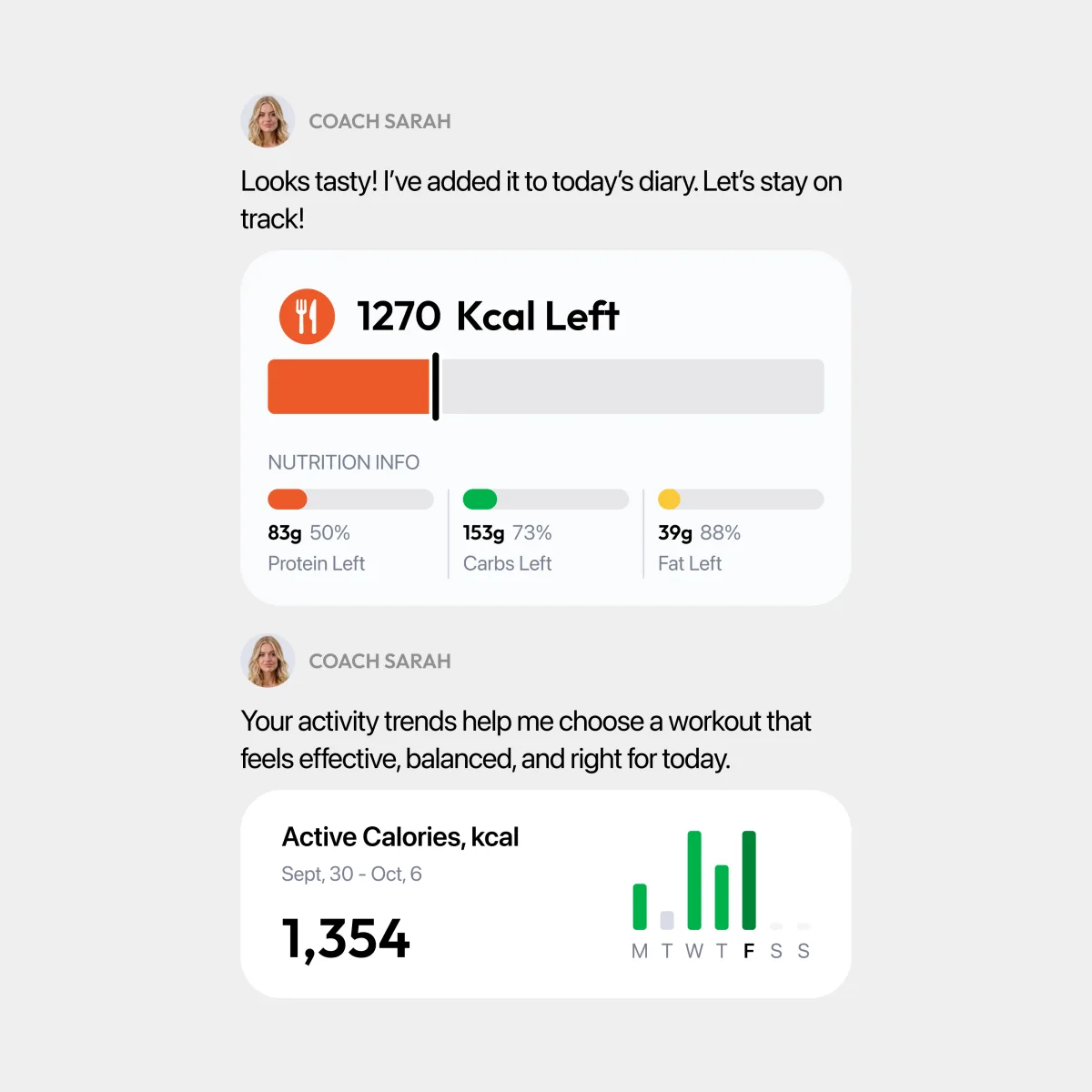
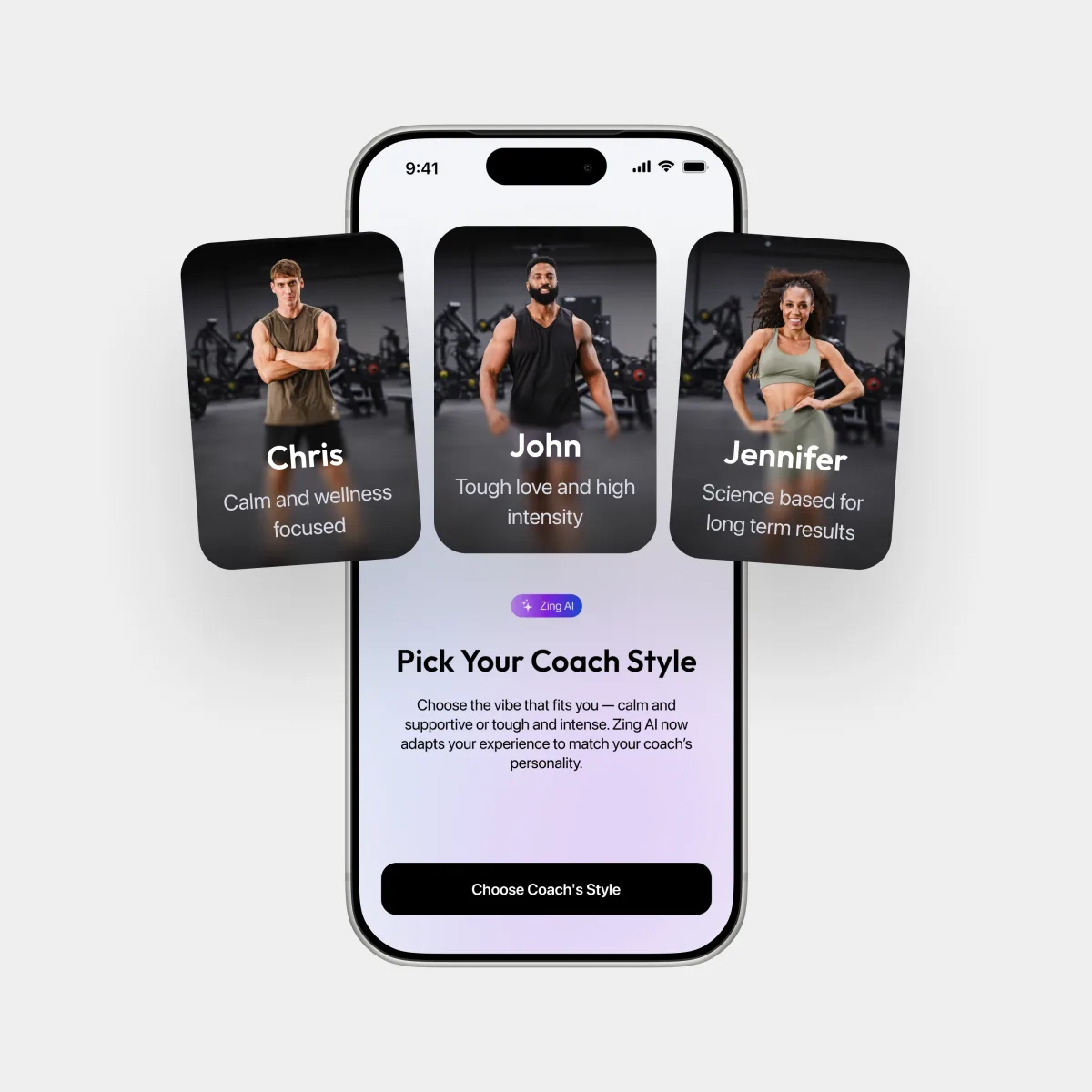
We reframed the AI Assistant from a standalone chat feature into a coaching system connected to the user's plan, progress, body data, recovery, and workout behavior.
The system needed five connected layers: user context (goal, profile, workout history, Apple Health, body scan, strength score, recovery, and fitness tests); a recommender for plan generation and adaptation; conversational AI for explanations, motivation, feedback, and support; proactive services for check-ins, reminders, and accountability; and product surfaces where coaching appears in context.
The long-term direction was to make Zing feel closer to a remote coach: quiet most of the time, present at the moments where guidance changes behavior. User context feeds the recommender, which powers conversational AI and proactive services, surfaced back inside the product.
Contextual prompts
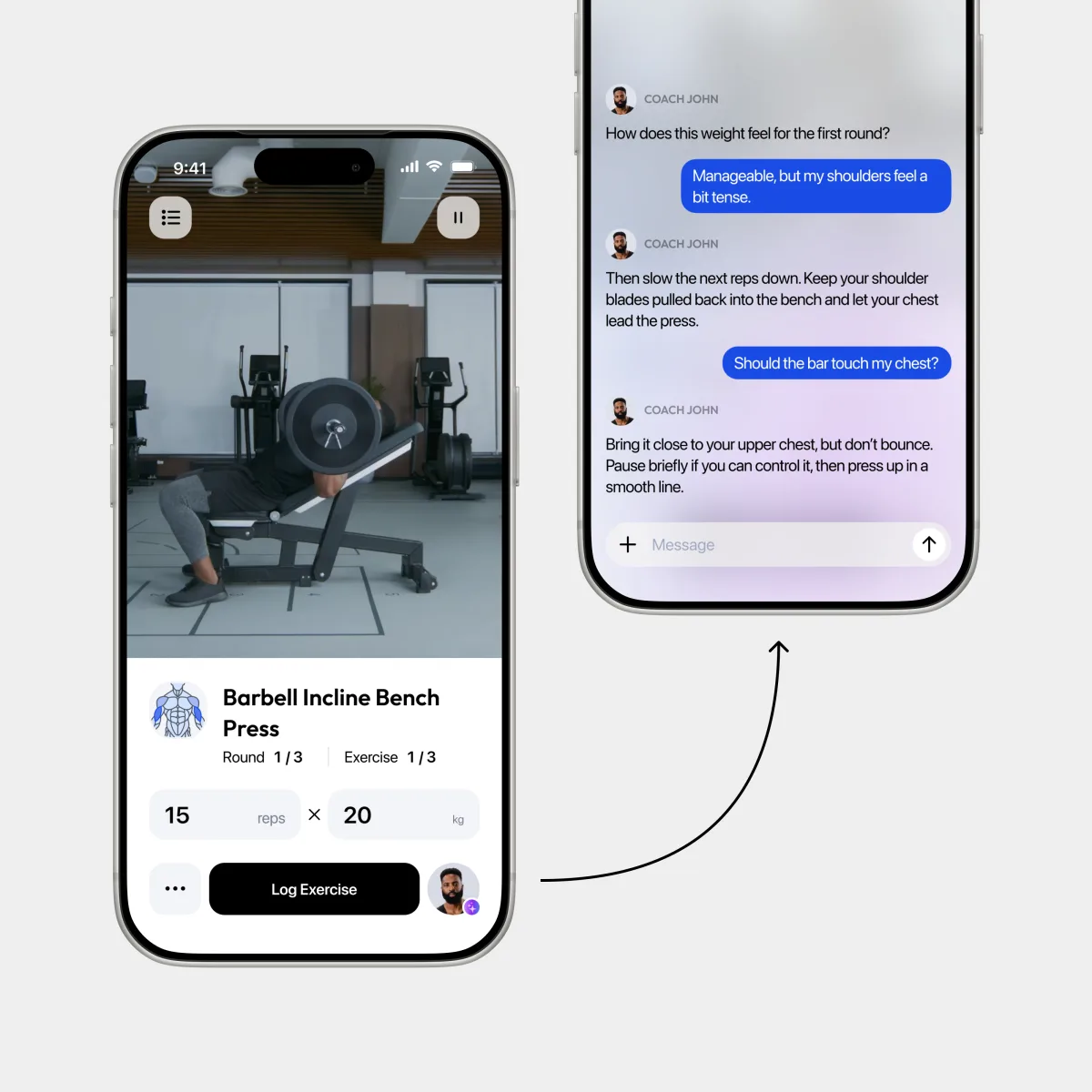
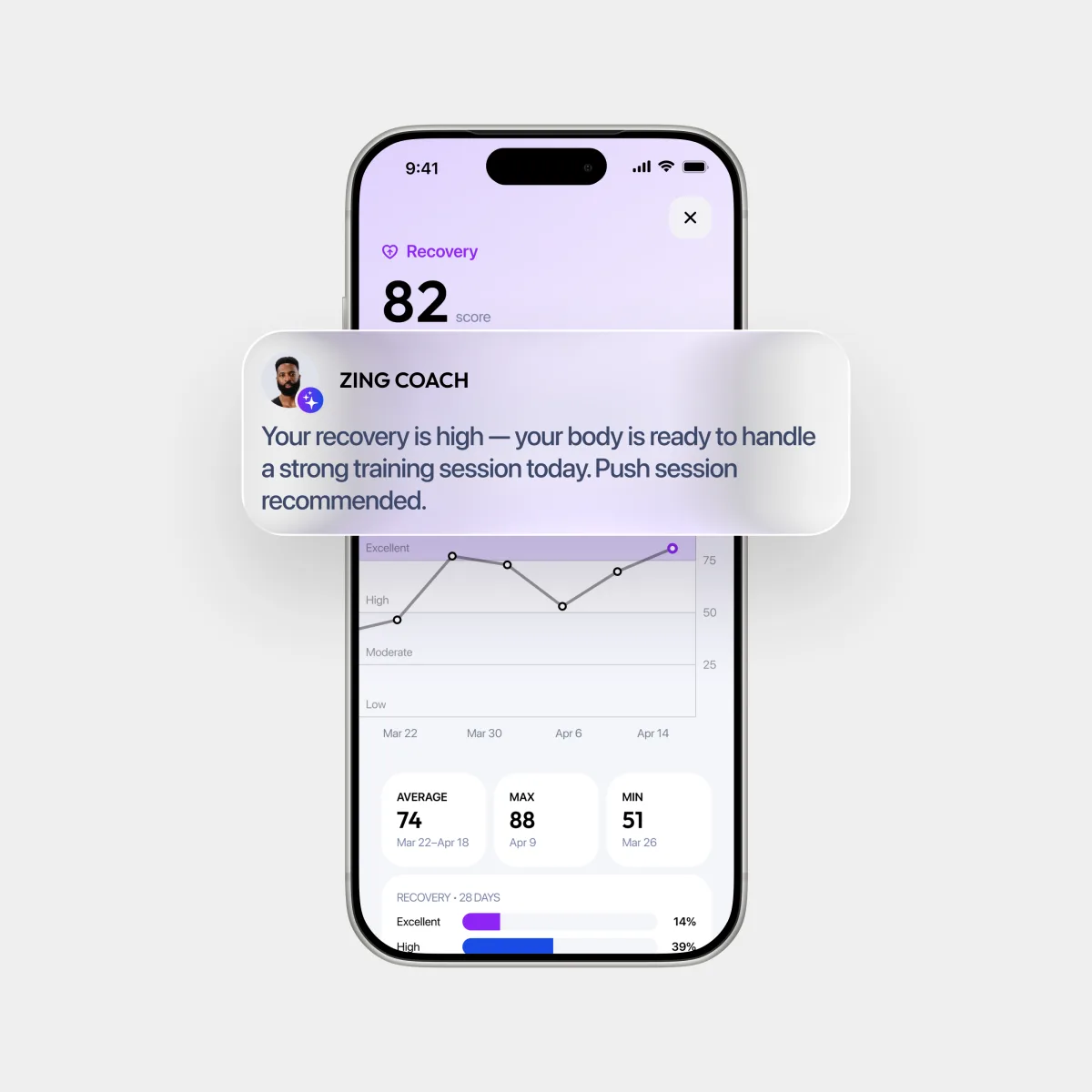
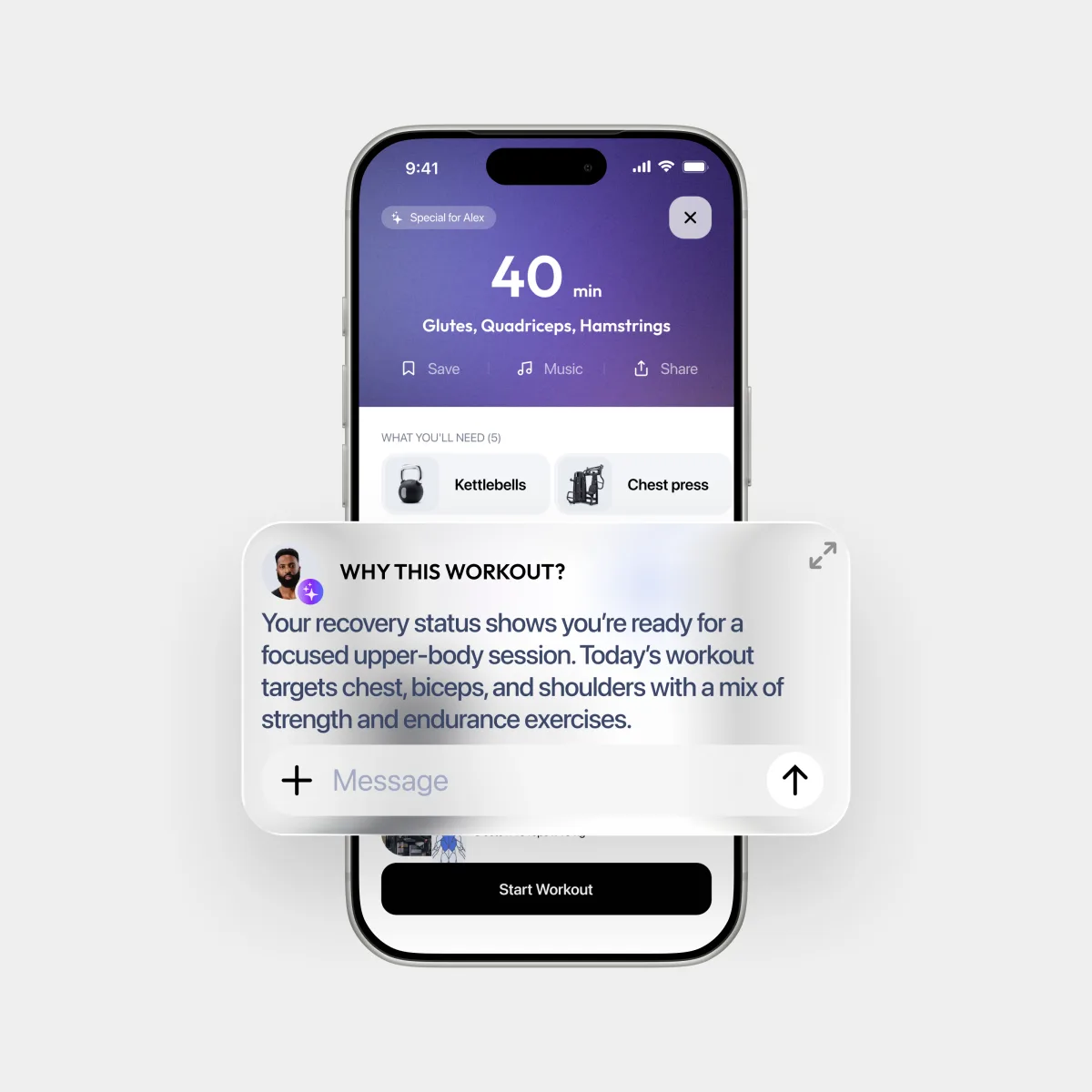
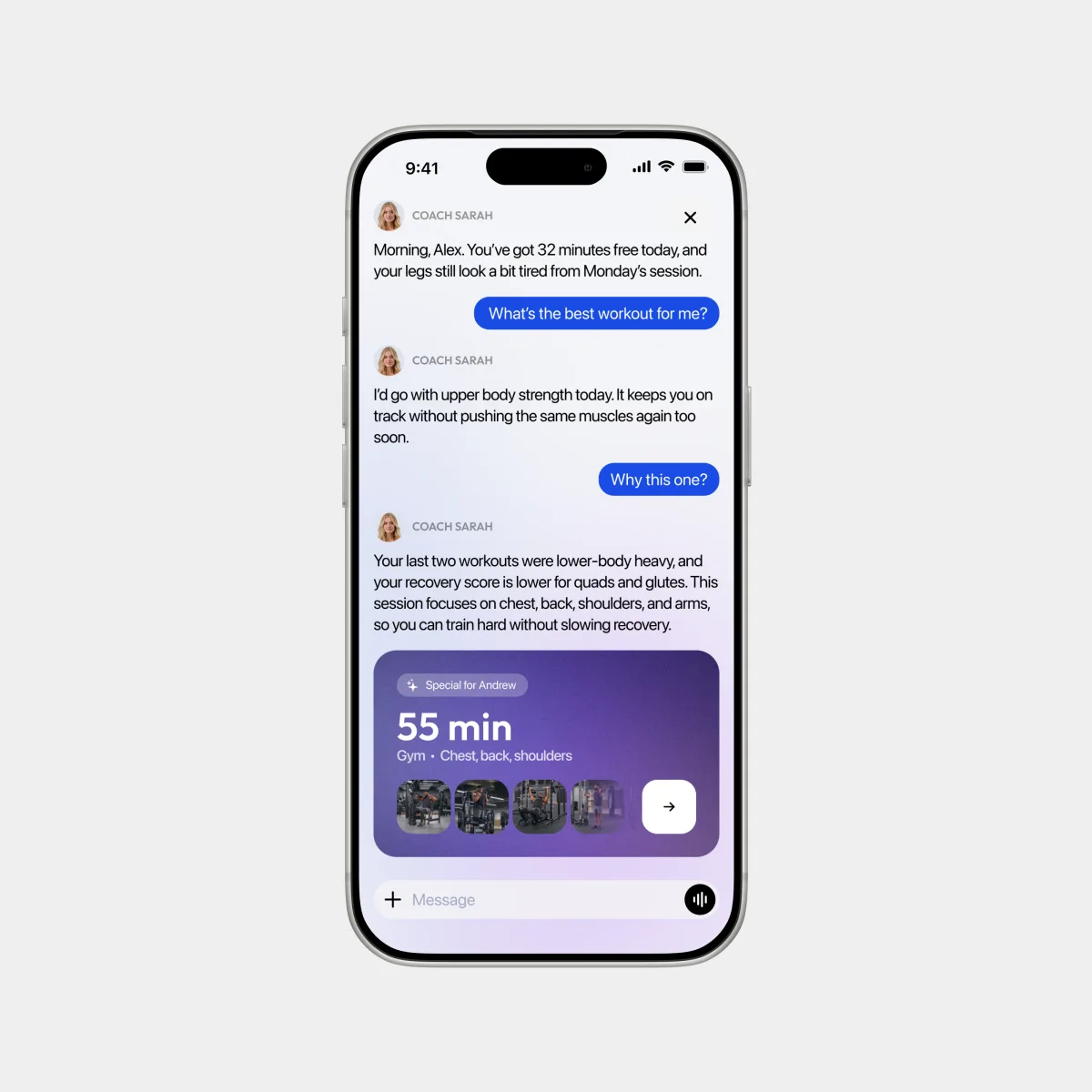
Rather than opening a blank chat and guessing what to ask, we placed relevant AI prompts inside the moments where questions naturally appeared — workout details, body scan results, progress insights, recovery, and plan explanations. The coach could use the user's profile, goal, workout plan, history, fitness tests, body scan, strength score, and recovery context, making the assistant feel less like a general-purpose AI and more like a coach that understood the current situation.
Proactive check-ins
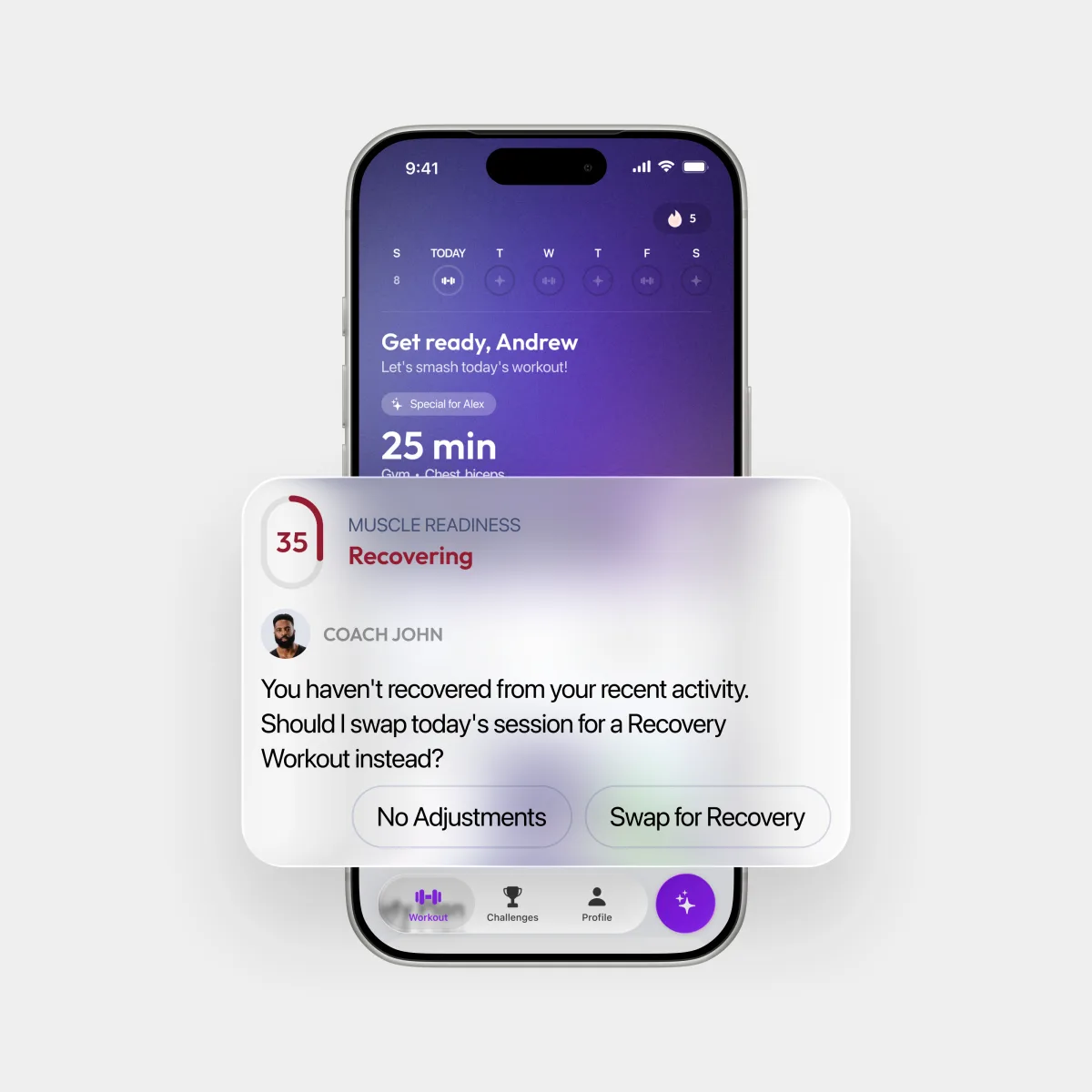
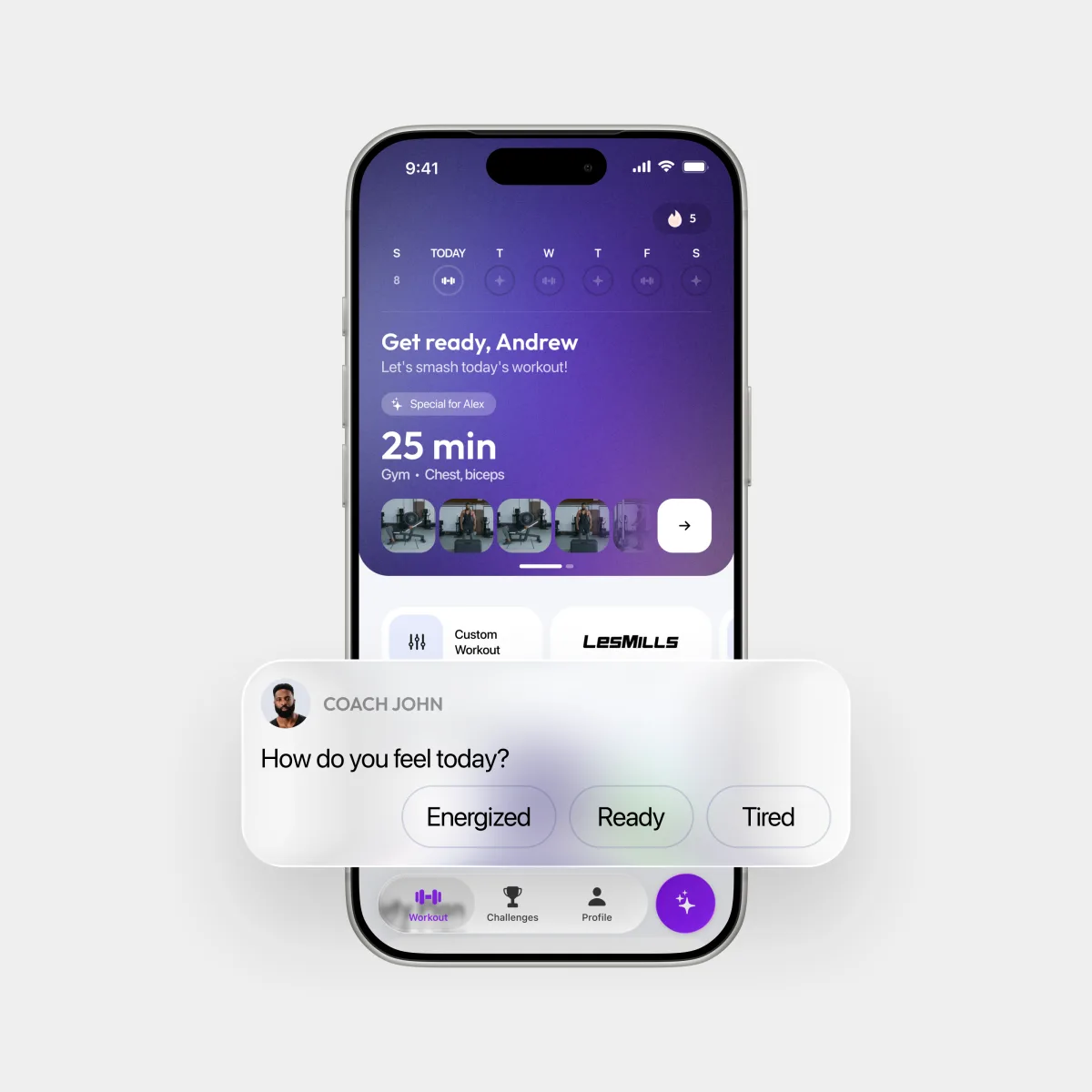
A real coach does not wait for the client to ask for help. They notice missed sessions, follow up, and help the person recover from imperfect weeks. We designed proactive AI check-ins around the first activation milestone — helping new subscribers complete their first two workouts — following a behavioral loop of positive reinforcement, insight for improvement, solution, and commitment. Success meant more users reaching the two-workout activation milestone.
Plan changes
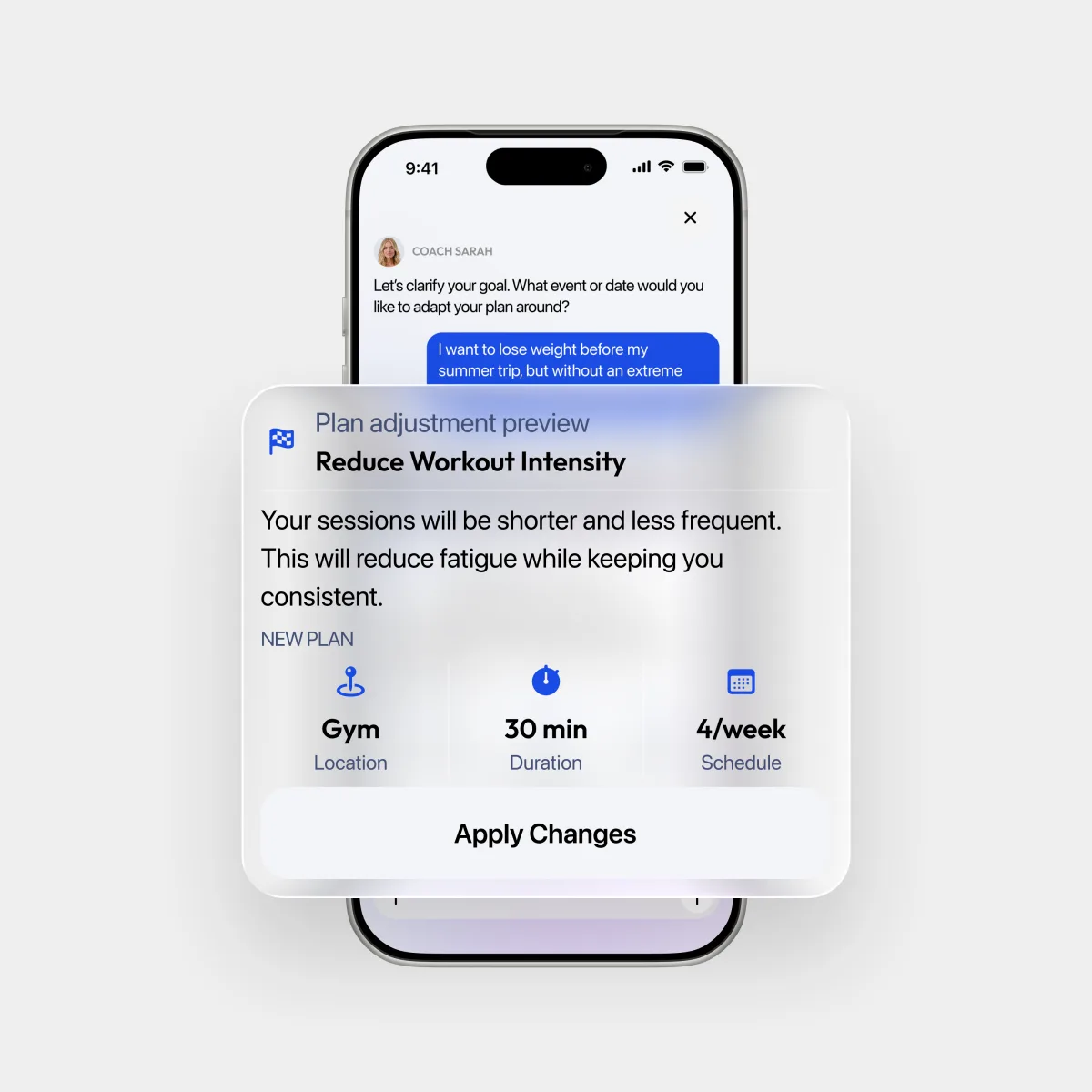
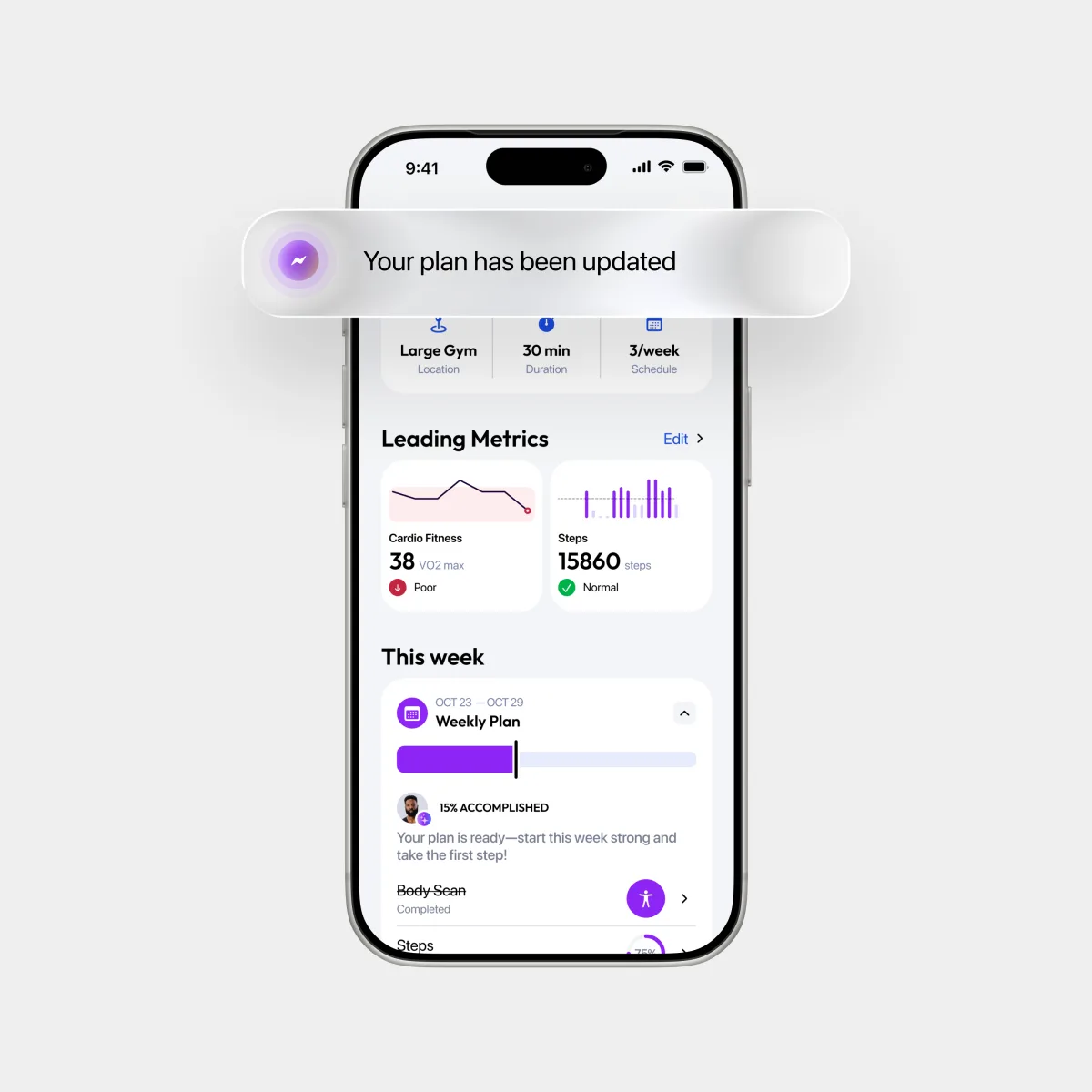
One of the biggest UX gaps in AI products is the distance between advice and action. A generic chatbot can say "You should reduce workout intensity." A useful AI coach should say "Based on your feedback, I can reduce your workout duration to 30 minutes, 4 days per week. Do you want me to update your plan?" This introduced a more agentic model: understand feedback, explain the change, preview the adjustment, ask for confirmation, apply the change, and follow up. Adjustments could include duration, frequency, schedule, home/gym mix, intensity, preferred exercises, injuries, and target muscle focus.
Progress explanations
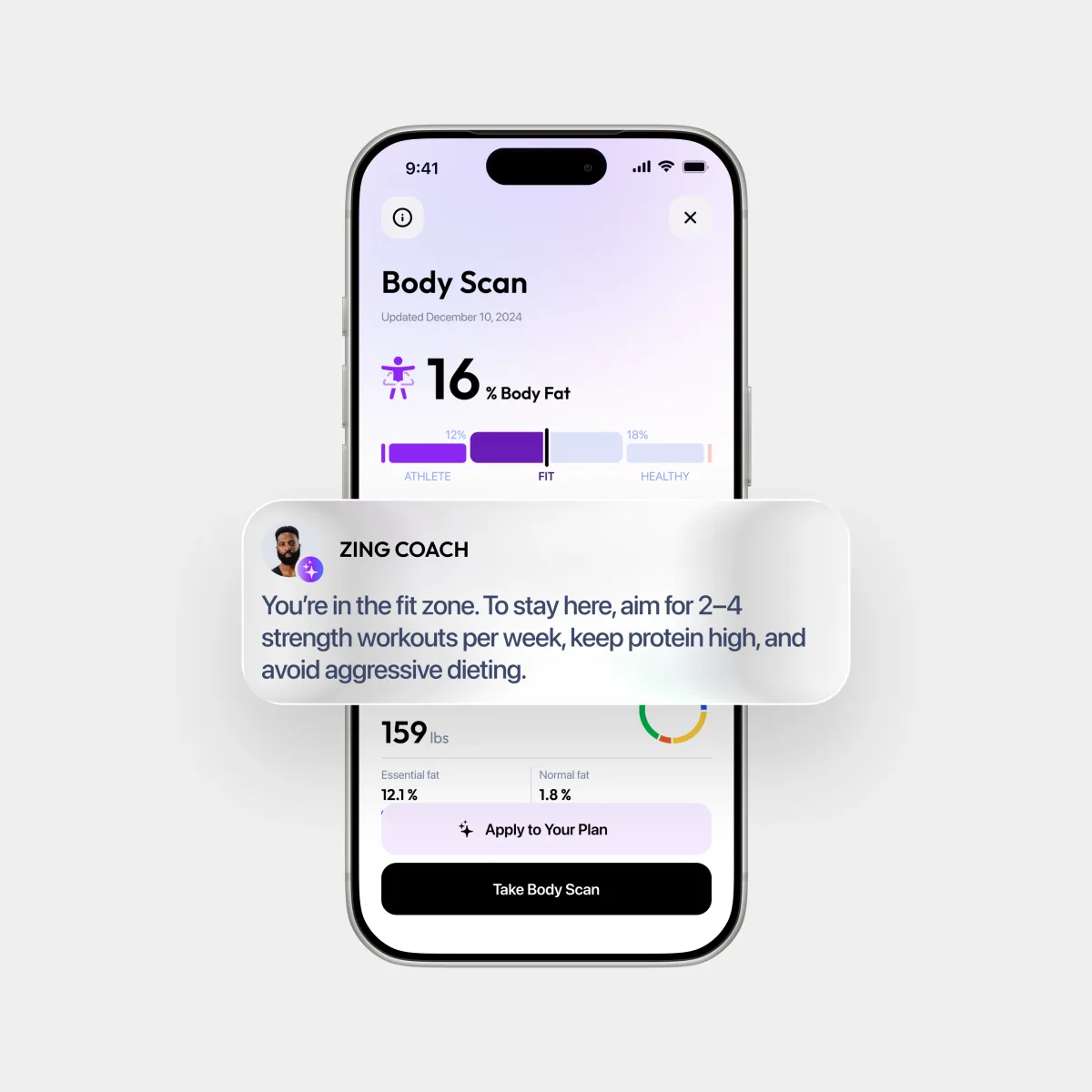
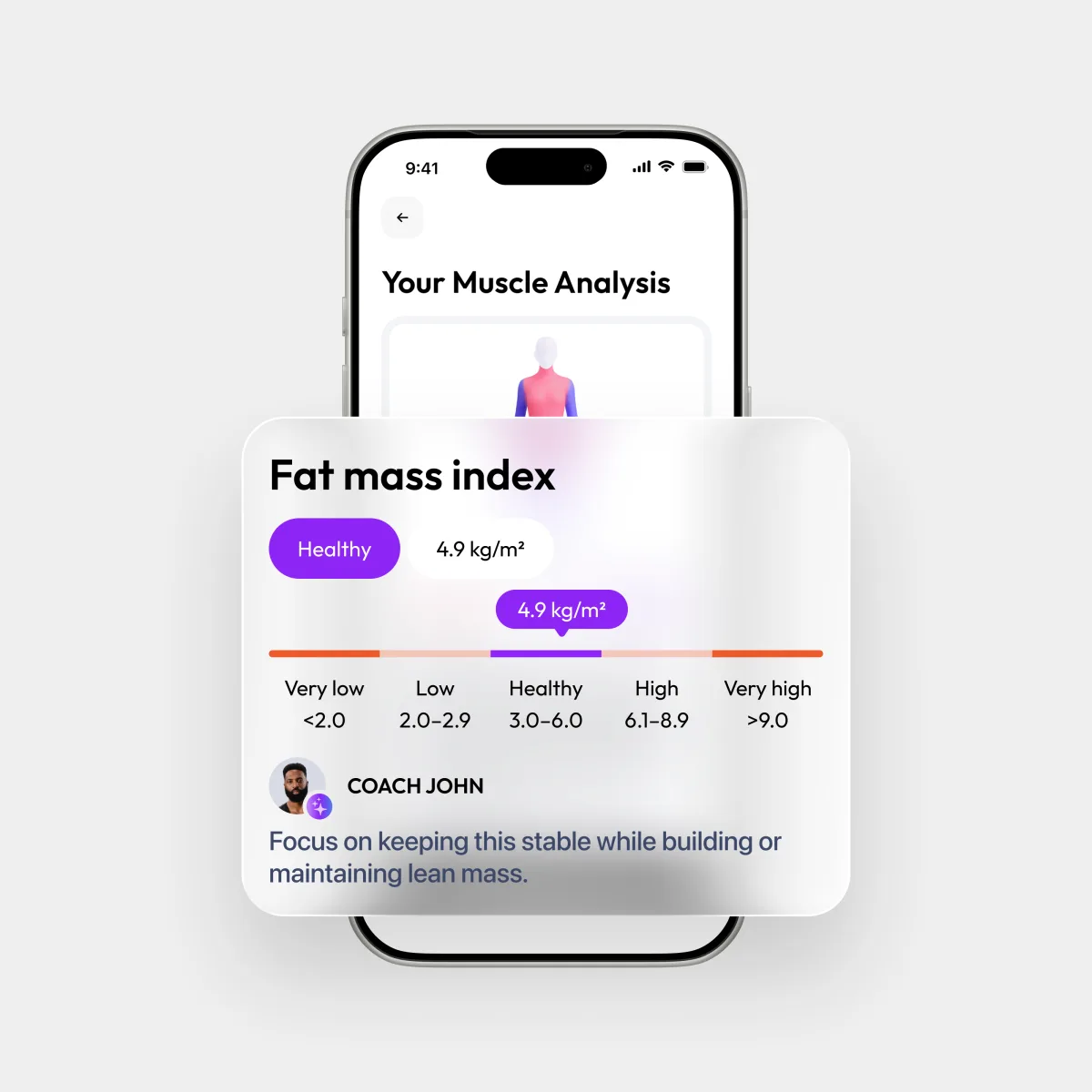
Fitness progress is slow and often invisible. The AI Coach connected body scan results, strength score, recovery, workout history, and progress trends to simple explanations and next steps — helping users understand what changed, why it mattered, and what to do next.
Interaction patterns
The AI Coach needed different UX rules from a traditional app flow, since users could say anything and trust depended on context quality, safety, and restraint. We used suggested questions instead of empty chat states, context-aware responses, explicit confirmation before applying plan changes, safe fallbacks when the assistant could not act, and a coaching tone that was practical, supportive, and specific.
What changed
The AI Coach gave Zing a way to help users between workouts — before they start, after a missed session, when the plan feels wrong, and when progress is hard to see.
As check-ins and plan adjustments shipped, two-workout activation hit its target. The next bet is daily coaching moments — a step-change in week-4 retention as the 2026 goal.
22.6 → 26.1%
Two-workout activation
What this taught me
Trust in AI coaching is earned by being specific, contextual, and safe — and by knowing when to hold back as much as when to act.
Where a generic assistant stops at answering fitness questions, a coach understands you, adapts the plan, explains progress, and keeps you accountable without judgment.