Content Shoots
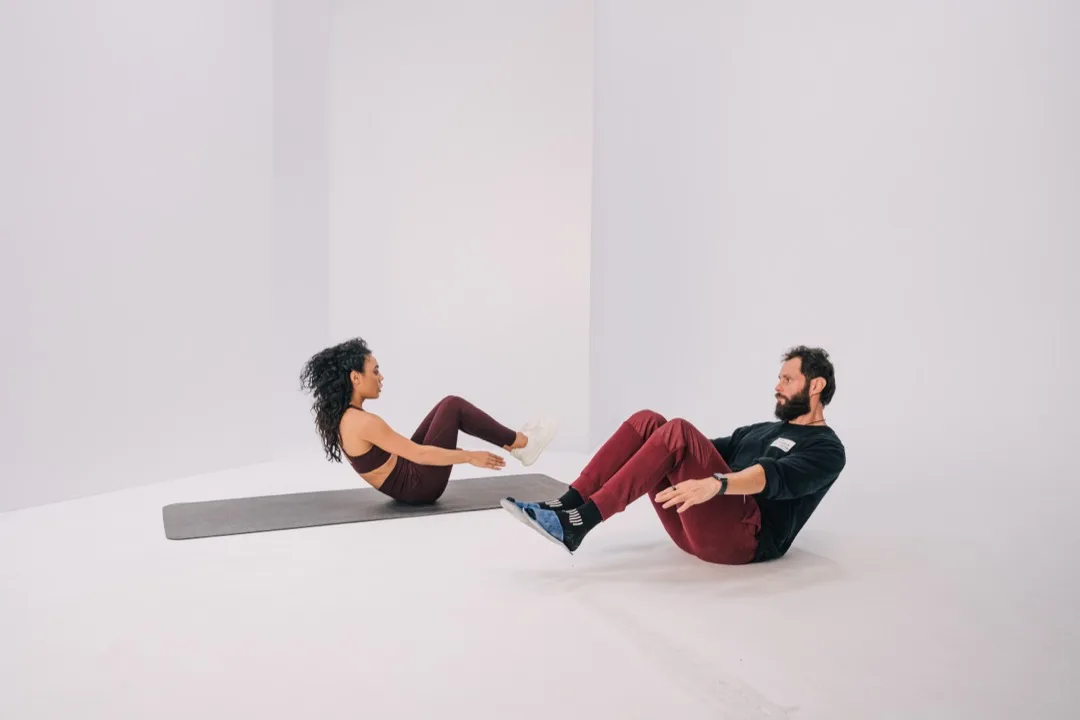
Led creative direction across two shoots — studio and gym — building a repeatable way to cast, film, review, and deliver exercise videos without reshooting the same movement for every format. The result: a production system for Zing Coach that shot two locations in three formats simultaneously, and delivered more than planned.
- Role
- Creative Direction
- Timeline
- 2021 — 2025
- Contribution
- Content Production, Creative Direction, Post-production
Results
More output than planned — without extending the shoot. Pre-production, on-set editing, and a coordinated crew turned saved hours into extra exercises, an extra model, and edited videos days after wrap instead of months.
- 360
- Exercises per model
- 800
- Edited videos
- 5
- Models filmed
- 90h
- Shooting window
- 40+
- Crew on set
- 1.5 mo
- Pre-production
Production system
The brief: shoot the full exercise library with every model across two locations, in three formats simultaneously — vertical phone, horizontal tablet, 4K TV — without stopping to reframe between takes. Every production decision followed from that constraint.
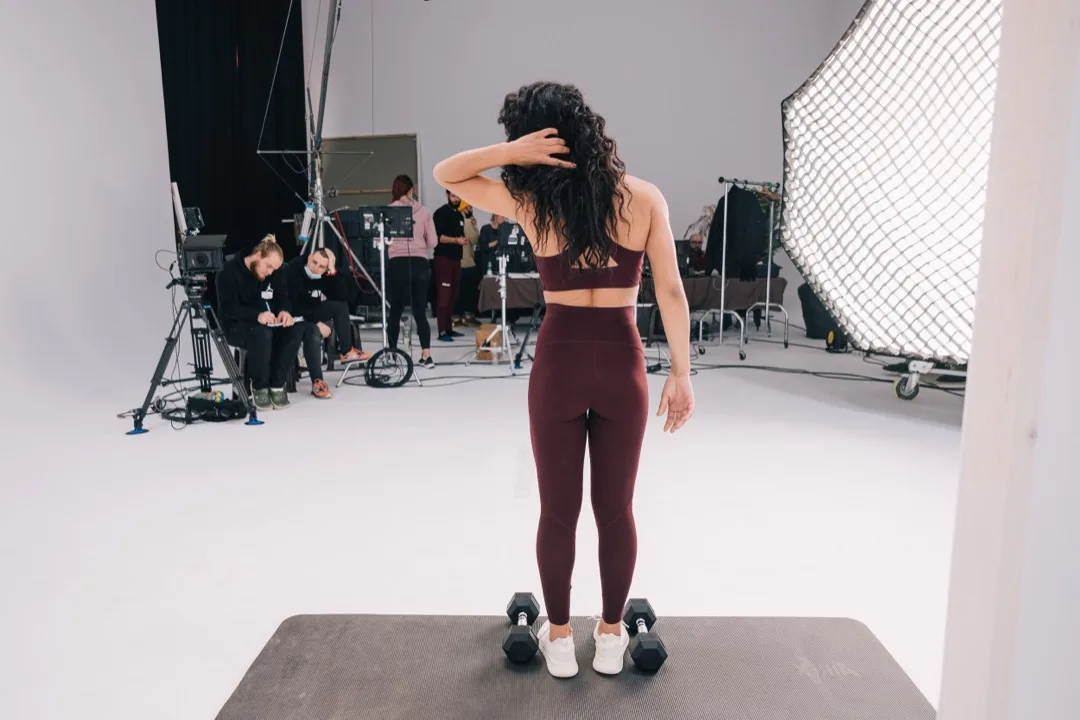
Pre-production covered studio scouting, gym scouting, wardrobe, make-up, hairstyles, equipment selection, and 3D spatial previews to test how the final frame would work with app graphics — all before the crew arrived on set.
Three formats, one shoot: 60 fps, wide lenses, a single Blackmagic URSA Mini Pro 4.6K G2 with 12 mm and 16 mm — preserving maximum flexibility in post without reshooting.
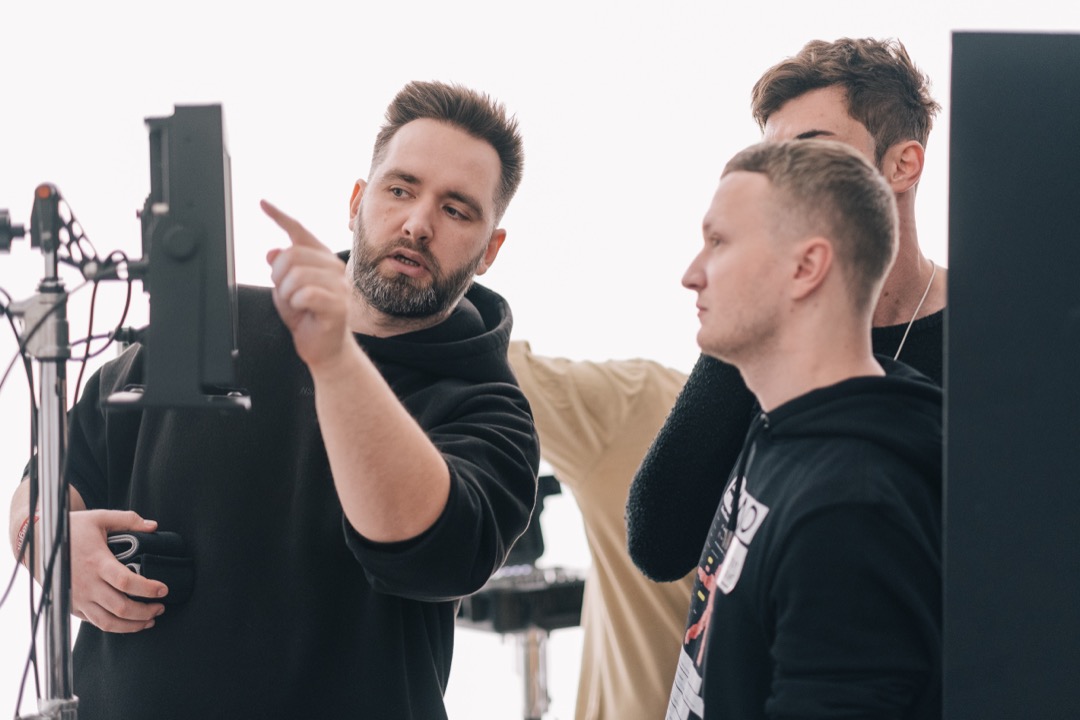
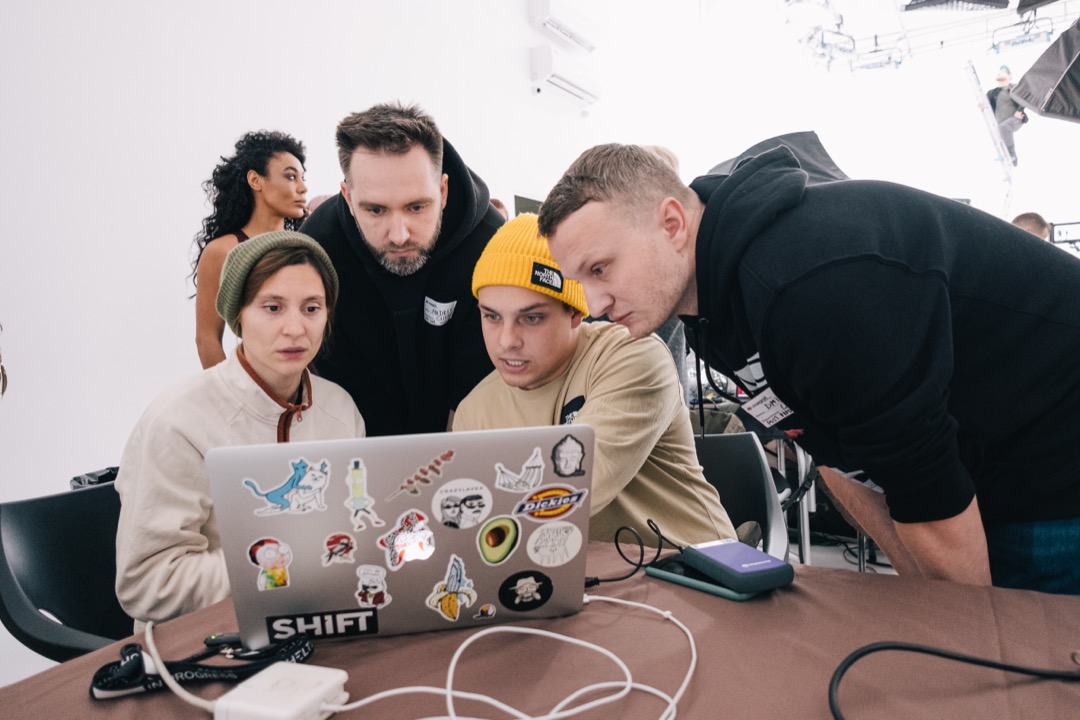
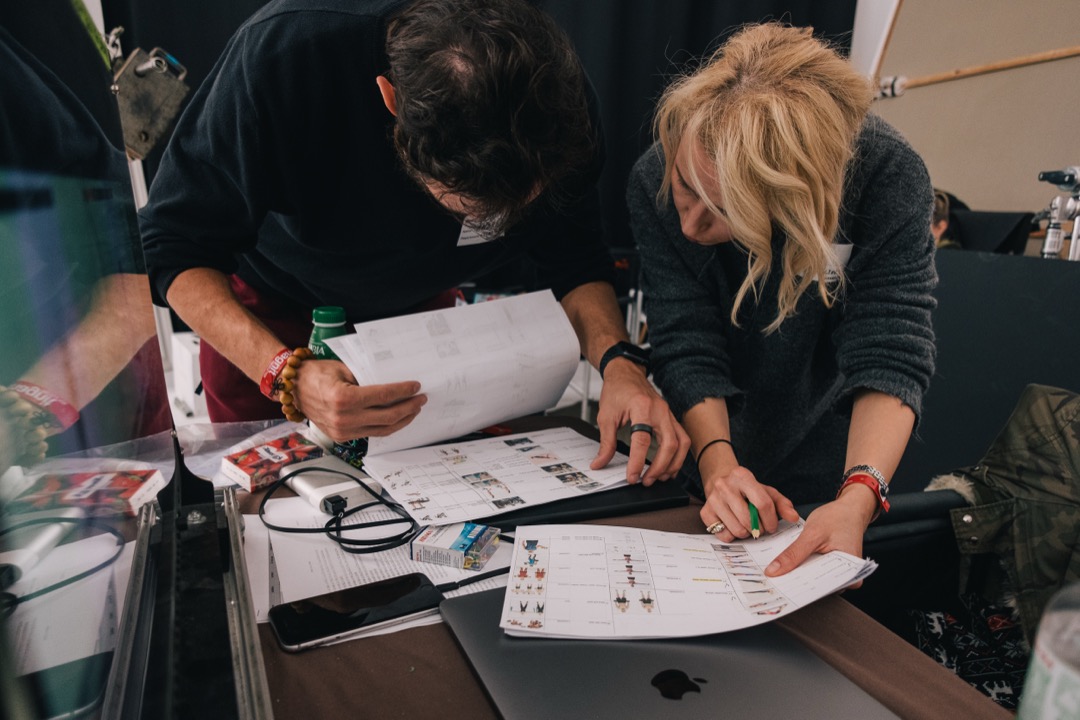
On-set editing to prevent post issues: QTAKE handled playback and backup. Every exercise had a numbered reference. An editing director reviewed footage live on set — frame-divided for all formats — catching problems before they became post-production costs.
Casting
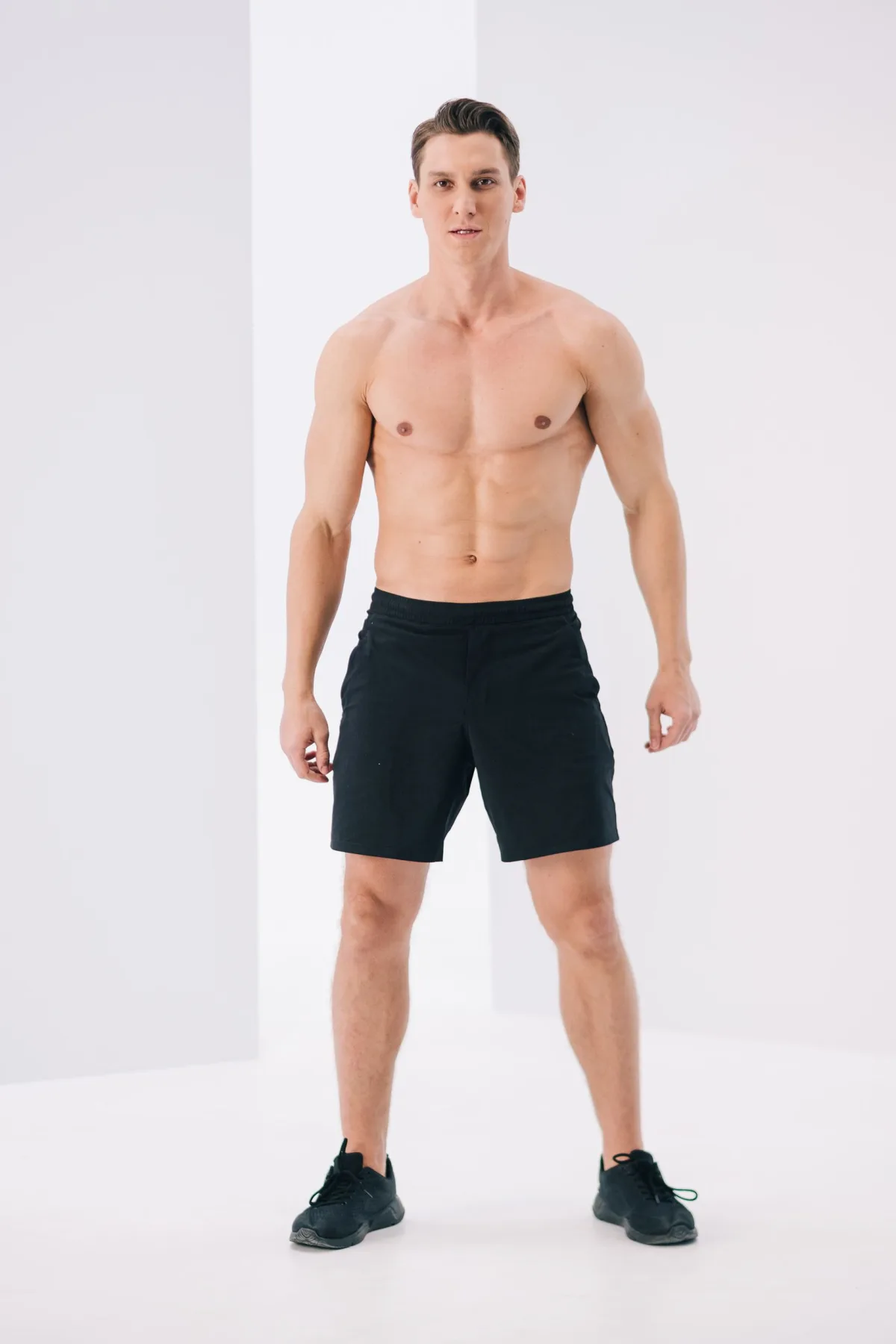
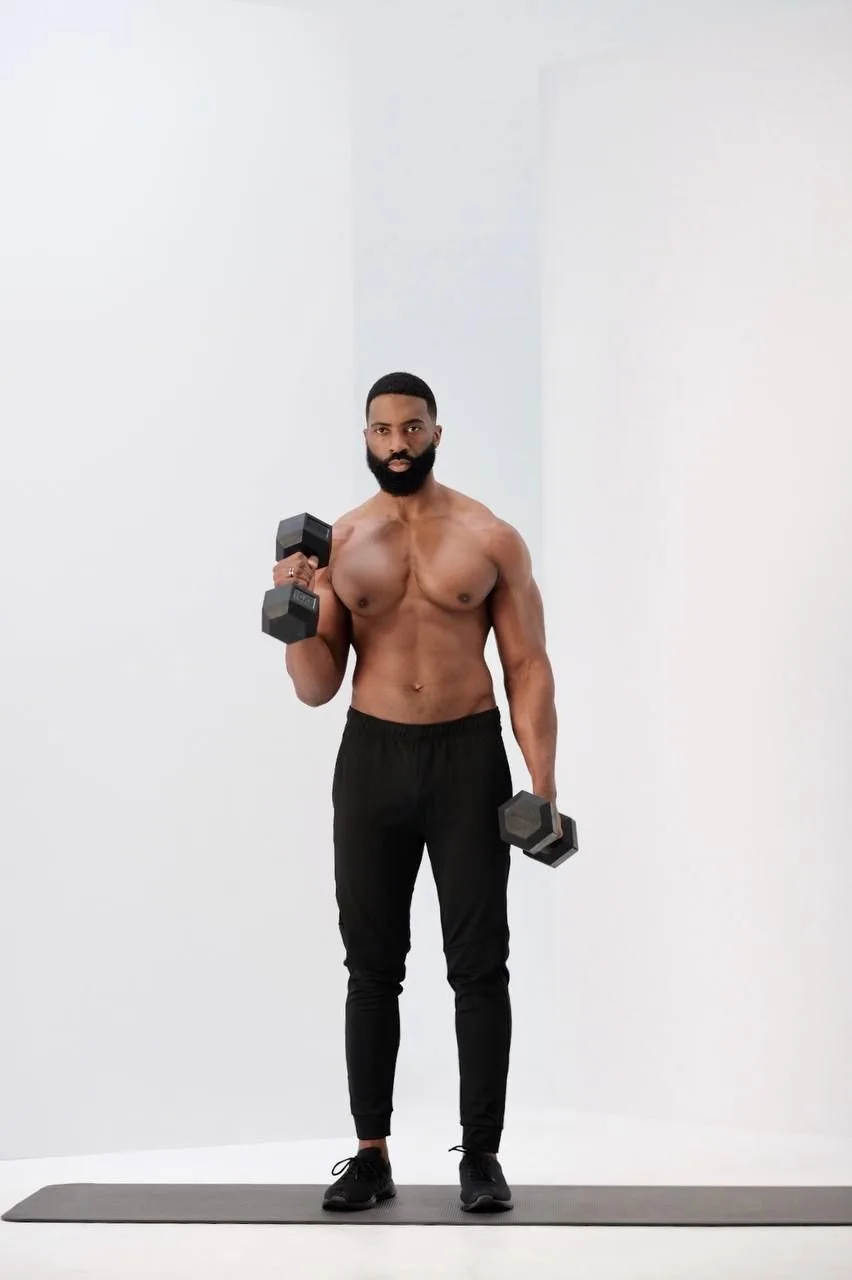
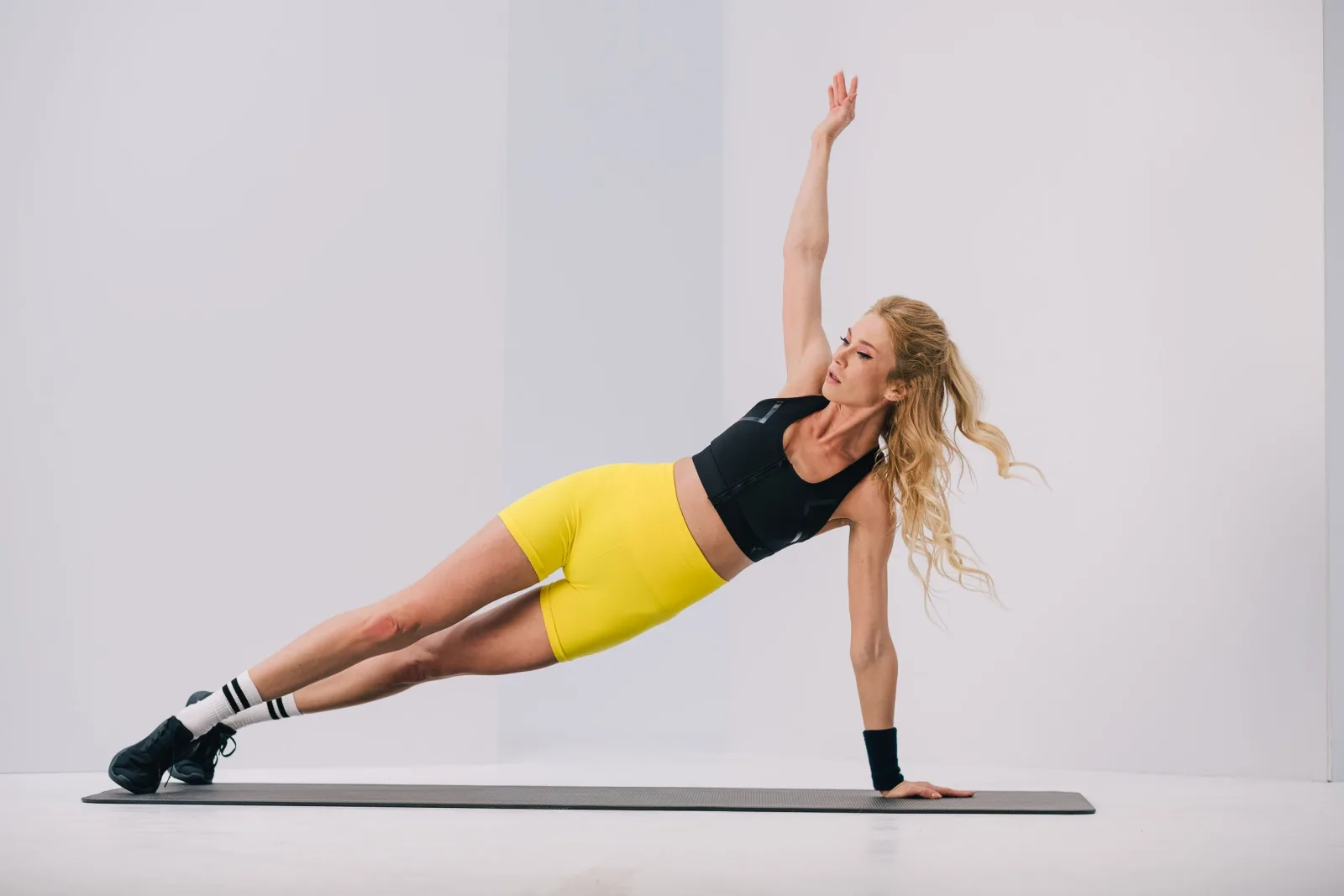
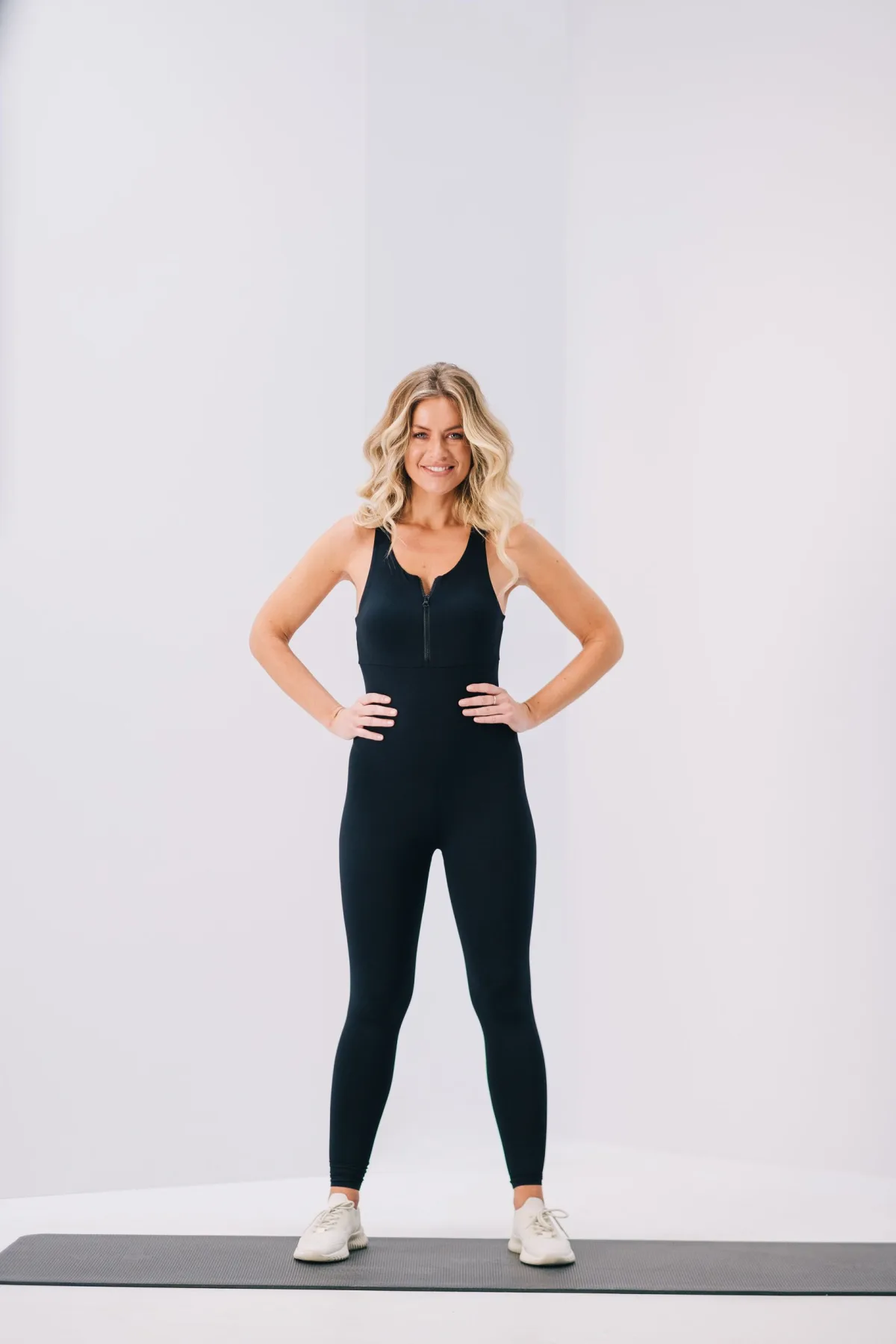
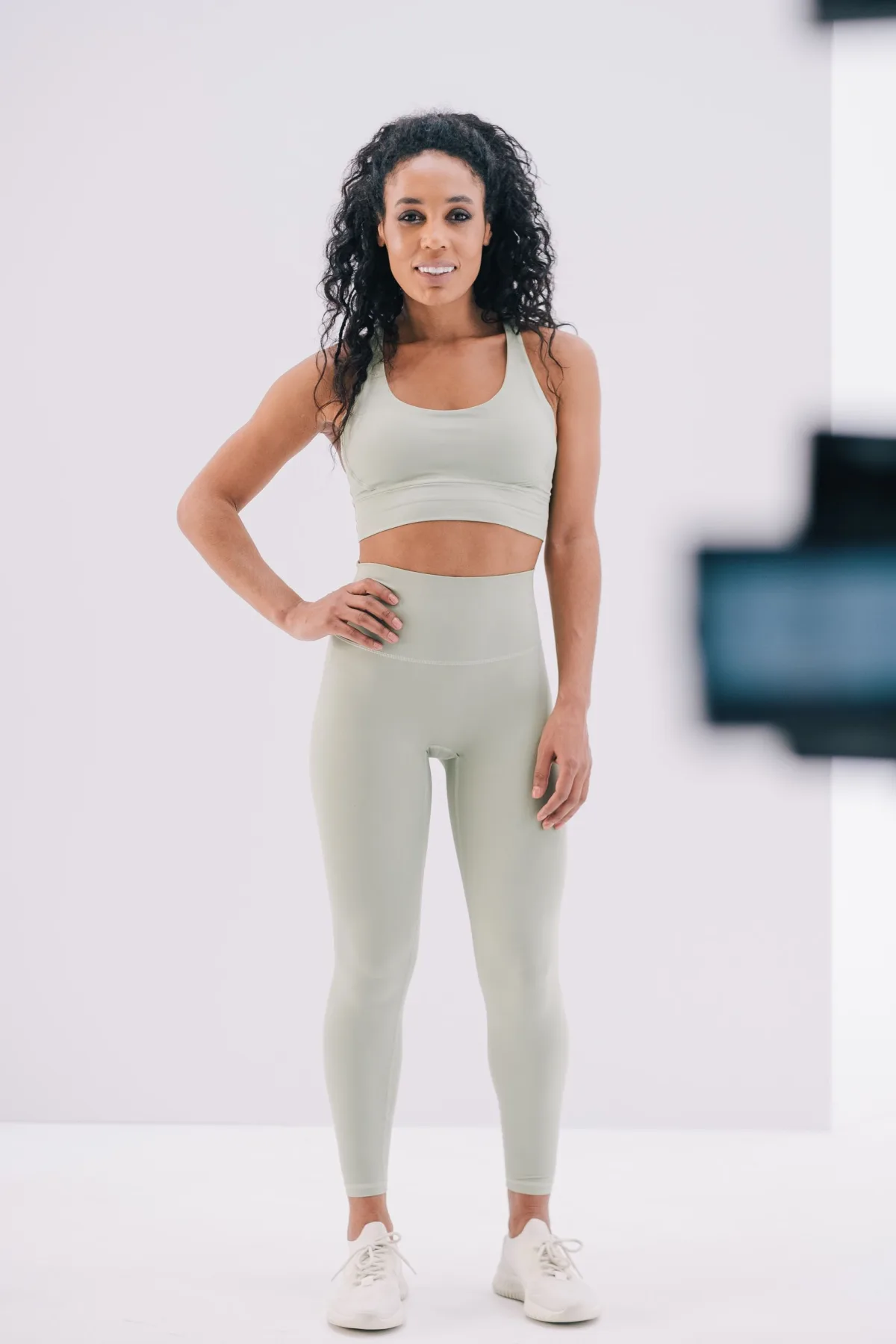
Casting ran like product research, not a talent search. References from Peloton, Freeletics, Nike Training Club, and Fitness+ set the bar, and user surveys shaped four model archetypes people actually wanted to train with. Each finalist passed UXR testing with real users before the final call — and two archetypes had to be flown in from London when the local market could not match them.
The shoot itself ran ahead of schedule, and the saved time went into a fifth model who was never in the brief.
Sport Equipment
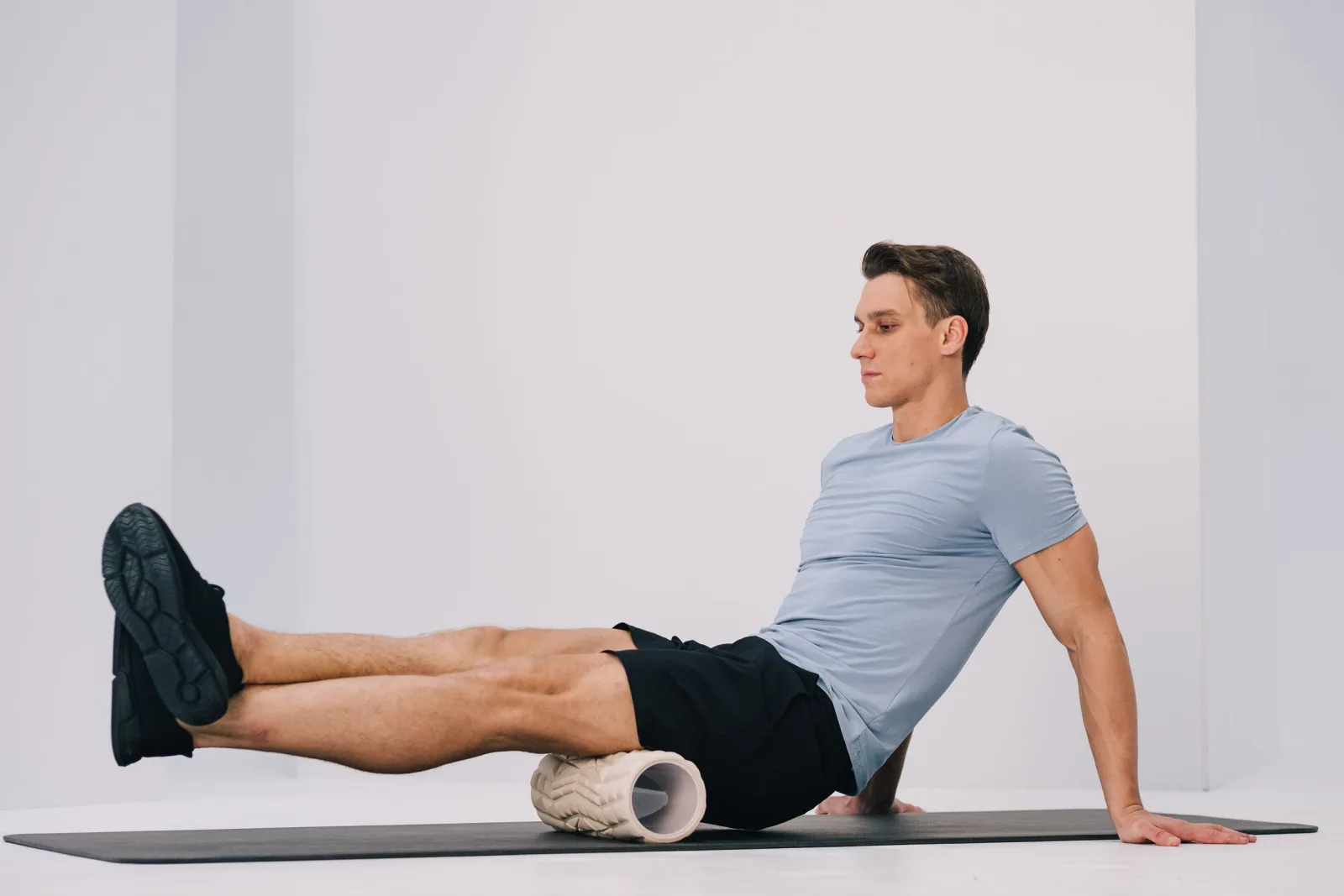
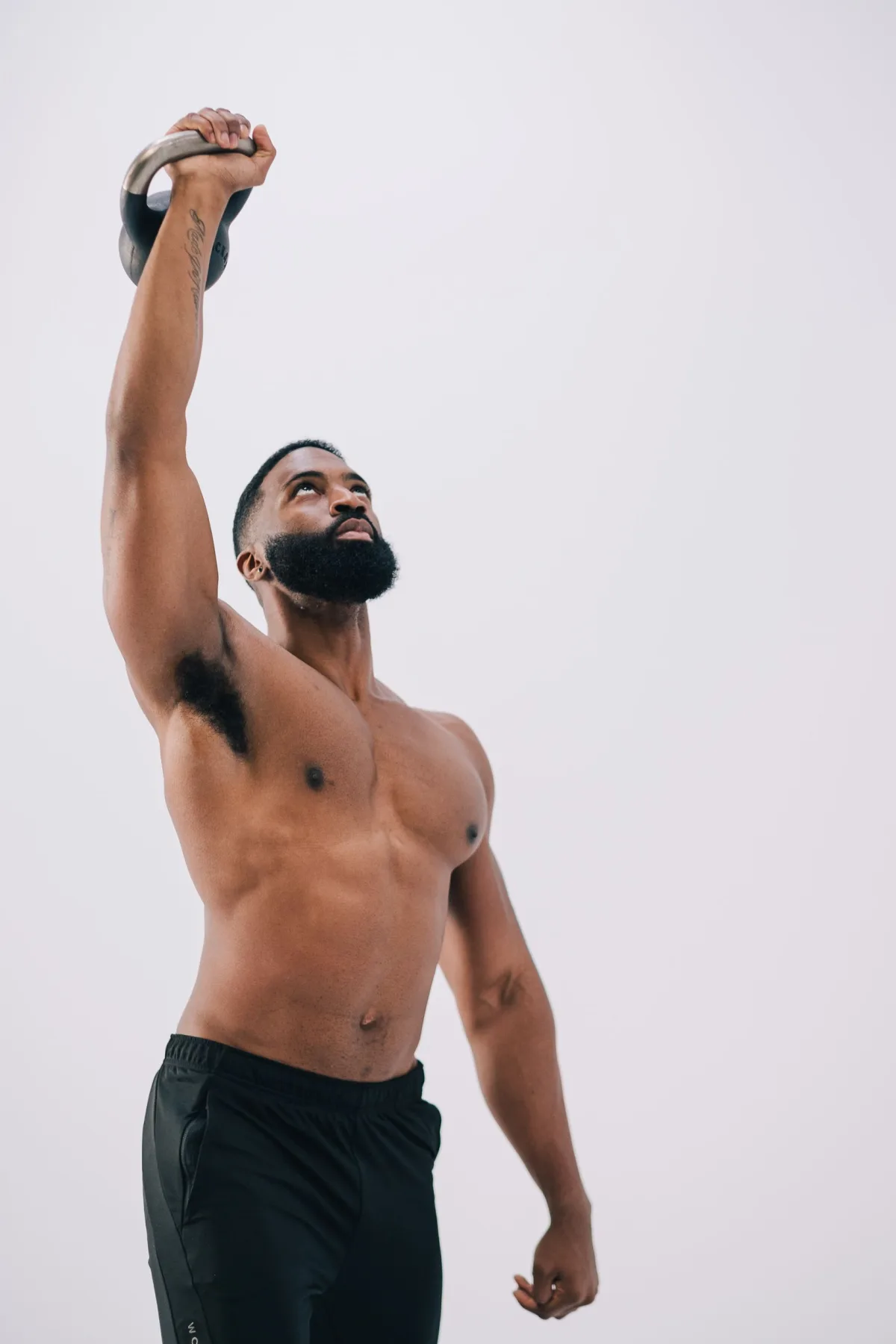
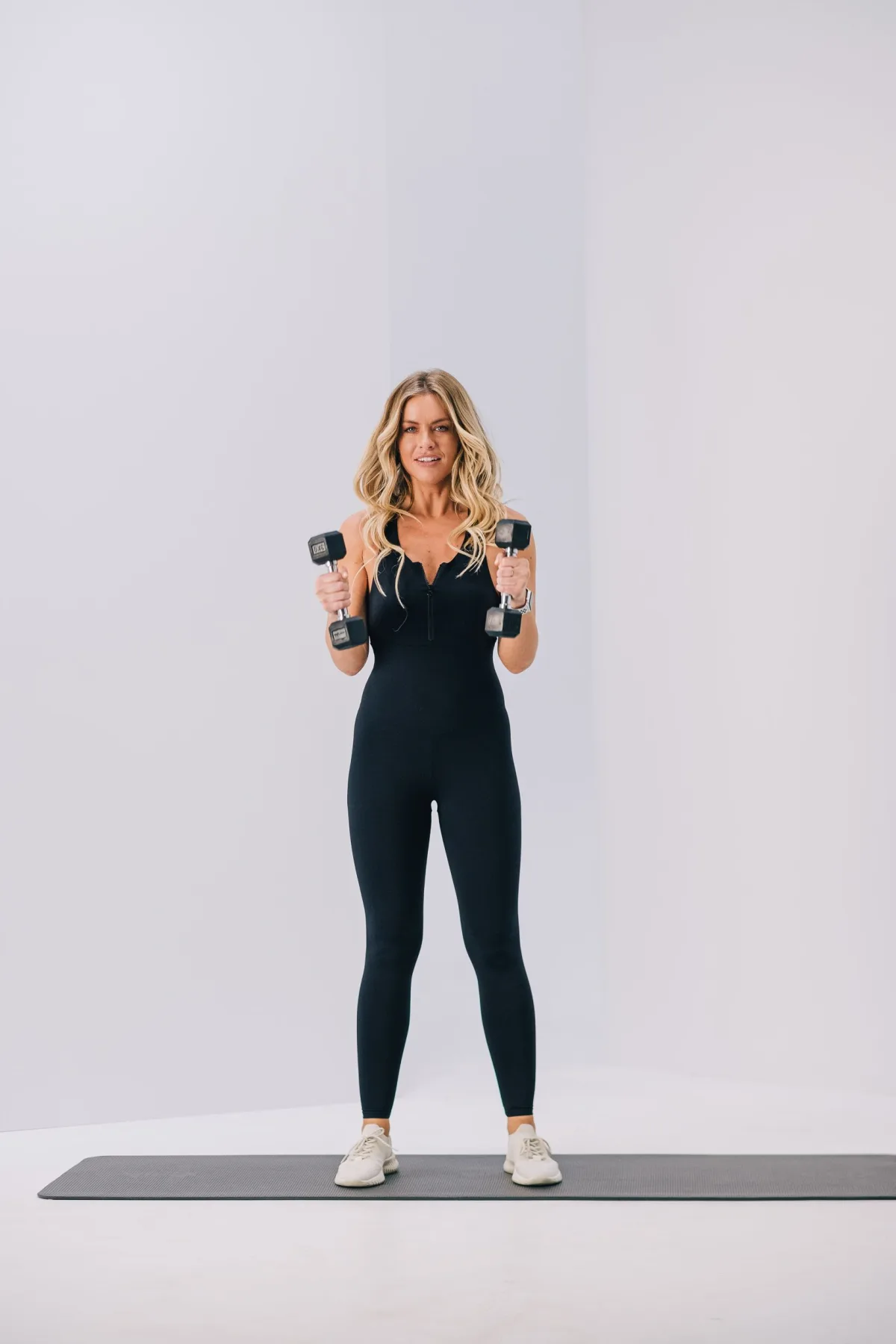
Two locations meant two equipment stories. The studio covered bodyweight and light equipment — dumbbells, kettlebells, foam rollers — selected and staged during pre-production so every exercise read clearly on camera.
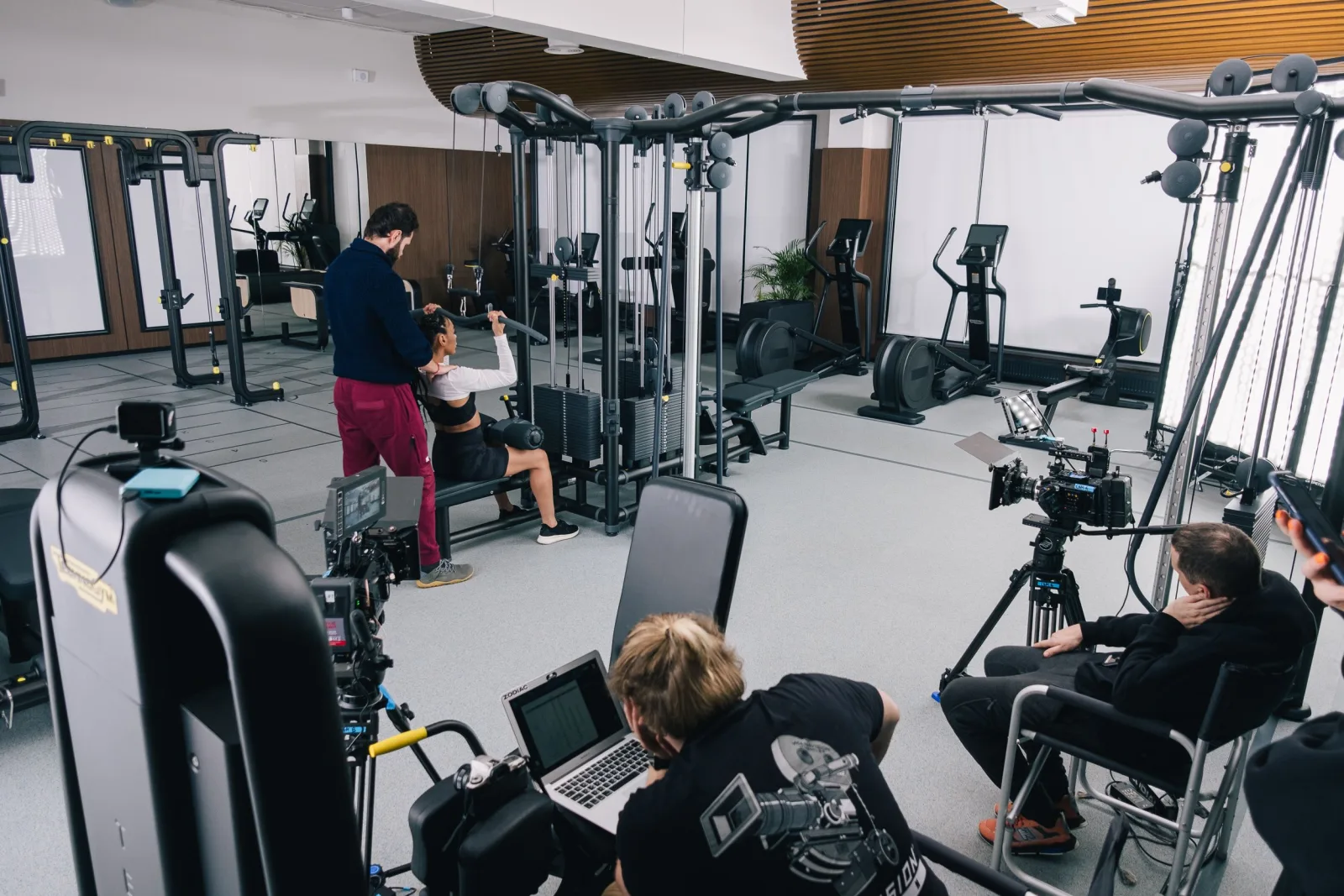
The gym brought barbells, heavy machines, and one deliberate choice: Technogym, the same brand users see in their own gyms, so in-app footage matched the real environment.
Lighting
Two locations, two lighting problems — and the same material had to work across phone, tablet, and TV layouts.
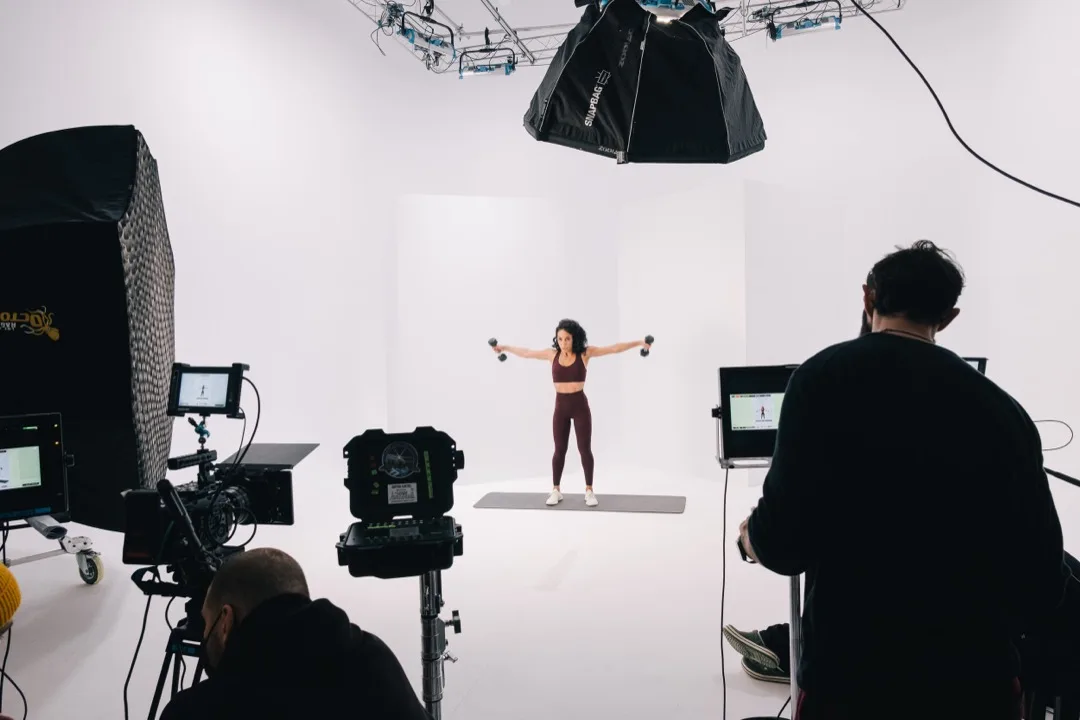
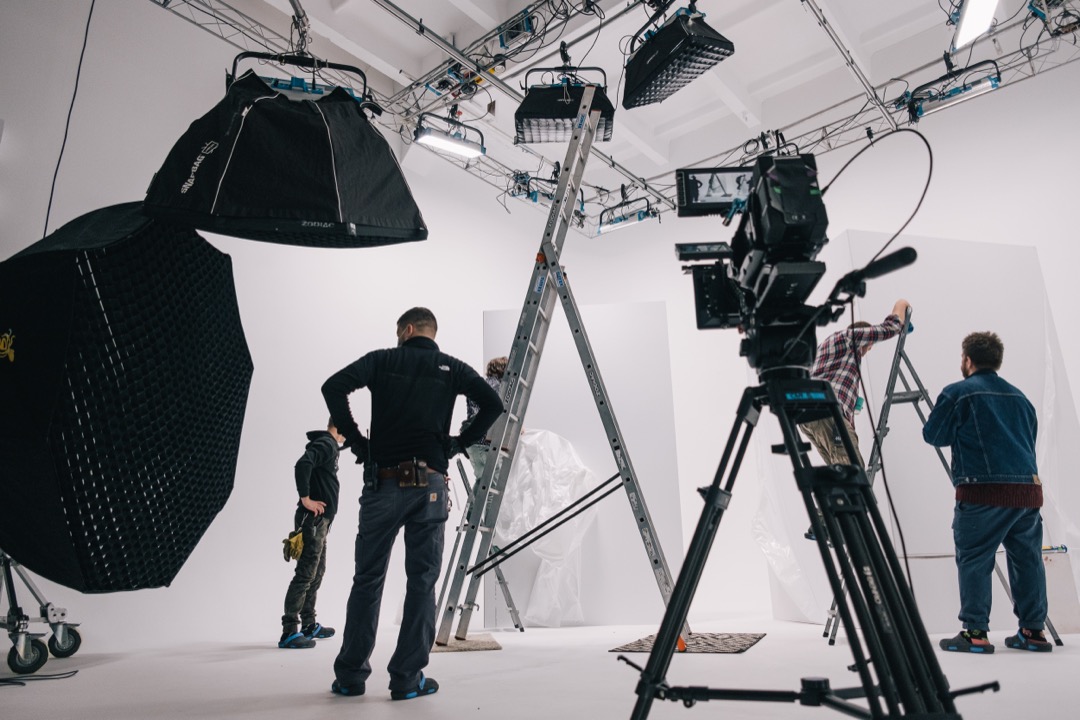
Studio — soft, dimensional light: the studio needed a well-lit model without flattening the space. Lights were hung around the background to illuminate the main panels, while a large softbox created an even key on the athlete.
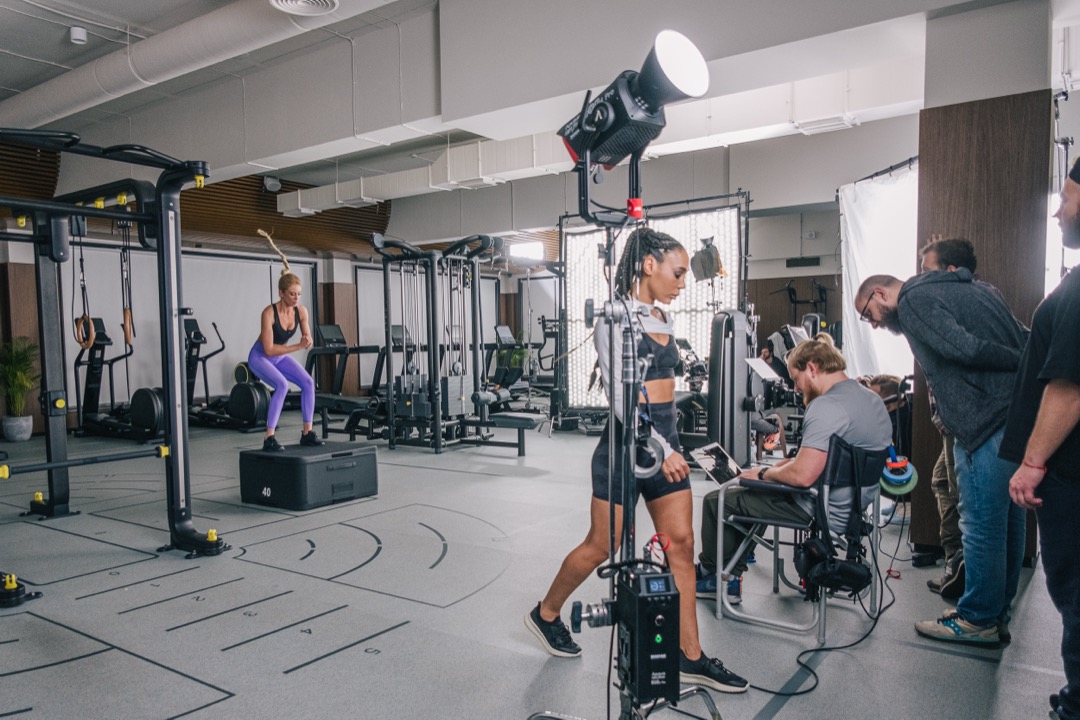
Gym — fast scene changes: the gym had less space and five scenes to complete in one night. Each setup required moving light and two cameras, so extra lighting crew were added to speed up resets and keep the schedule under control.
How it came together
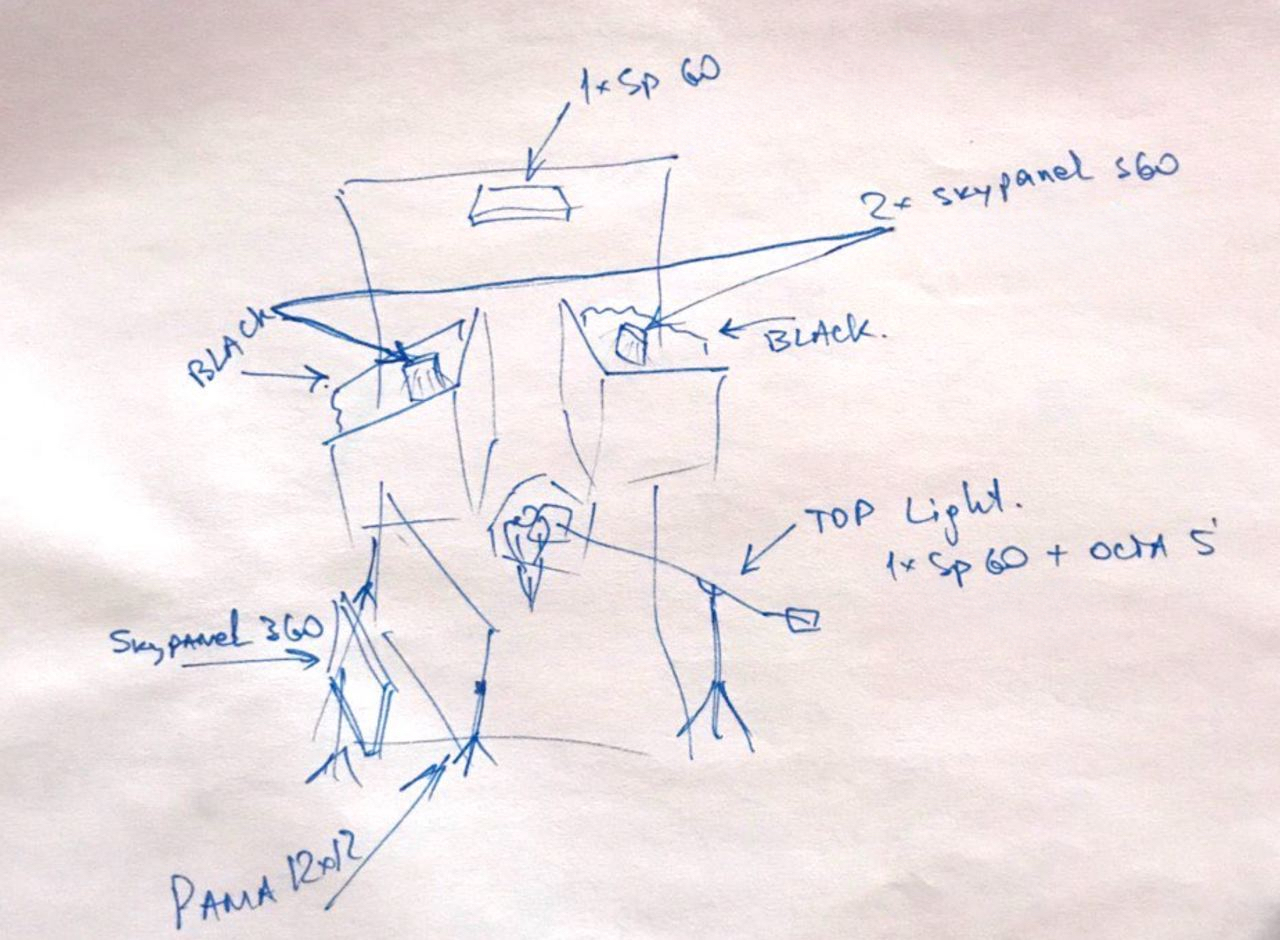
Test the light before day one: a test shoot a week ahead validated the location, background, light, camera, and lenses — and caught a set problem early: translucent background panels did not hold light and were swapped for opaque ones. The sketch translated the studio into a practical setup: top light, side panels, black flags, and a clear plan for the crew.
Frame the system first: the production started with spatial planning — camera positions, background panels, future graphics, and the relationship between a moving body and three output formats. The draft render turned the studio into a system before filming began.
Build the studio around movement: the white studio needed height, suspended lights, large panels, monitors, crew movement, and enough empty space to reset quickly. The set was designed to make every exercise feel clean, repeatable, and technically safe for post-production.
Review while the set keeps moving: the team used playback, frame guides, and on-set editing to catch problems before post-production. That feedback loop helped turn the shoot into a reusable workflow for future Zing Coach productions.
Color as a system: a custom Zing LUT, matched to the lighting and each model's skin tone, was loaded into the camera before every shooting day — no per-video grading in post. Neural compression brought delivery files down to a 3 Mbps bitrate without visible quality loss.