Mobile App Experience
Four years building Zing Coach from an early-stage app into a product millions of people train with. Every design decision came down to one insight: users who completed four workouts in their first month stayed for the long term.
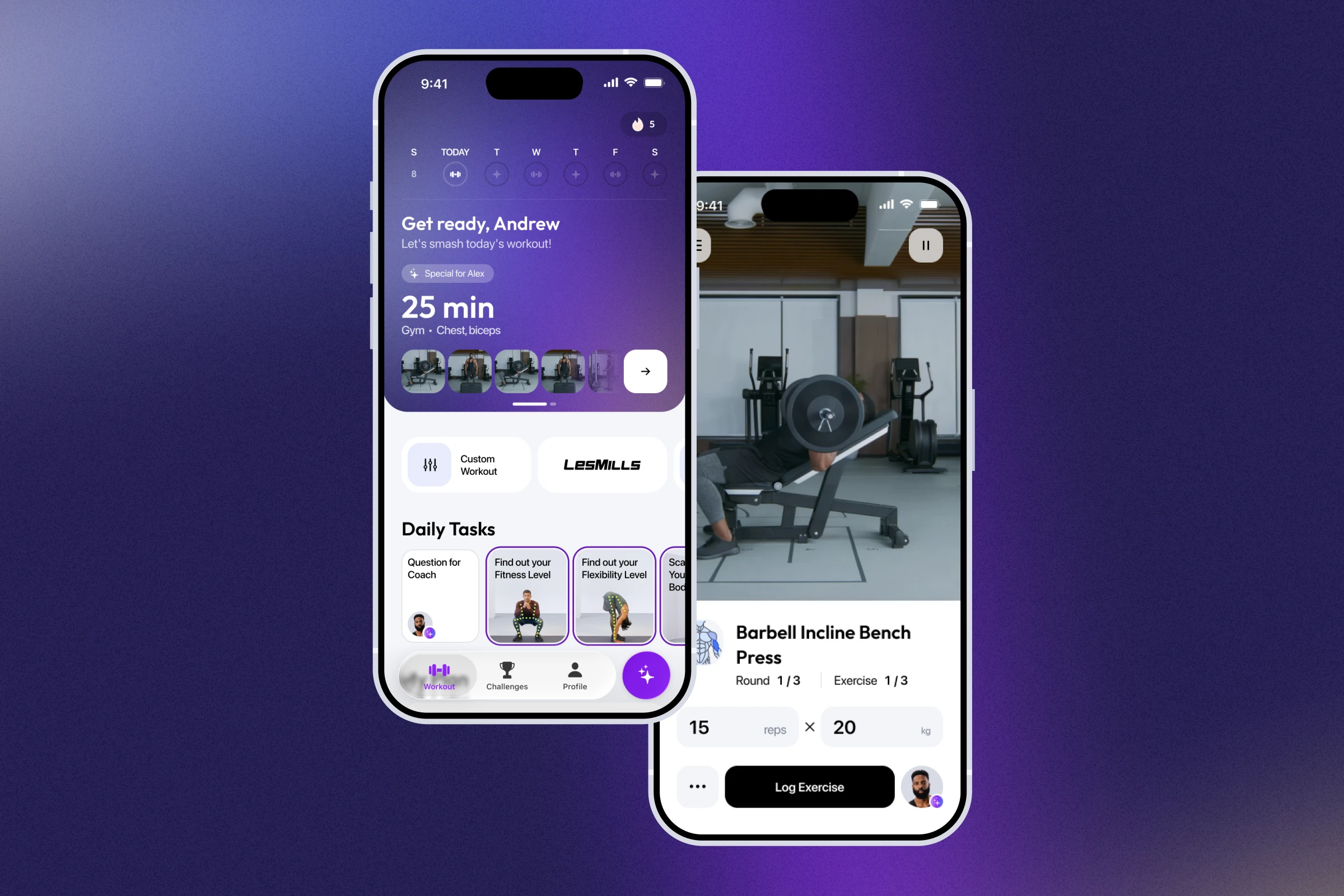
- Role
- Product Design Lead
- Timeline
- 2021 — Now
- Contribution
- Product Design, AI, Retention, Mobile
The challenge
Most fitness apps lose users in week one. People download with high motivation and quit before seeing results. The design problem wasn't onboarding or workouts in isolation — it was the gap between the promise of AI personalization and what the product actually delivered day-to-day.
Retention is not one decision. No single screen keeps people. It's the accumulation of small moments where a product either earns trust or loses it. Our job was to find those moments, test what moved the needle, and make the right call — even when it felt counterintuitive.
What we reached
Behind every number is the same habit moment: subscribers who completed four workouts in their first month kept training and kept their subscription. That single insight, validated across every segment, set the target the whole first-month experience was designed around.
40–55%
Month-1 retention
2.2M
Downloads
4.5M
Tracked workouts
4.8★
App Store rating
Users commit when they understand
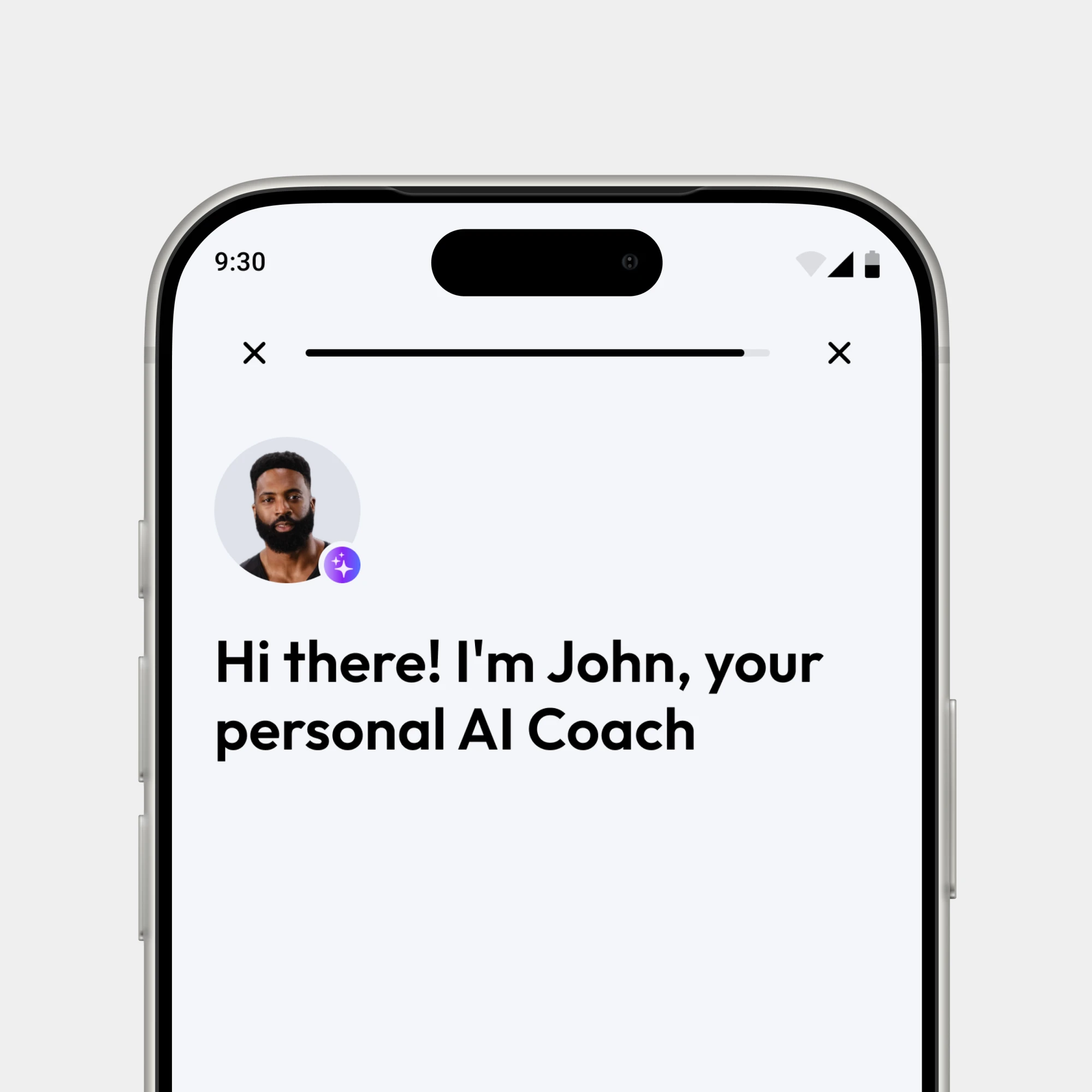
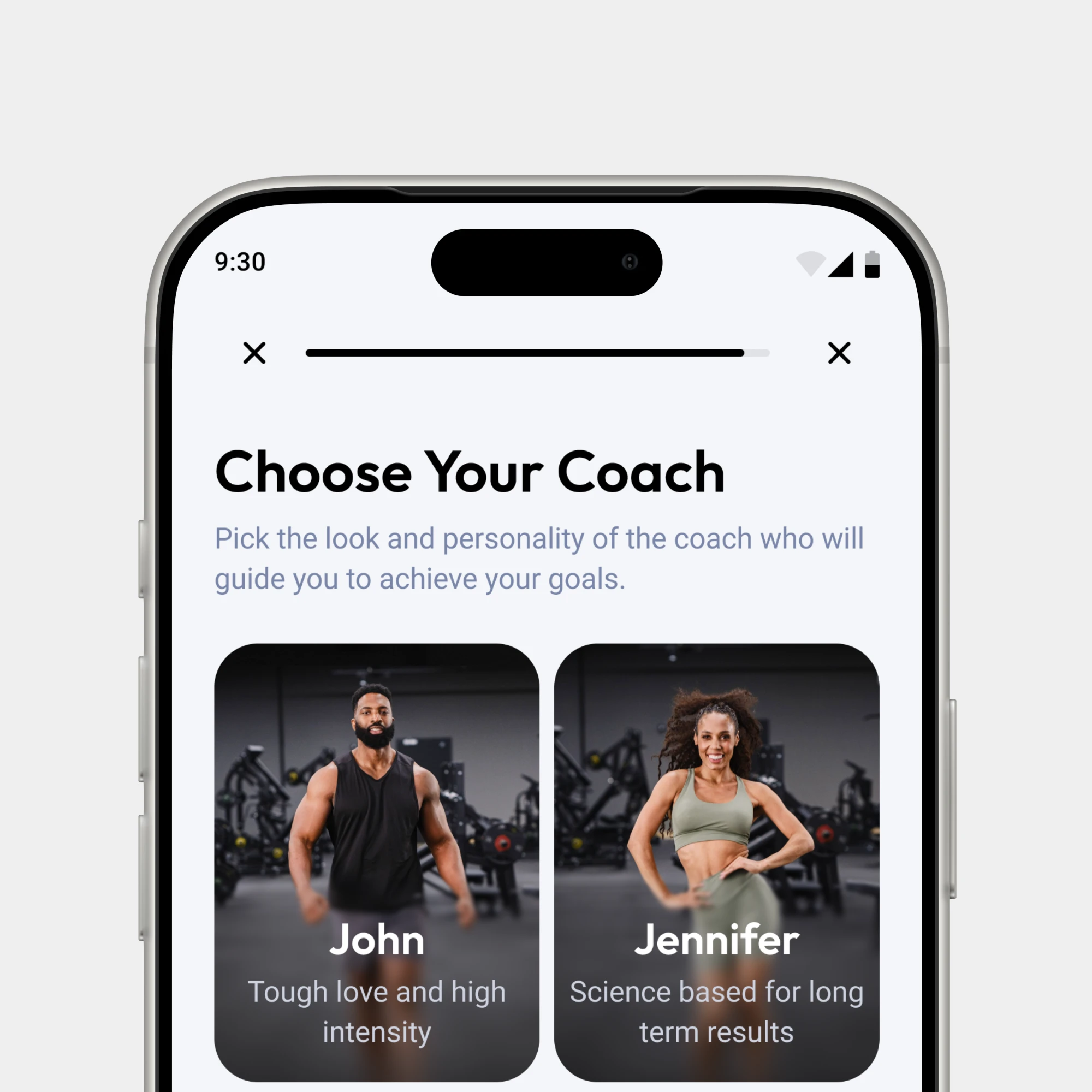
Users didn't trust generic apps. They needed to understand how the AI personalized their plan or they'd quit. We tested screen counts, question order, and depth, and shipped a longer flow that explained the AI step-by-step — conversational rather than corporate.
We never built a "quick start": every attempt at a faster path cost week-1 retention. Investment in explanation drove commitment.
+27%
Week-1 retention
Four workouts make the habit
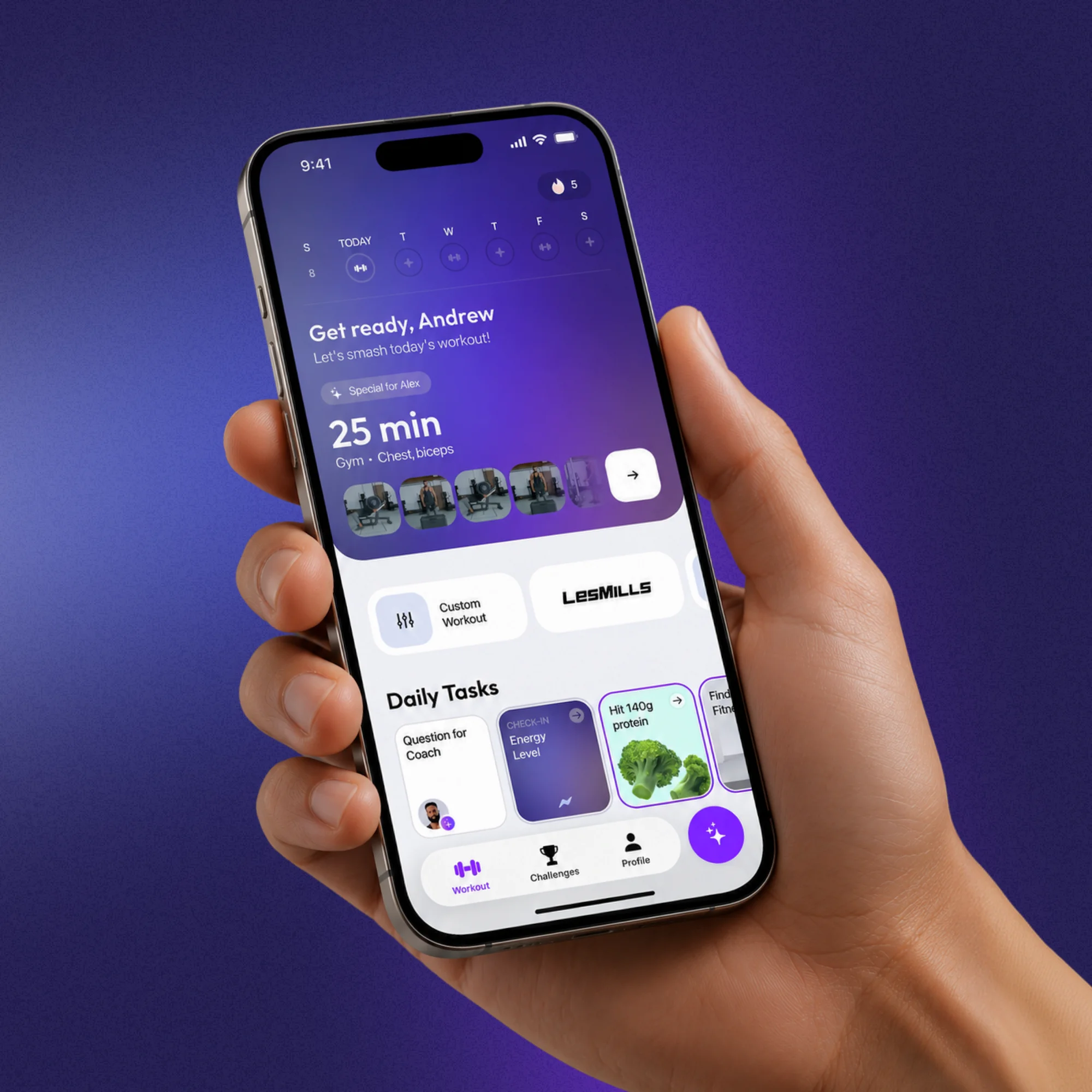
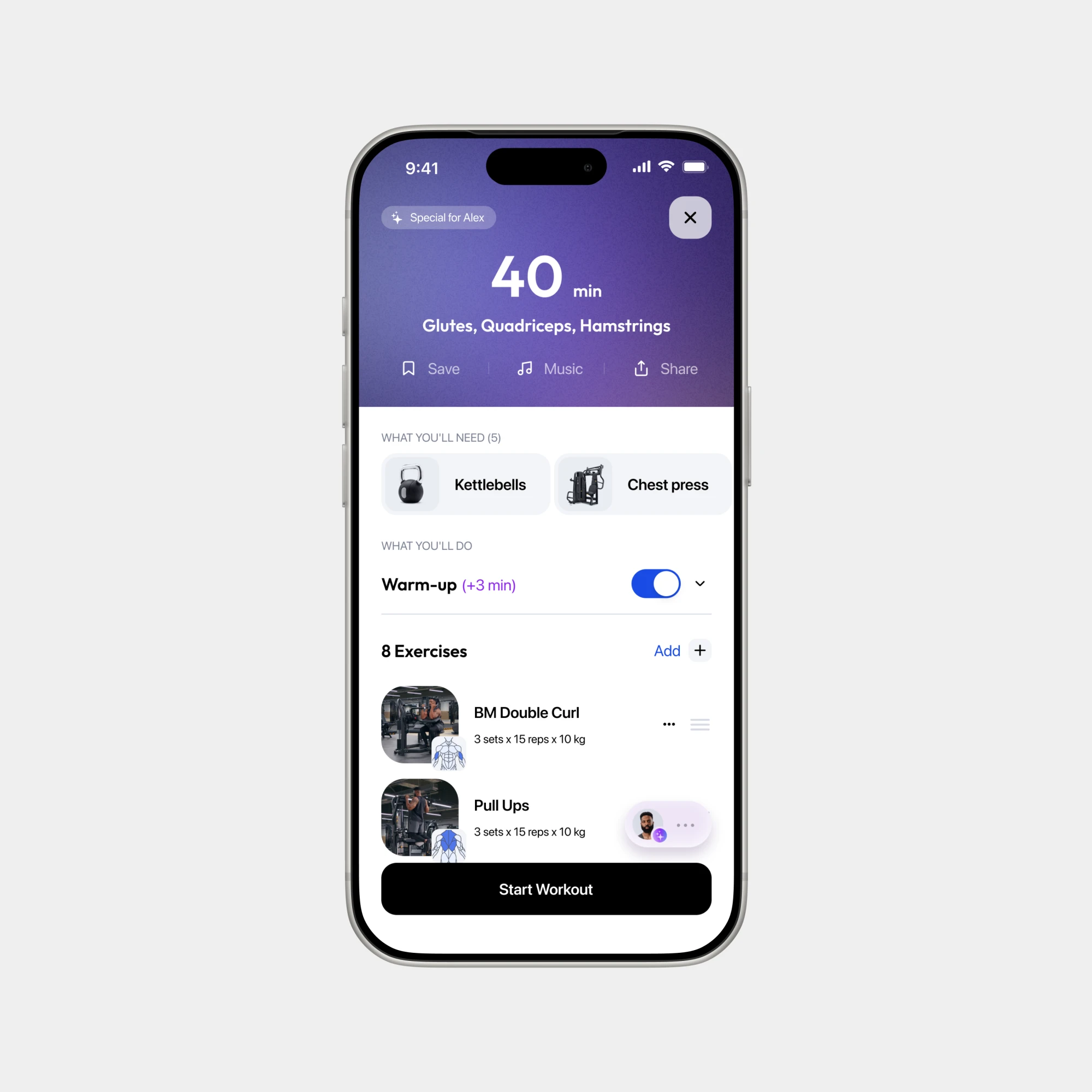
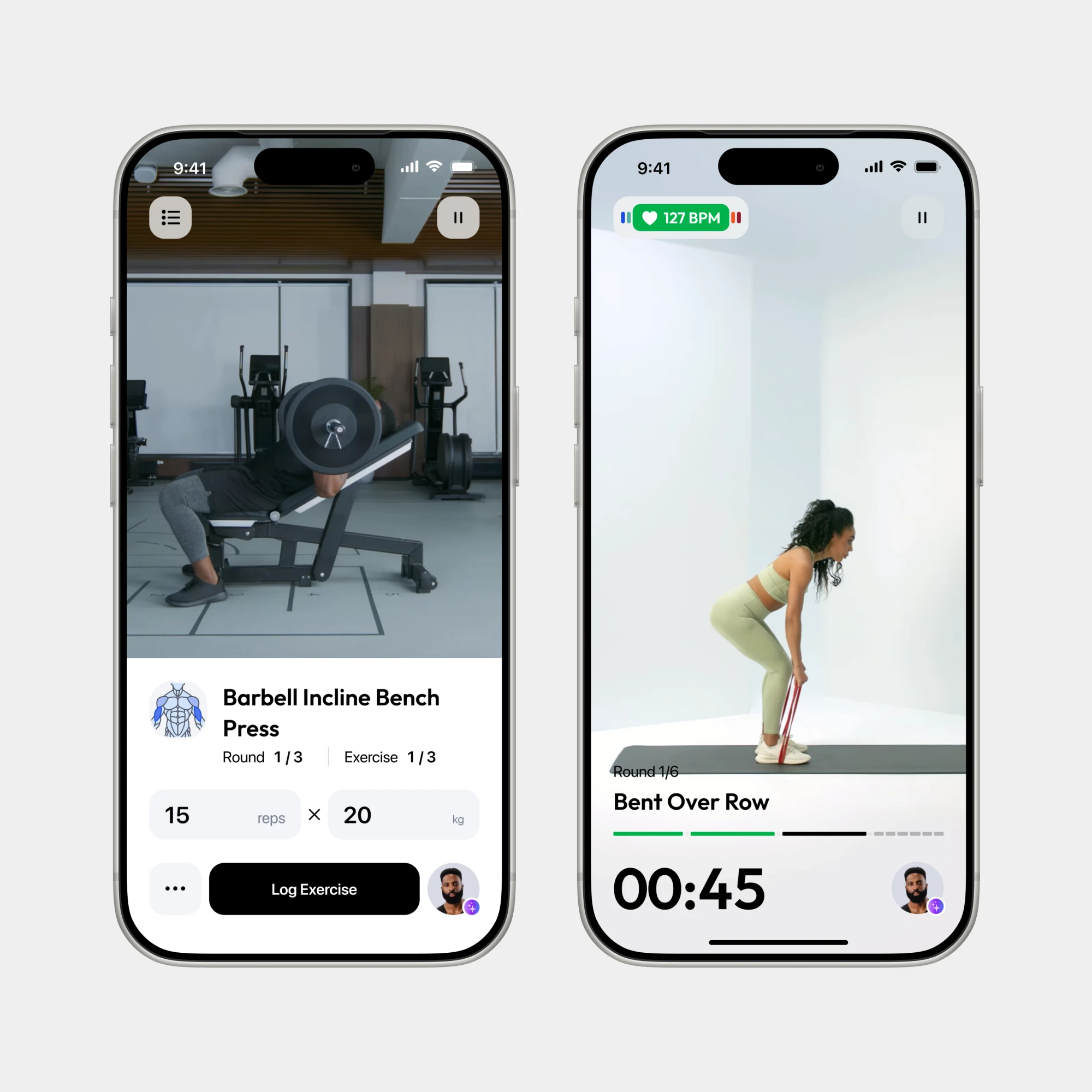
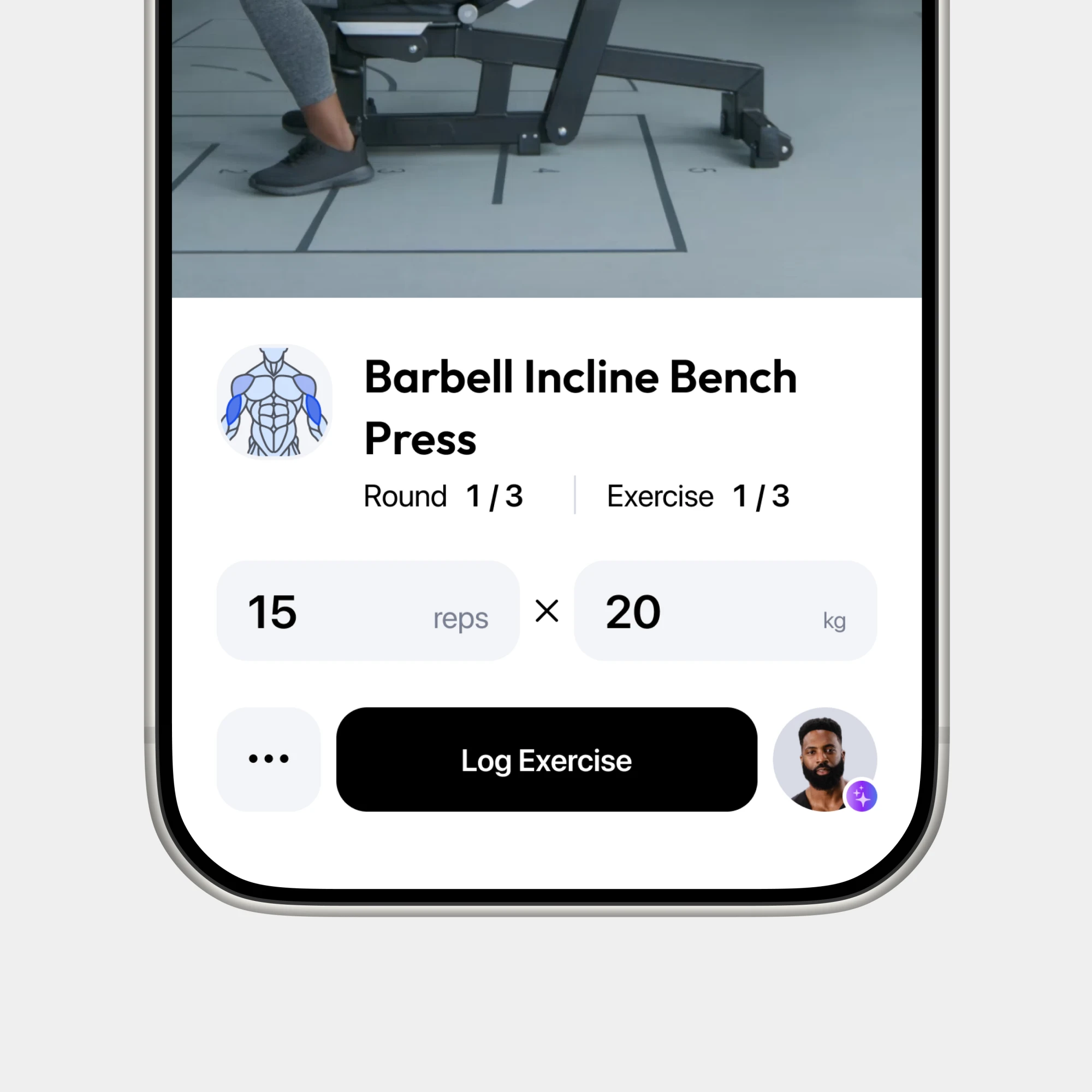
A timer and rep counter felt lonely. Users completed sets but didn't feel coached, with no reason to come back. We tested what made workouts feel coached — guided vs. unguided modes, real-time feedback, coaching cues, acknowledgment — and every unguided version dropped completion. We shipped real-time form feedback, guided reps, coaching cues during rest, and acknowledgment after each set. Guided coaching moved more users through the first four workouts, with completion rising in every test versus unguided modes.
Everything in the first month was designed to get people to four workouts. A simple, unguided mode stayed on the cut list: each experiment in that direction traded completion for convenience. Guided coaching was the more expensive path to build and run; the retention it kept paid for it.
Unpredictable content needs flexible systems
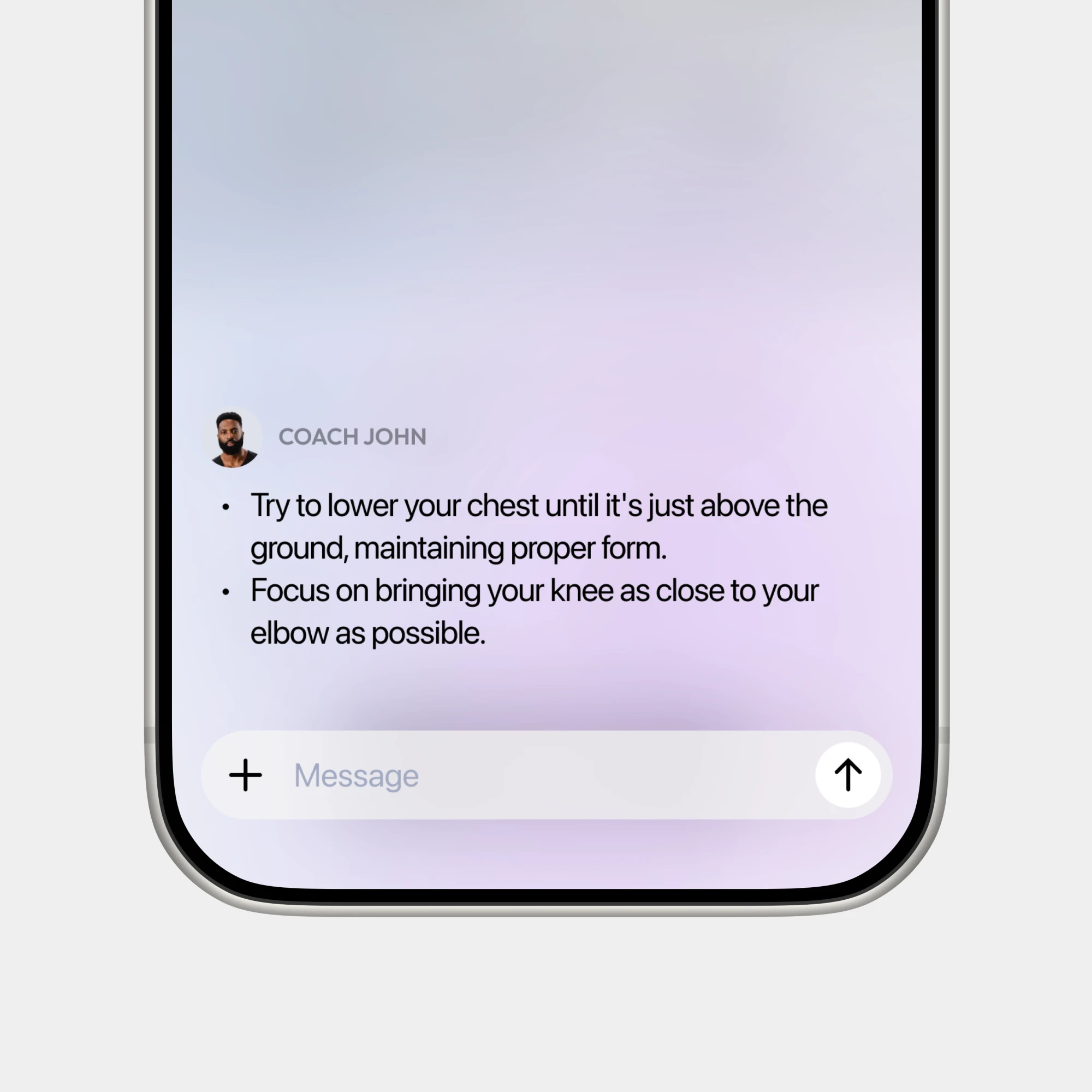
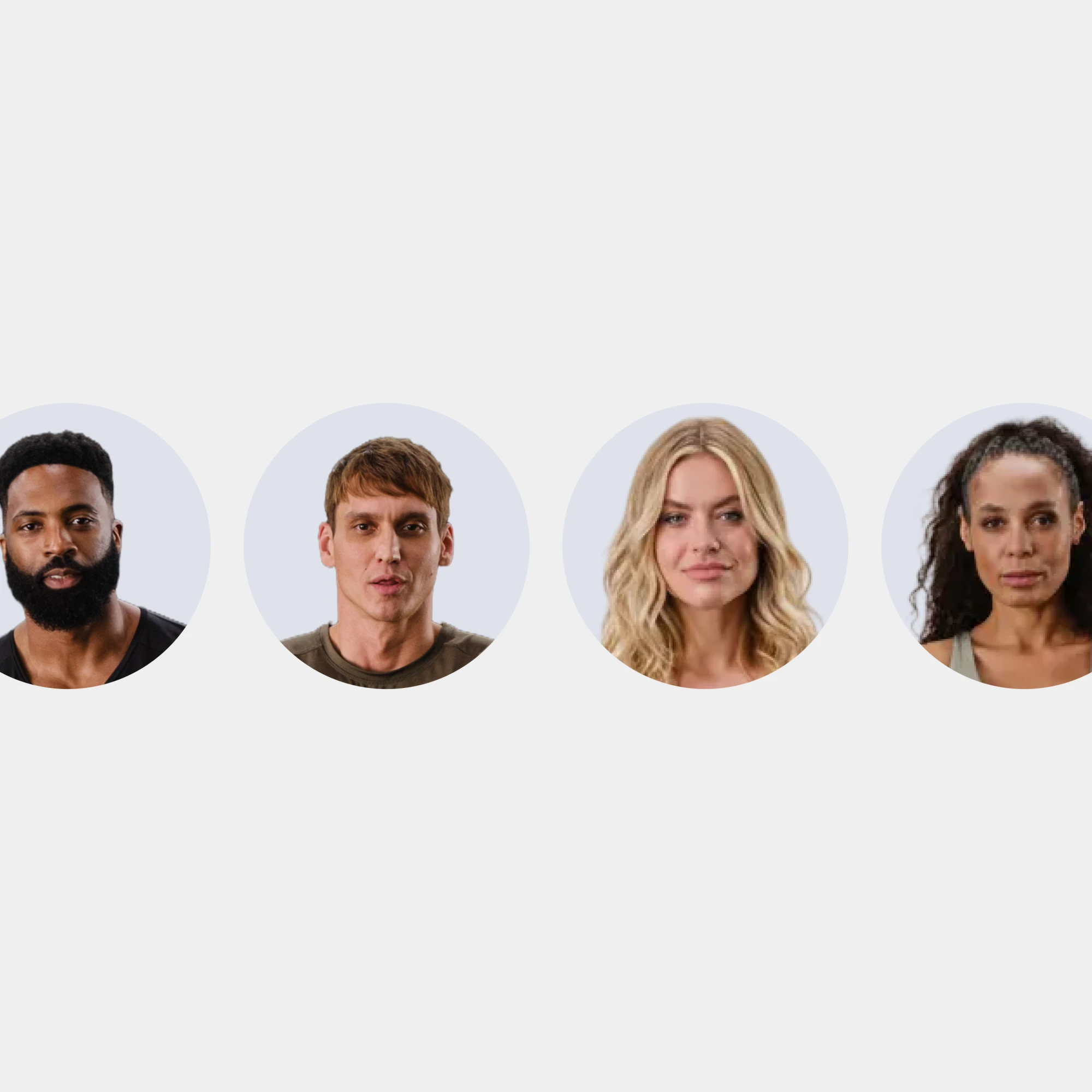
Users needed coaching in the moment — mid-set, mid-rest. But AI answers were unpredictable: one sentence or a novel, impossible to act on during a workout. We tested a standalone chat surface vs. coaching embedded in the workout, and one generic voice vs. personalized coaching tones. We shipped chat embedded in workout context with answers shaped to be actionable mid-set, and rebuilt the design system on flexible min/max rules so any answer stays readable.
Users engaged more when the AI spoke to them as individuals, not when it buried guidance under caveats. So we rewrote the coaching voice from hedged to clear: "This might work for you" read as uncertainty, while a real coach commits to a recommendation, then adapts as they learn more about you. Directive language moved people to act — and the AI kept adjusting from their feedback. The coach still adjusted course when it was wrong — it just stopped hedging every sentence.
+13.6%
Messages per user
Invisible progress kills motivation
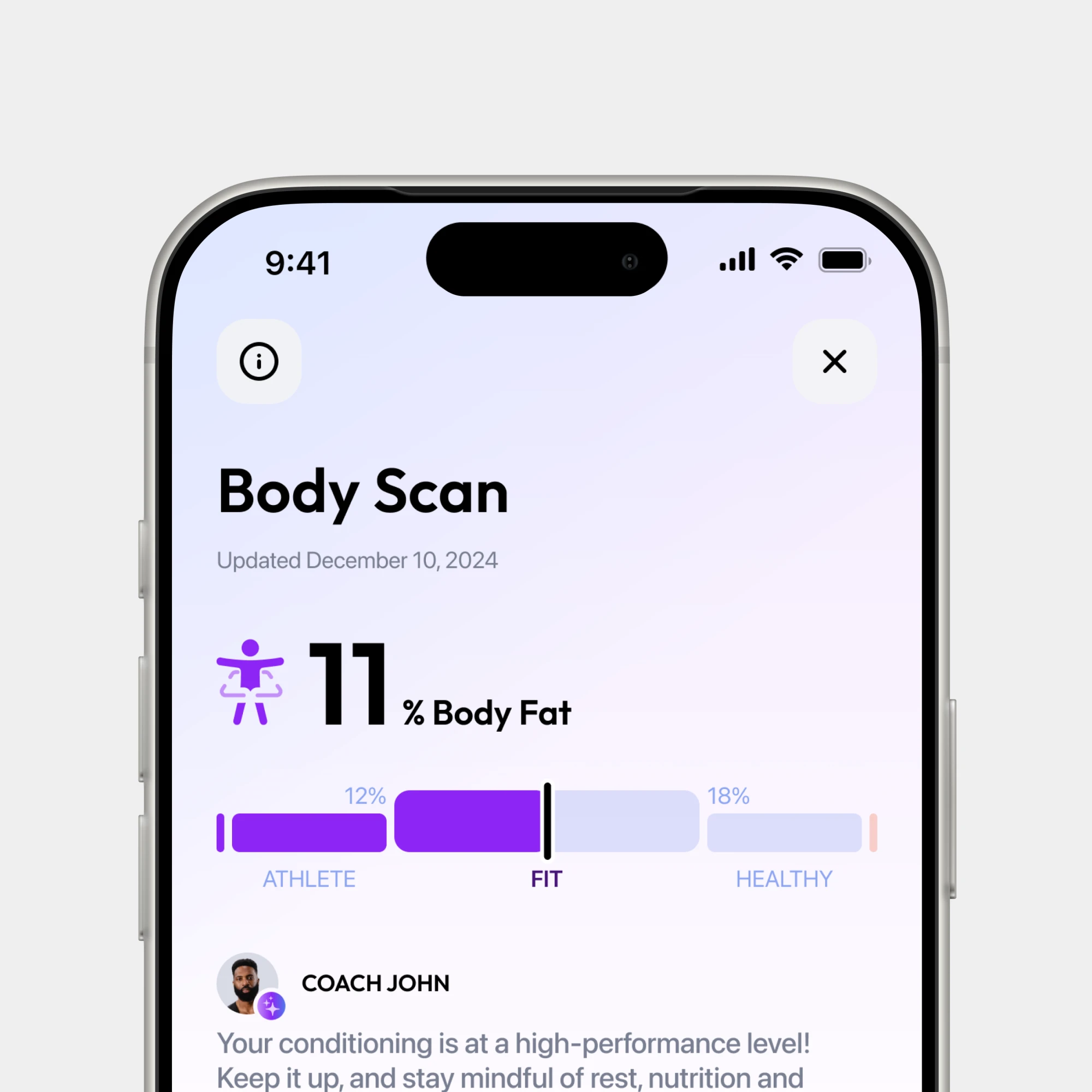
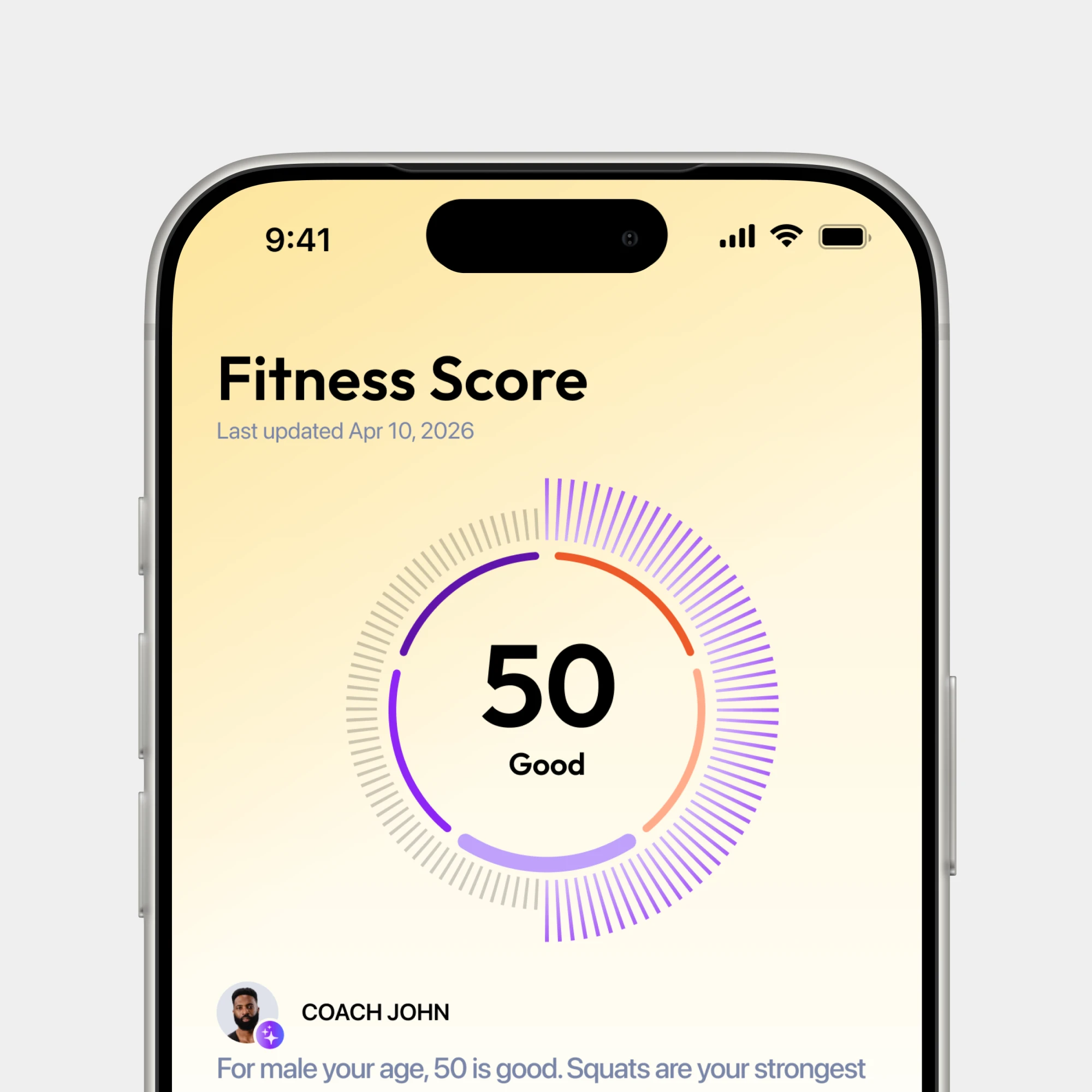
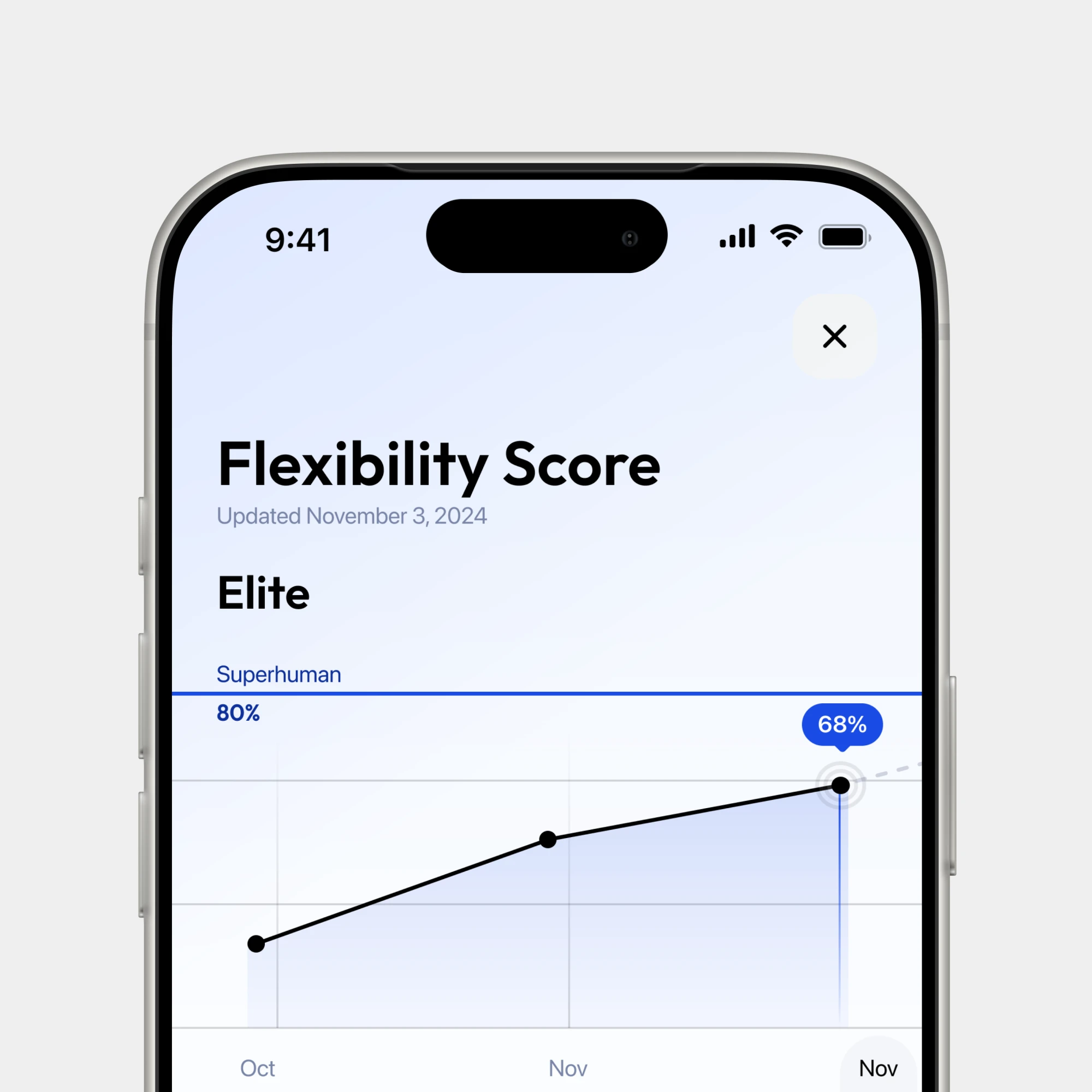
Real fitness progress like muscle and body composition takes weeks, and users quit because they don't see results by day 3. We tested weekly body scans with video comparison, personalized progress plans, activity streaks, and strength progression, measuring which drove the fastest perceived progress. We shipped body composition tracking with visual before/after, a personalized workout and progress plan refreshed weekly, activity streaks, and a Strength Score metric — making the invisible visible without lying.
Making invisible progress visible moved people from frustration to motivation — they stayed because they could see themselves improving. Body scans require hardware, and we didn't build a lower-friction option; the friction of accurate progress tracking was worth it for the engagement it kept.
0.5M
Body scans completed
60%
Viewed Strength Score

Reframing data collection as personalization
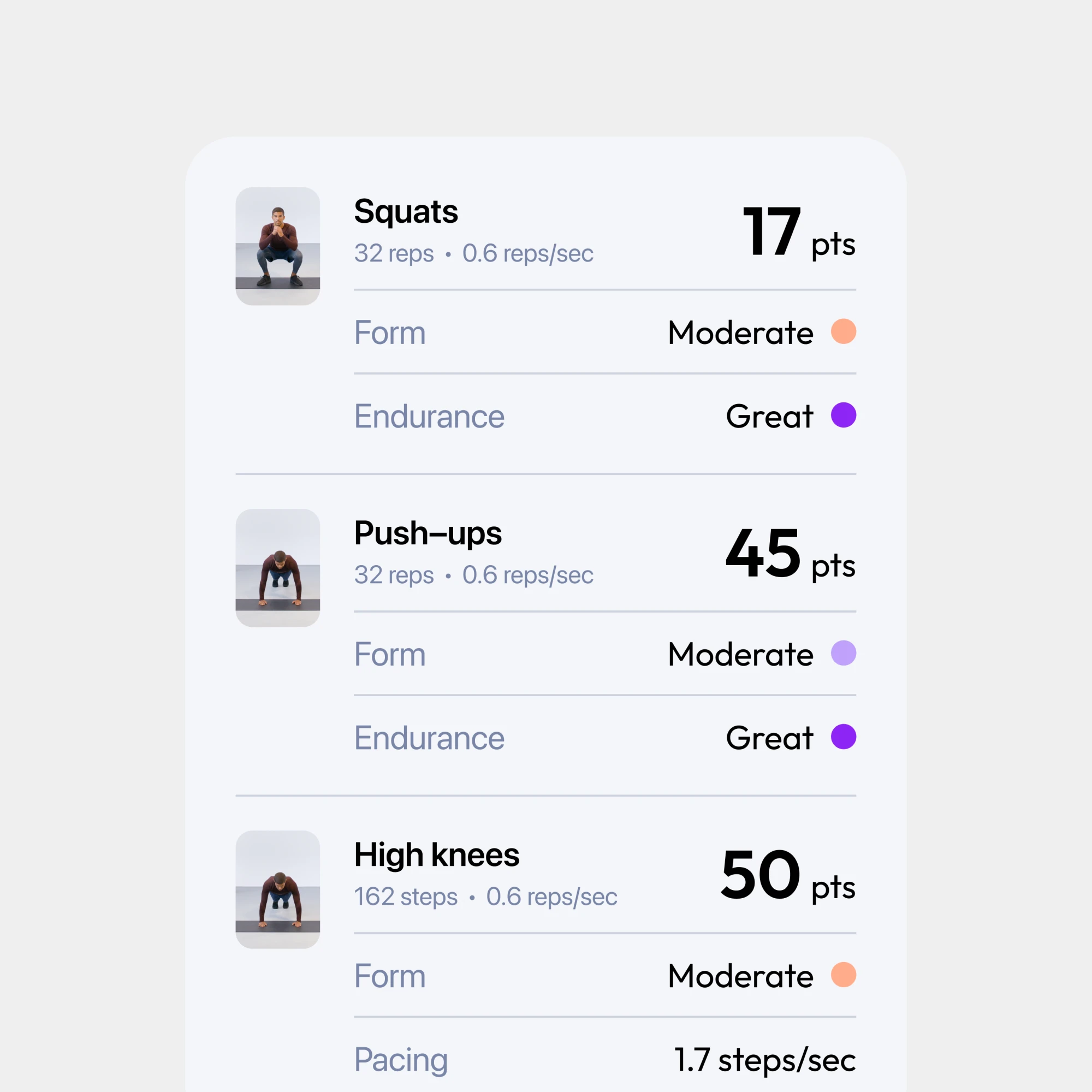
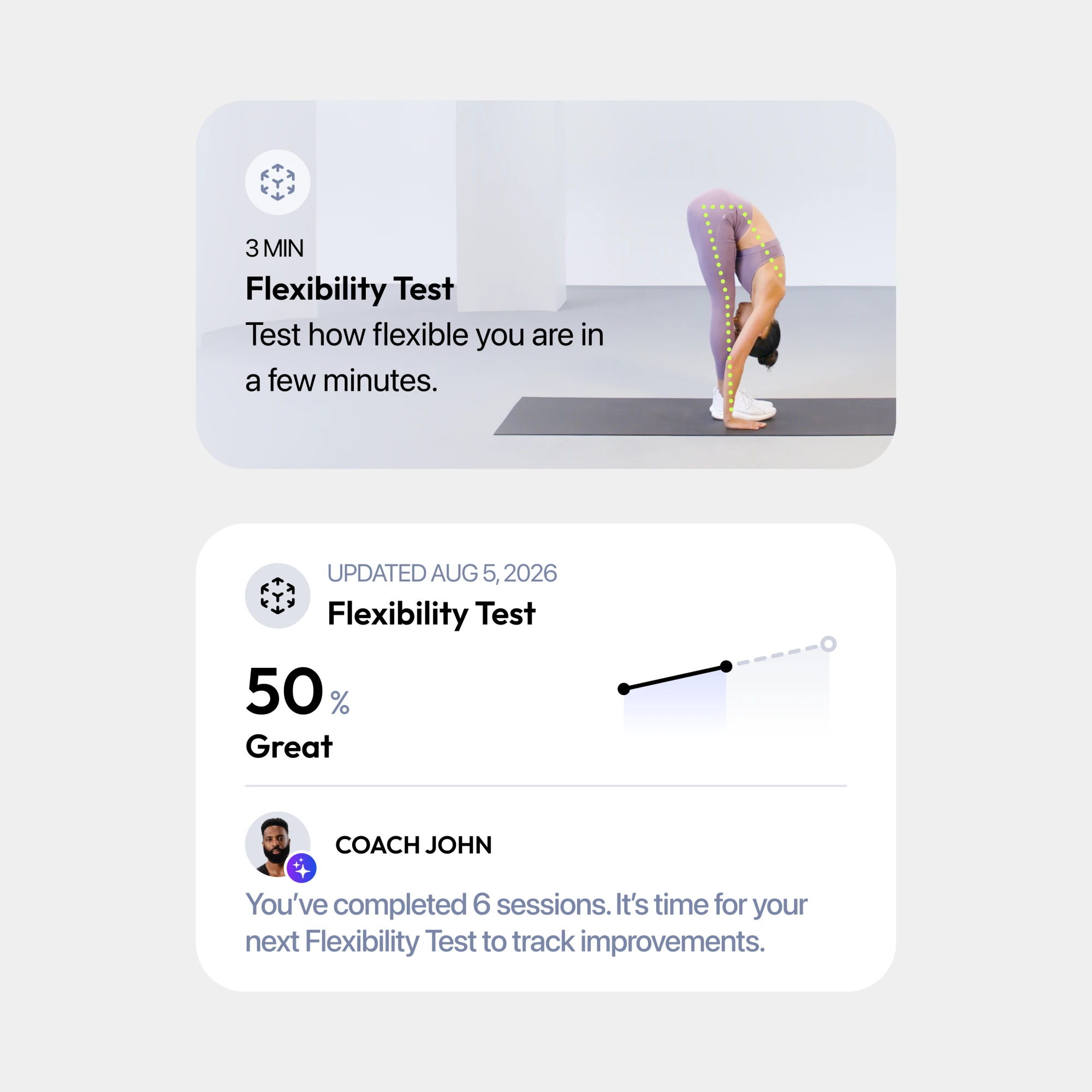
Users treated the fitness test like an exam — something to get in shape for first, then pass. So they skipped it, and we lost the data that personalized their plans. We tested copy, timing, and positioning — "assessment" vs. "personalization" framing, and at which moment to ask. We reframed it as "Let's learn what works for you" and surfaced it at the moment it clearly powered their plan, not as a gate to pass.
The same questions became welcoming instead of intimidating. The full assessment fed the personalization, so the friction had to be solved with framing and timing rather than fewer questions.
78%
Assessment completion
When to coach instead of correct
Early-stage users have bad form. Correcting them creates friction, but bad form causes injury and dropout. We tested real-time correction vs. coaching through good form, measured on engagement and injury-related drop-off. We shipped coaching cues that guide form without stopping the workout — flexible movements, proper breathing, safe progressions.
Coaching through safe movement worked better than stopping people mid-exercise to correct form. Coaching language is harder to build than error messages, and we invested in it anyway.
Day 30
Injury-related drop-off
Nutrition after the workout habit
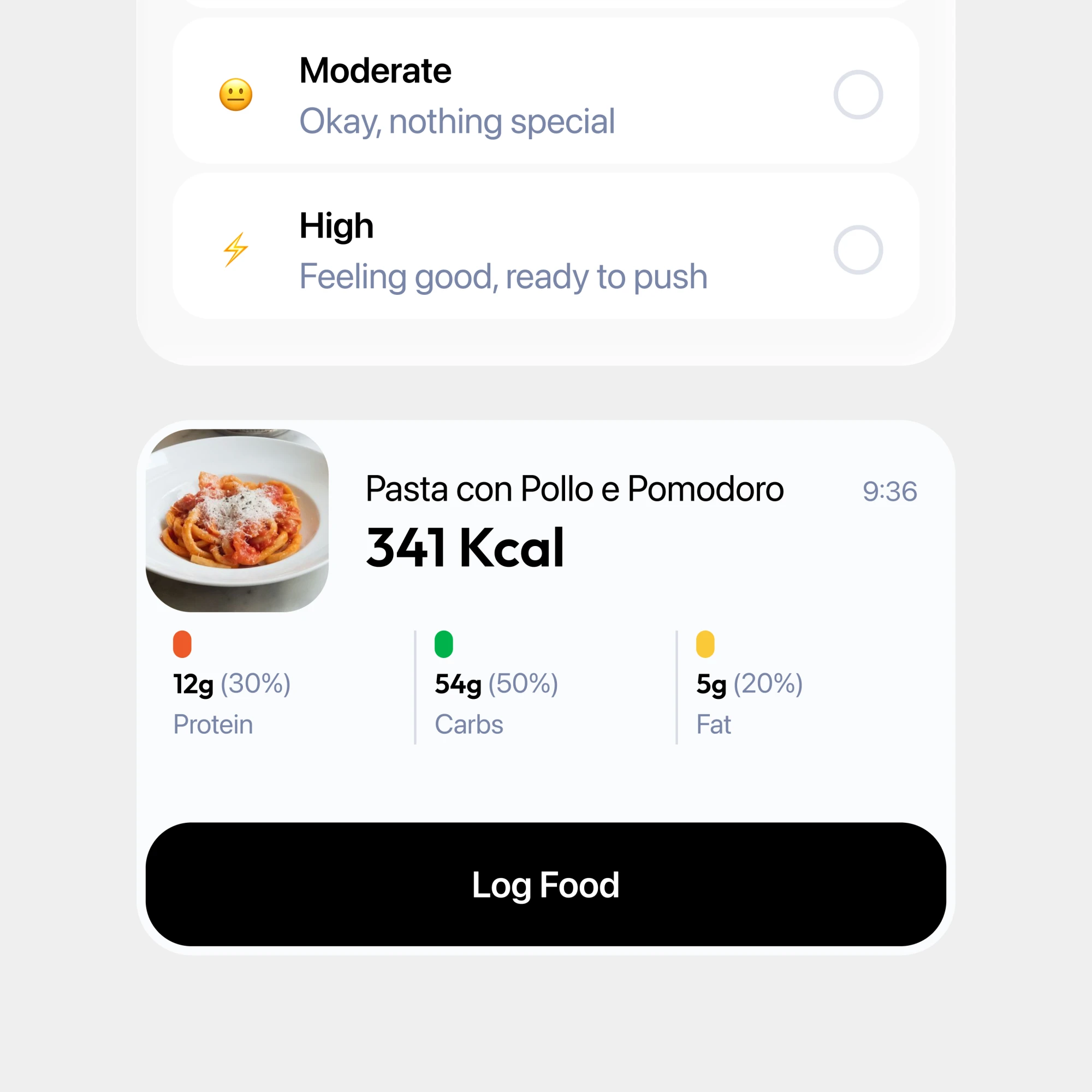
Nutrition matters for fitness results, but adding it early overwhelms users — the challenge was finding the right moment to introduce it. We tested nutrition in onboarding vs. after the first 10 workouts, along with timing, copy, and AI coach integration. We shipped nutrition after users had built the workout habit, with an AI coach that understands their specific goals and preferences.
Introducing nutrition after workout-habit formation meant people actually stuck with both. We delayed it to focus on the workout habit first, which meant a smaller initial feature set and slower time-to-value for people who care about diet.
2×
90-day retention
Consistency beats novelty
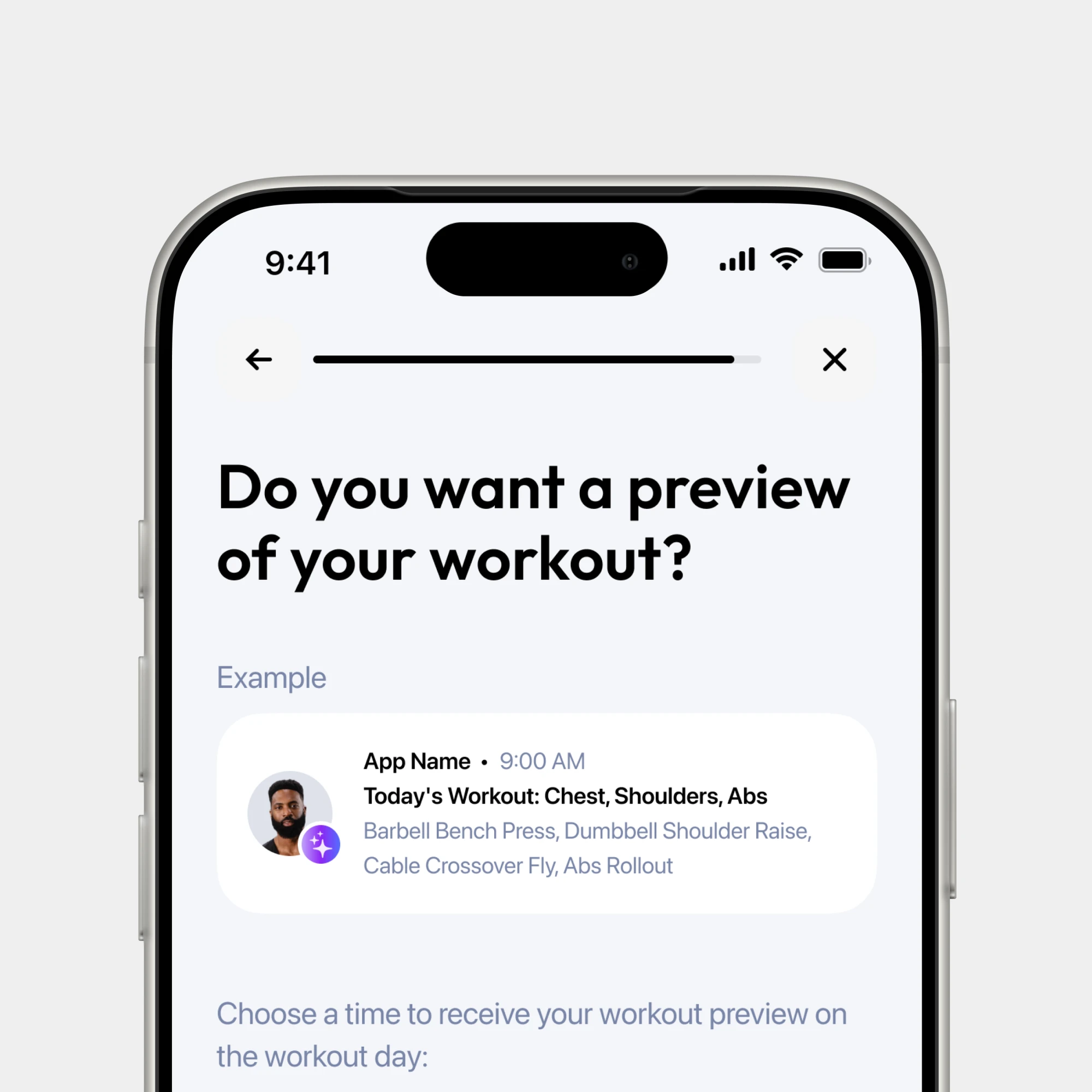
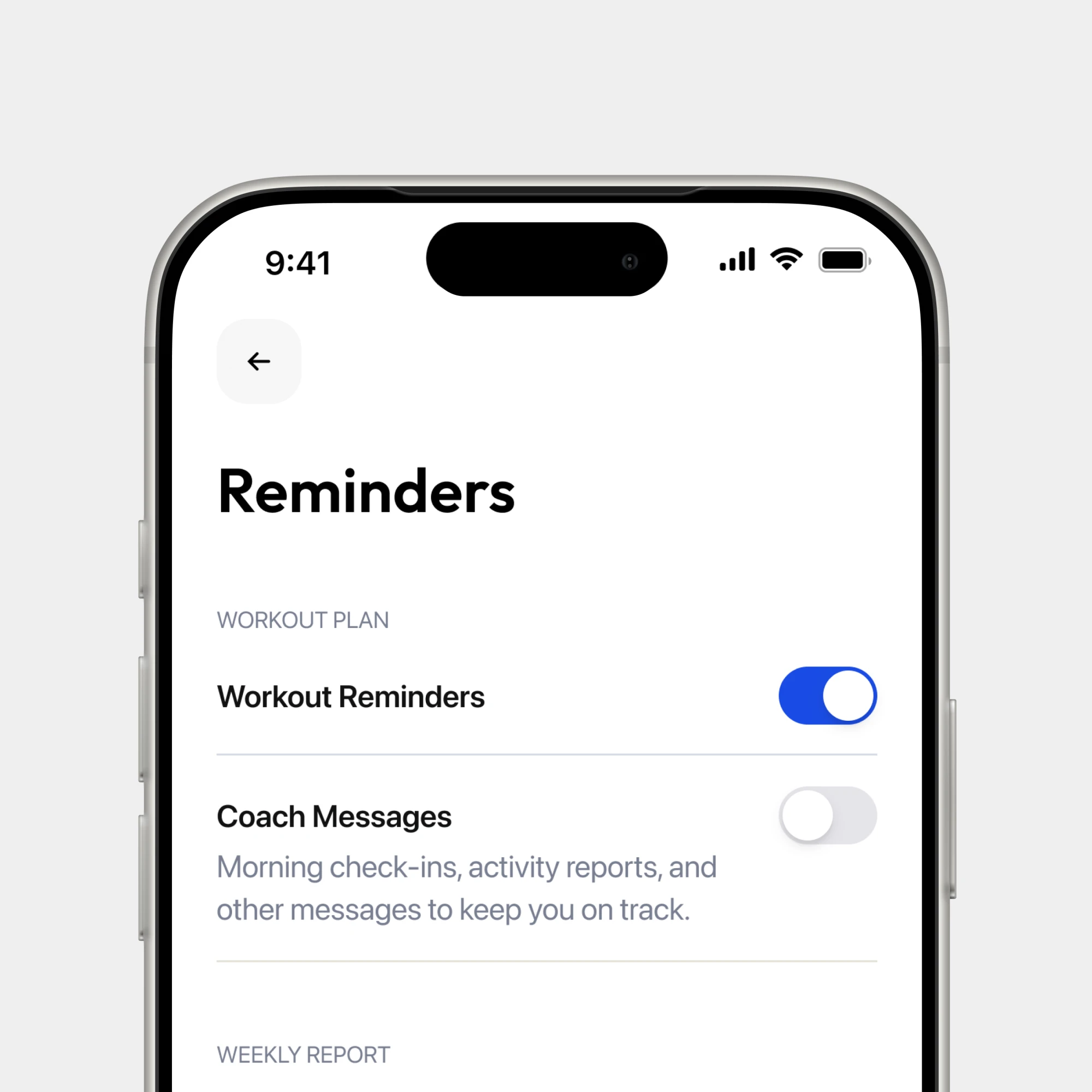
Notifications become noise — most apps train users to ignore them, so ours had to stay useful without becoming annoying. We tested frequency, timing, AI personalization, and copy — simple vs. clever, scheduled vs. adaptive. We shipped a consistent daily notification at the user's preferred time, proactive morning check-ins from the coach, and a personalized weekly summary of what they achieved, how it moved their progress, and the plan ahead. Every follow-through metric moved — sessions started, opens after a morning check-in, workouts completed within a day.
Predictability beat novelty. We didn't personalize notification content deeply — consistency mattered more, and people knew when to expect a message and trusted it was relevant.
+28%
Notification opens
+19%
Session conversion
Retention that compounds
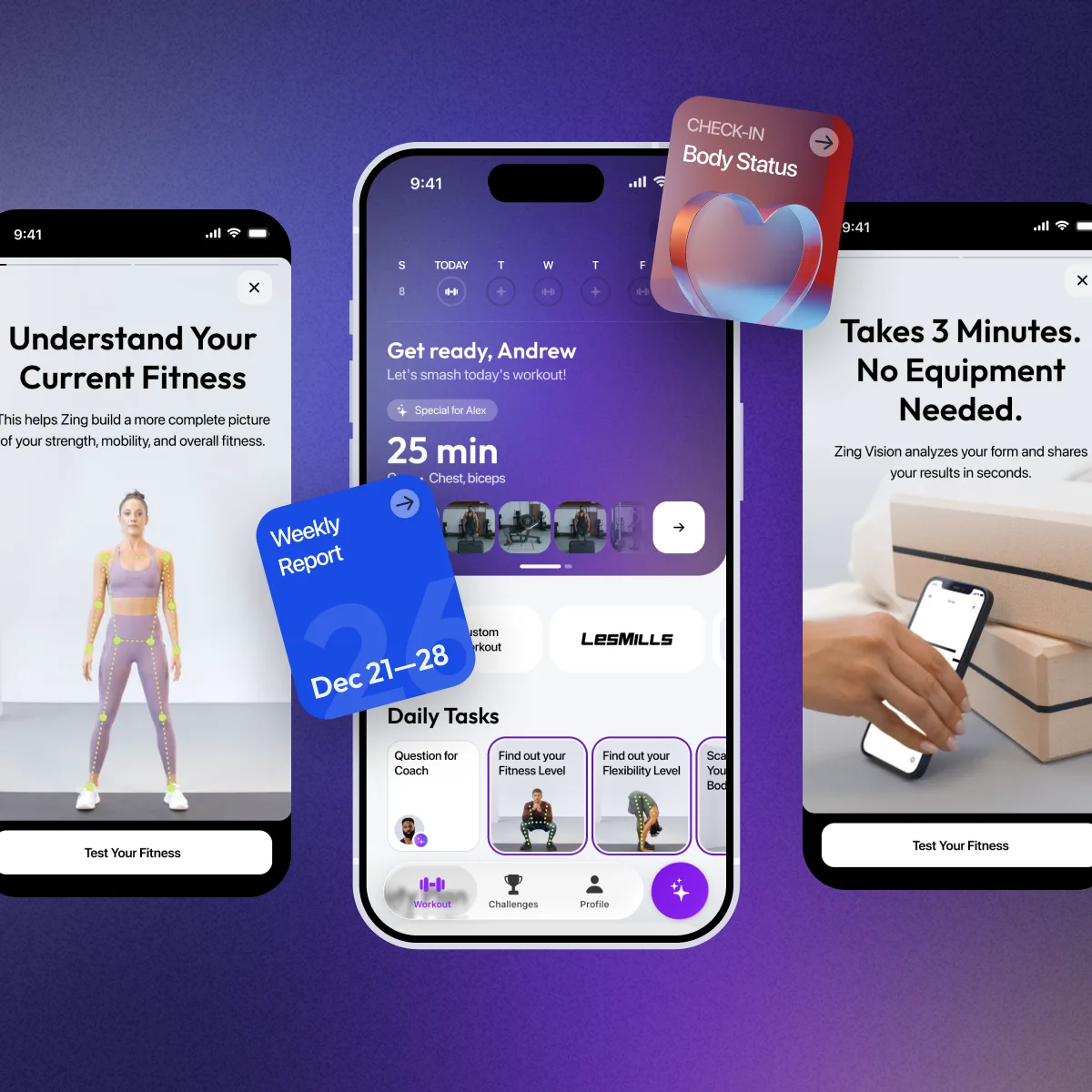
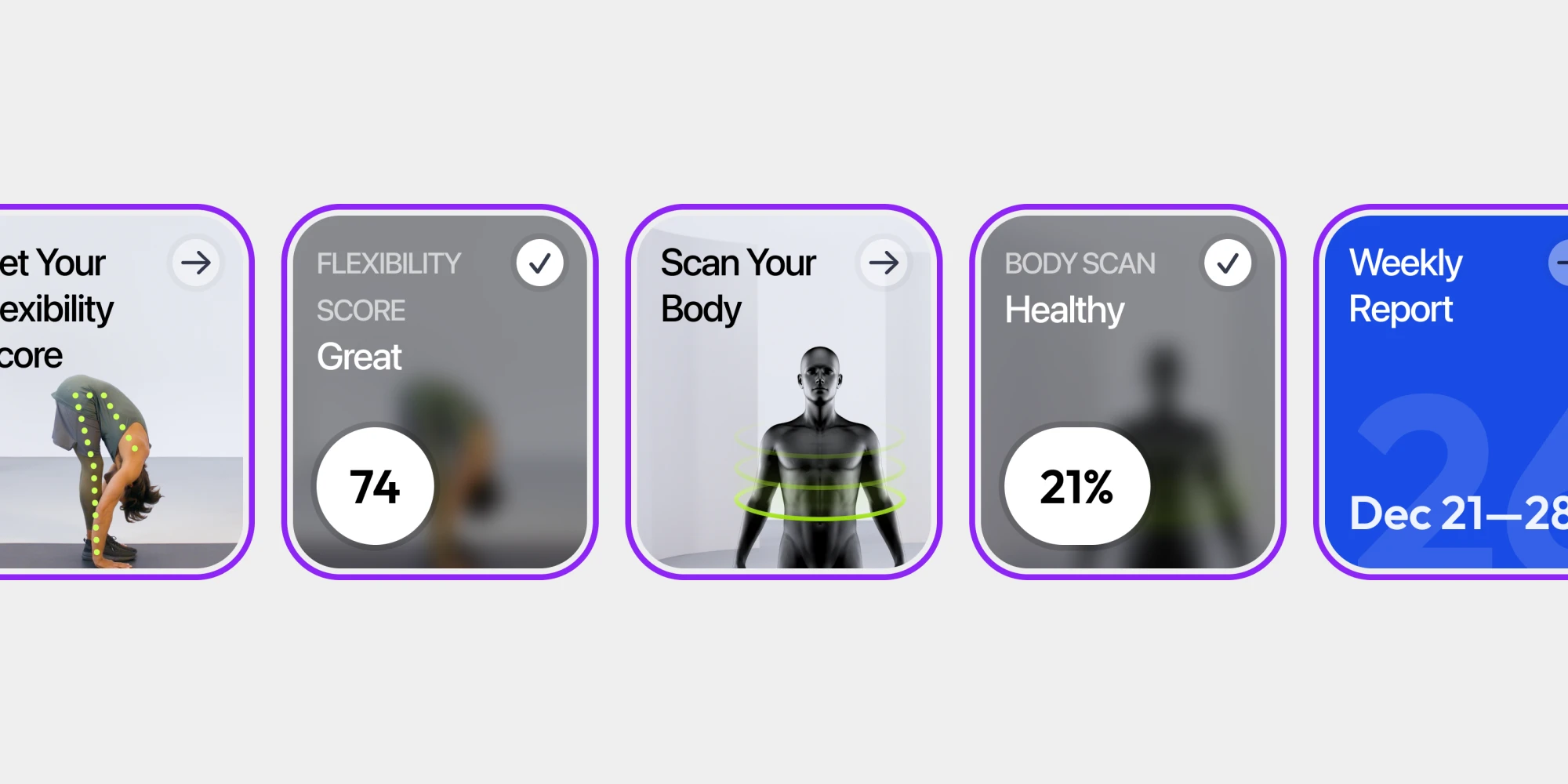
The AI coach lifted motivation, but engagement across the rest of the product stayed uneven — users lacked a daily, personal reason to open the app beyond the workout itself. We ran an A/B test on ~19,400 users: a personalized Daily Tasks feed on the Home tab — coach check-in, muscle readiness, tests, and progress cards — against the existing static section. We shipped the Daily Tasks feed, refreshed once a day, to all users as the base for personalizing every user's day.
The effect was invisible in week one and undeniable by week four — retention compounded as the habit loops took hold. Decomposition showed exactly where it came from: stronger progress feedback loops through Body Scan and more conversations with the coach. Tests we didn't touch stayed flat, confirming the mechanism rather than a general novelty effect.
+3.3pp
Week-4 retention
What this taught me
Retention isn't one big feature. It's a thousand small choices about whether to add friction for better results, or remove it for better adoption. Sometimes the answer changes week-to-week as people build the habit.
The hardest part isn't design or engineering. It's staying disciplined about what matters: does this choice actually improve retention, or is it just polish? I said no to a hundred features to say yes to the right nine decisions.