Expert Network Platform
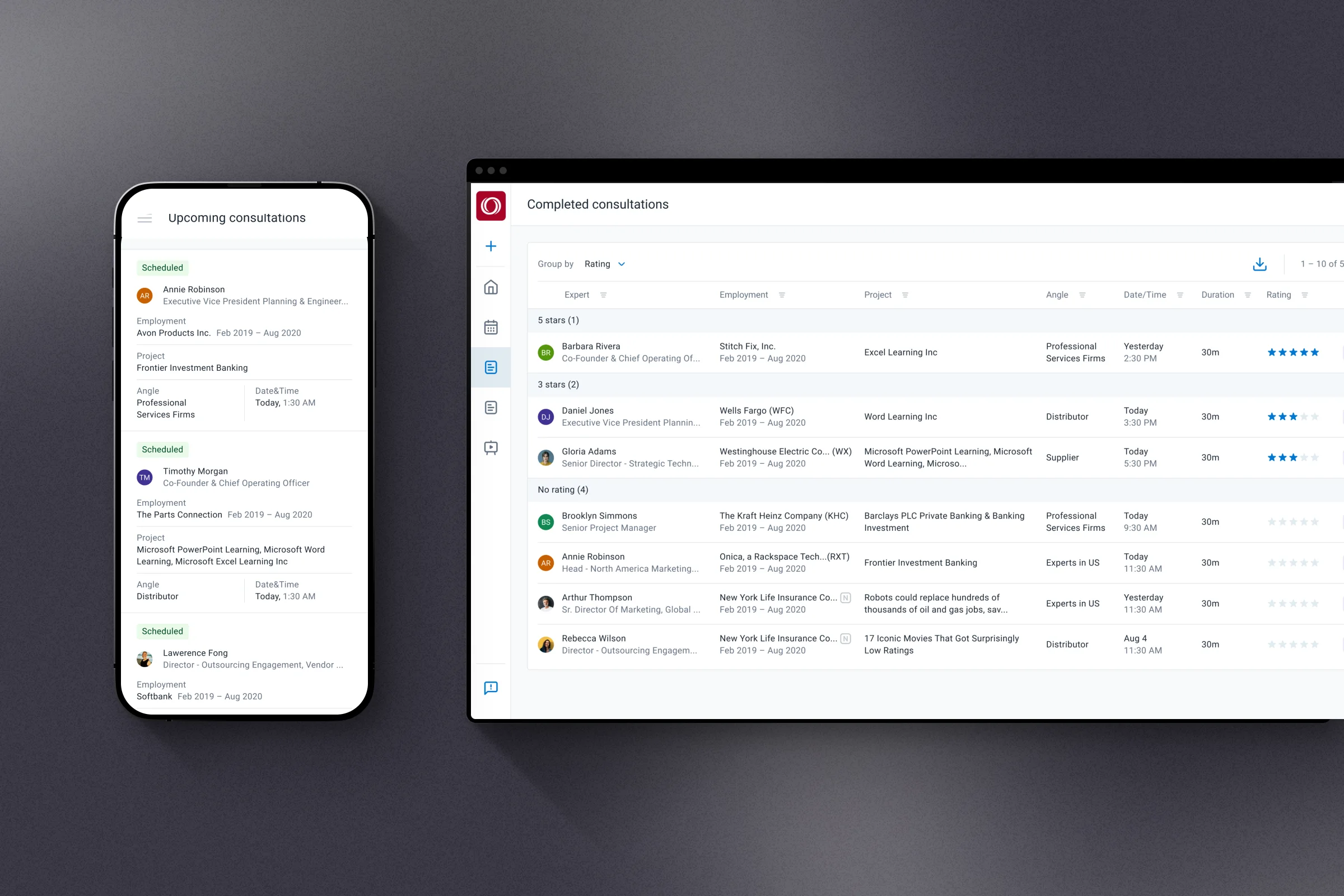
Expert calls at Coleman Research Group used to run on email, phone, and internal tools — every step of the cycle in a different place. I rebuilt the workflow as one platform: four connected apps that carry a request from first search to expert payment, for clients, experts, compliance officers, and staff.
- Role
- Product Design Lead
- Timeline
- 2019 — 2021
- Contribution
- Enterprise UX, Service Design, Design Systems
Key numbers
The scale behind the redesign — how usage and speed changed between 2019 and 2021.
- 38k → 95k
- Expert app MAU
- 2.1k → 5.2k
- Client app MAU
- 3 days → 2 hrs
- Compliance review
One cycle, four apps
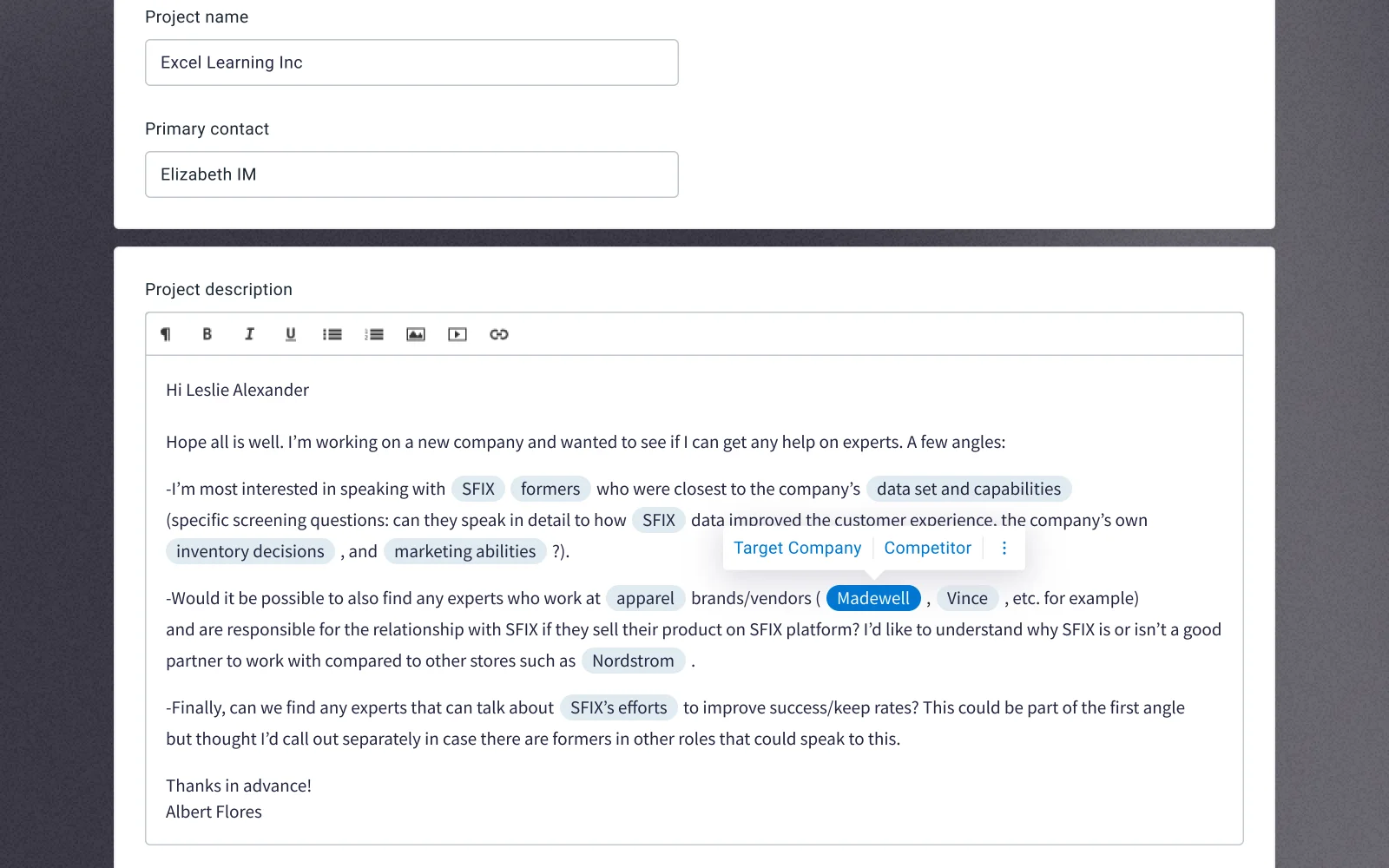
A client books an expert call in 11 steps — submit the request, define angles, review suggested experts, qualify, schedule, clear compliance, talk, rate, pay. Before the redesign those steps lived in emails, phone calls, and staff spreadsheets stitched together by hand.
I designed it as an ecosystem where each audience gets its own app — Client, Expert, Compliance, Staff — and the workflow moves between them without leaving the platform.
Rebuilding the client app
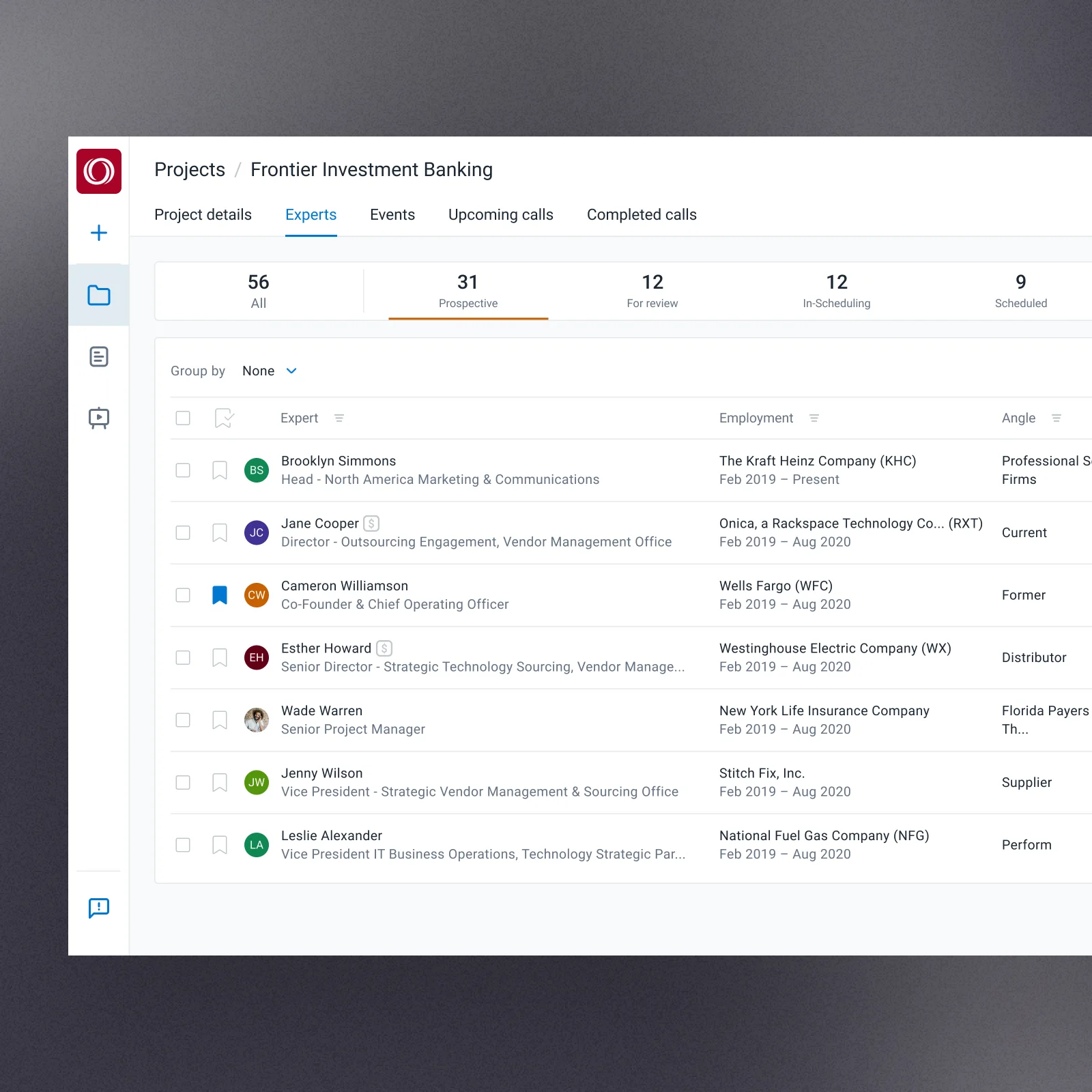
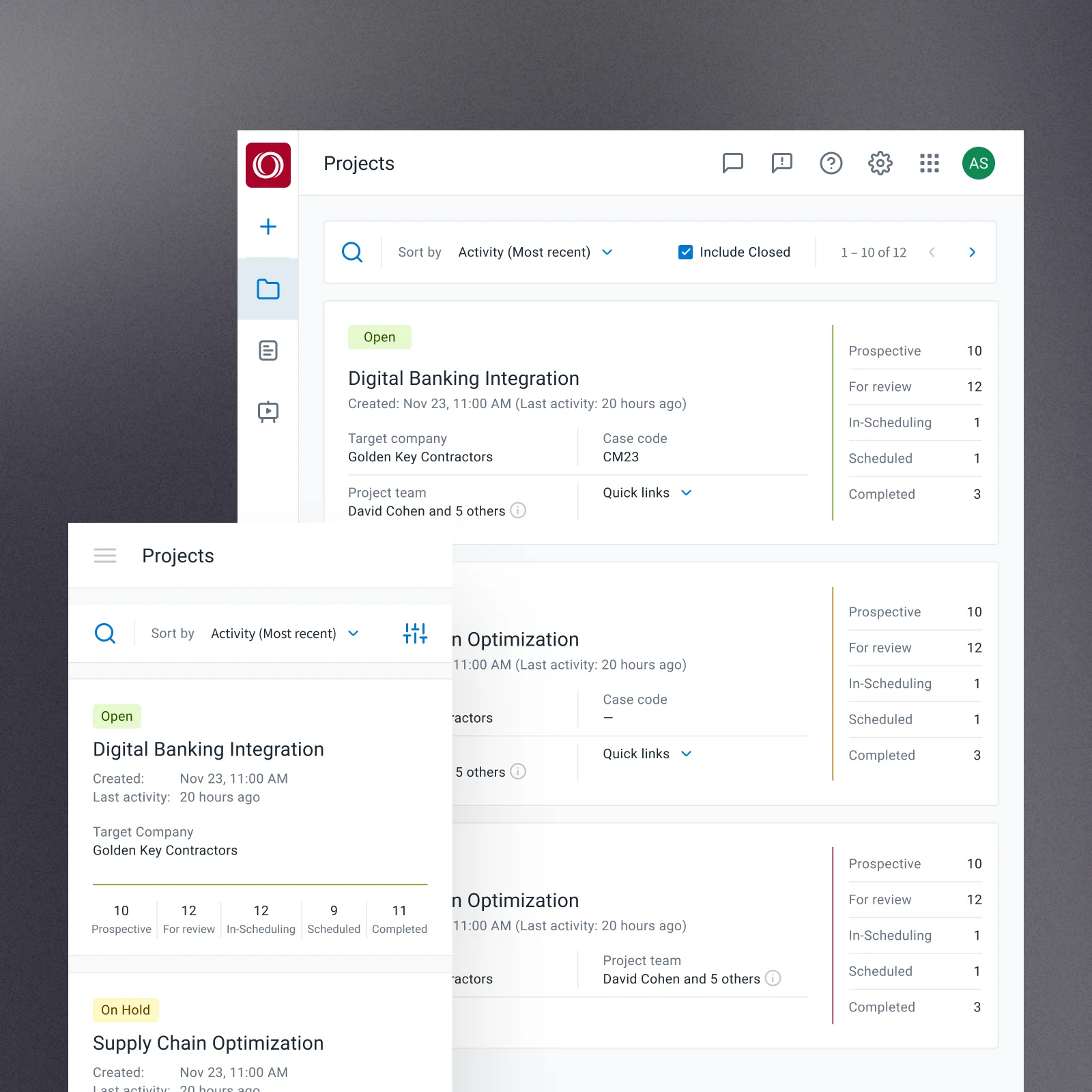
Clients come to an expert network for speed: a call this week, an insight before the deal closes. But the old app could not answer their most basic question — what is happening with my project right now? So clients emailed, account managers dug through the system, and hours were lost on both sides. I put the pipeline on the surface: every project shows its experts by stage, from review to completed, with search, case codes, and sorting that match how investment teams actually file their work.
Scheduling without the back-and-forth
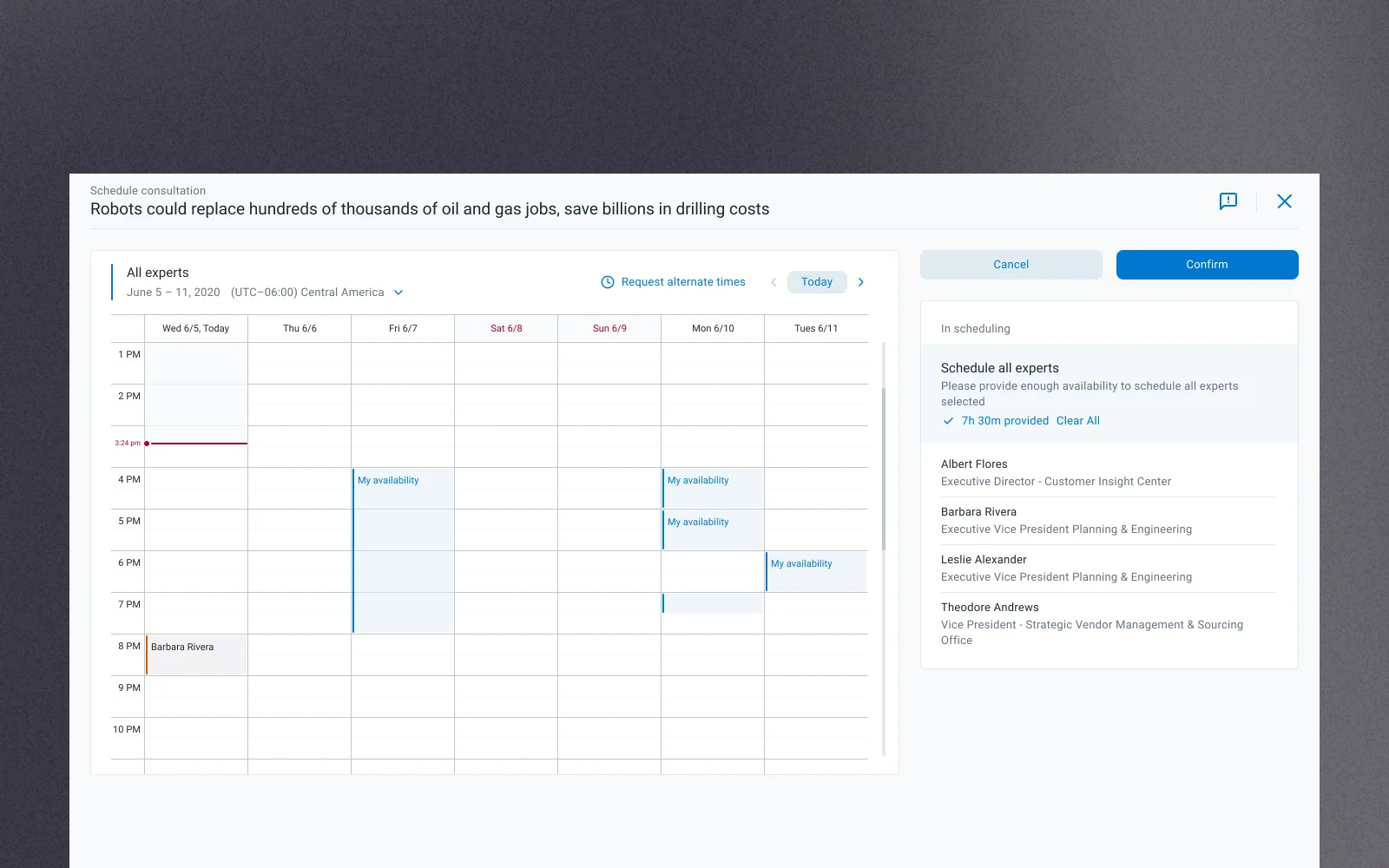
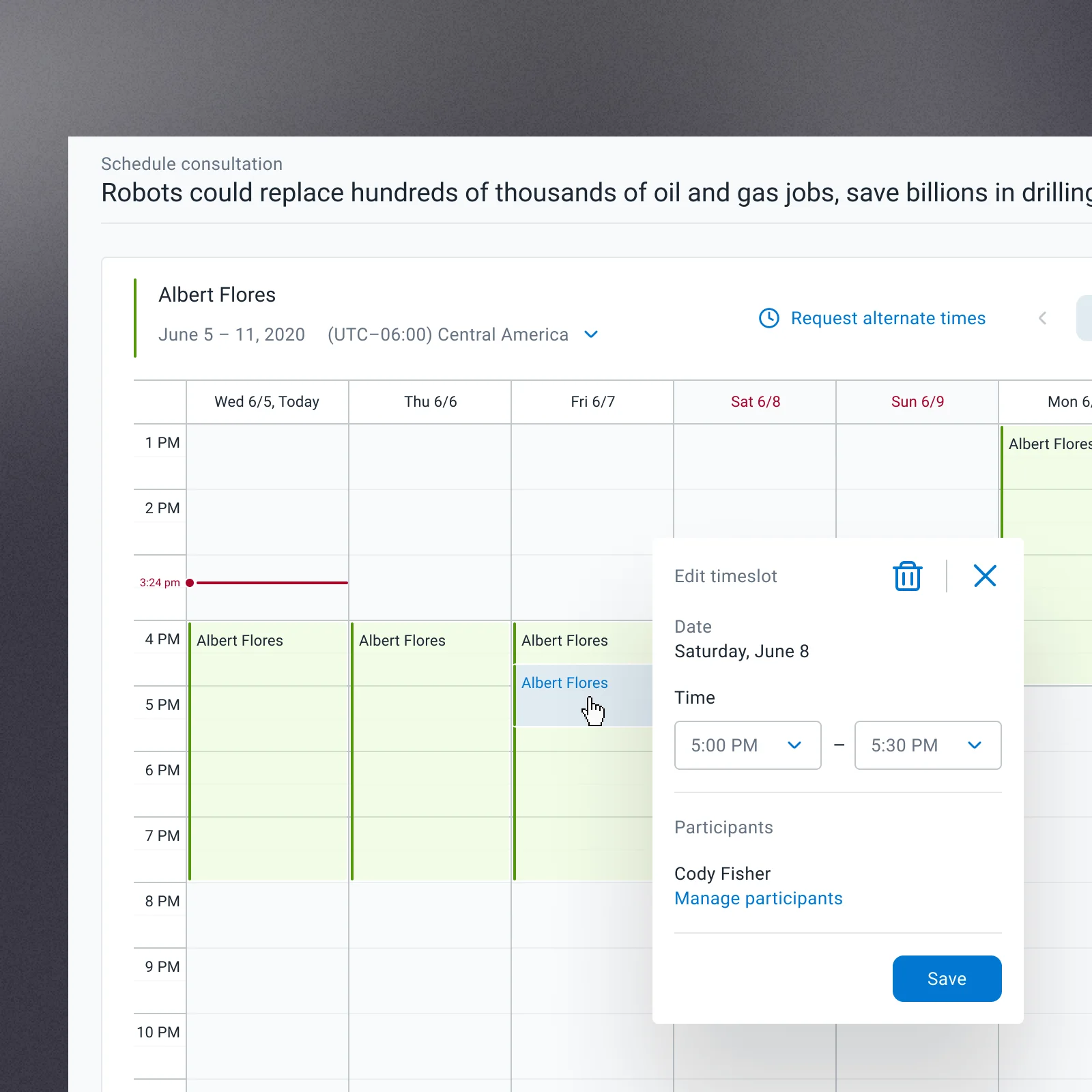
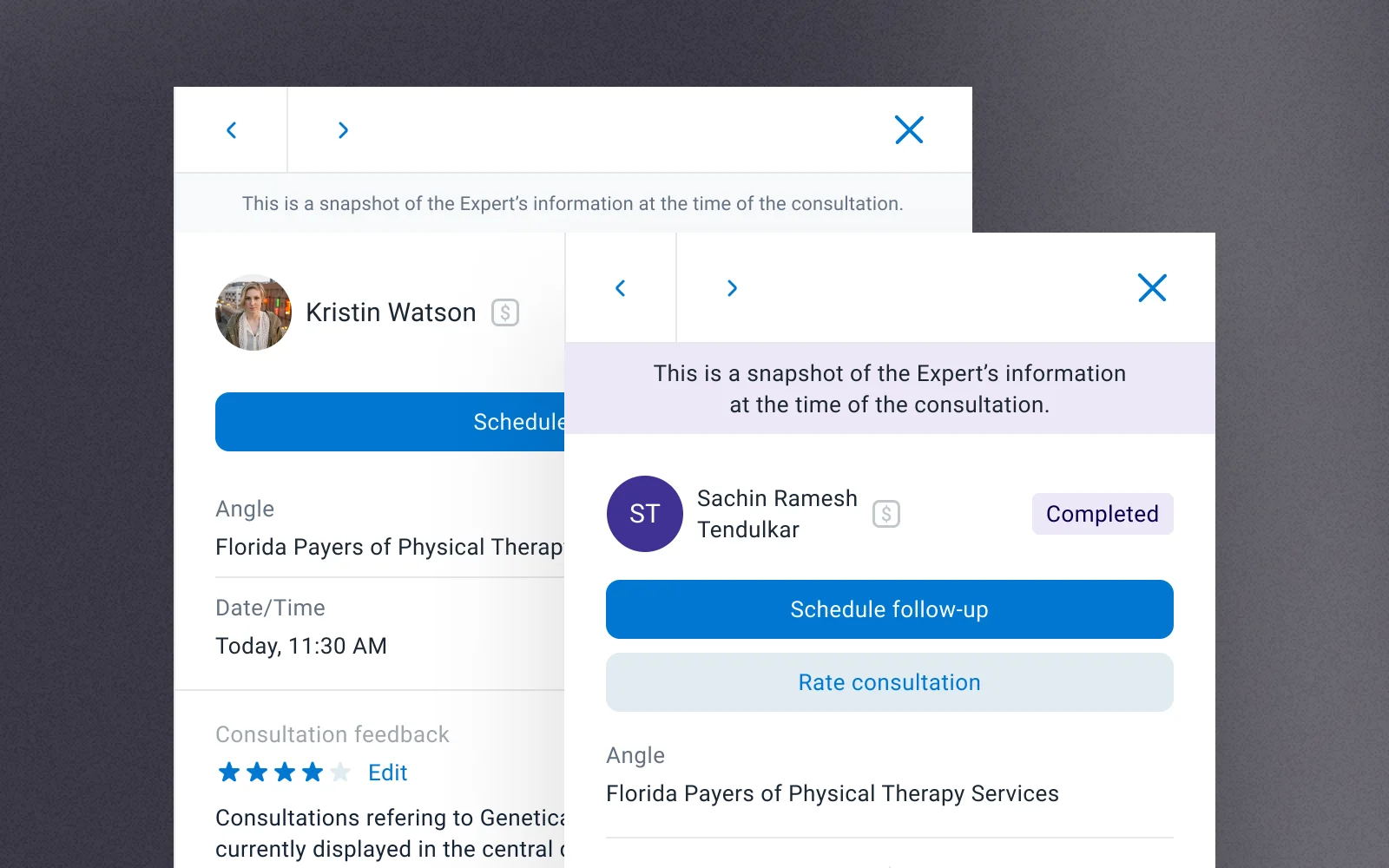
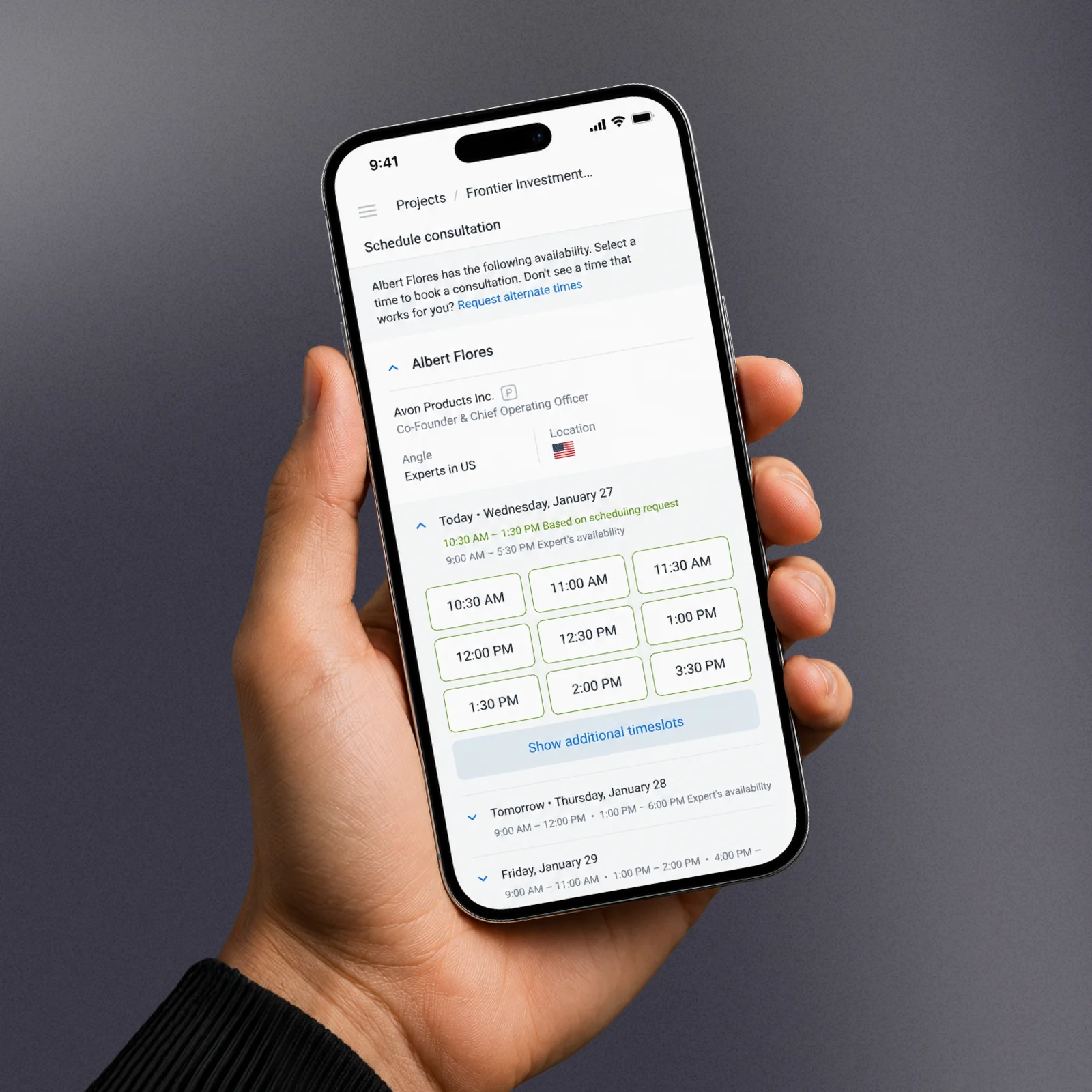
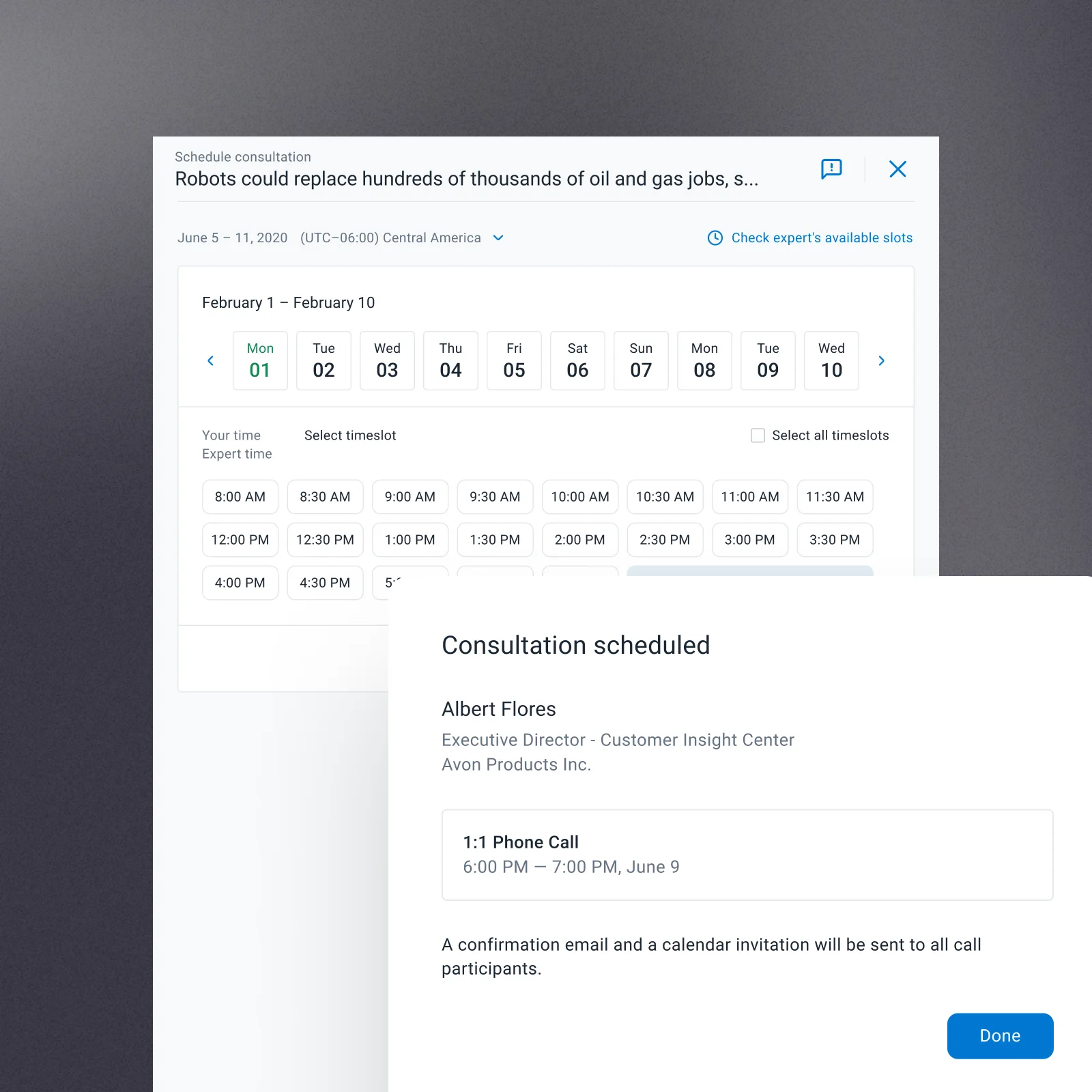
A booked call is the product — it is the moment the network earns its fee, and it was the easiest place to lose one. Booking went through account managers: rounds of emails to find a time while the expert drifted off the market. I made scheduling self-serve — clients see an expert's live availability, pick a slot, and reschedule without a human in the loop, from any device, mid-meeting or on the way to one.
6 → 0
Emails to book a call
A design system against technical debt
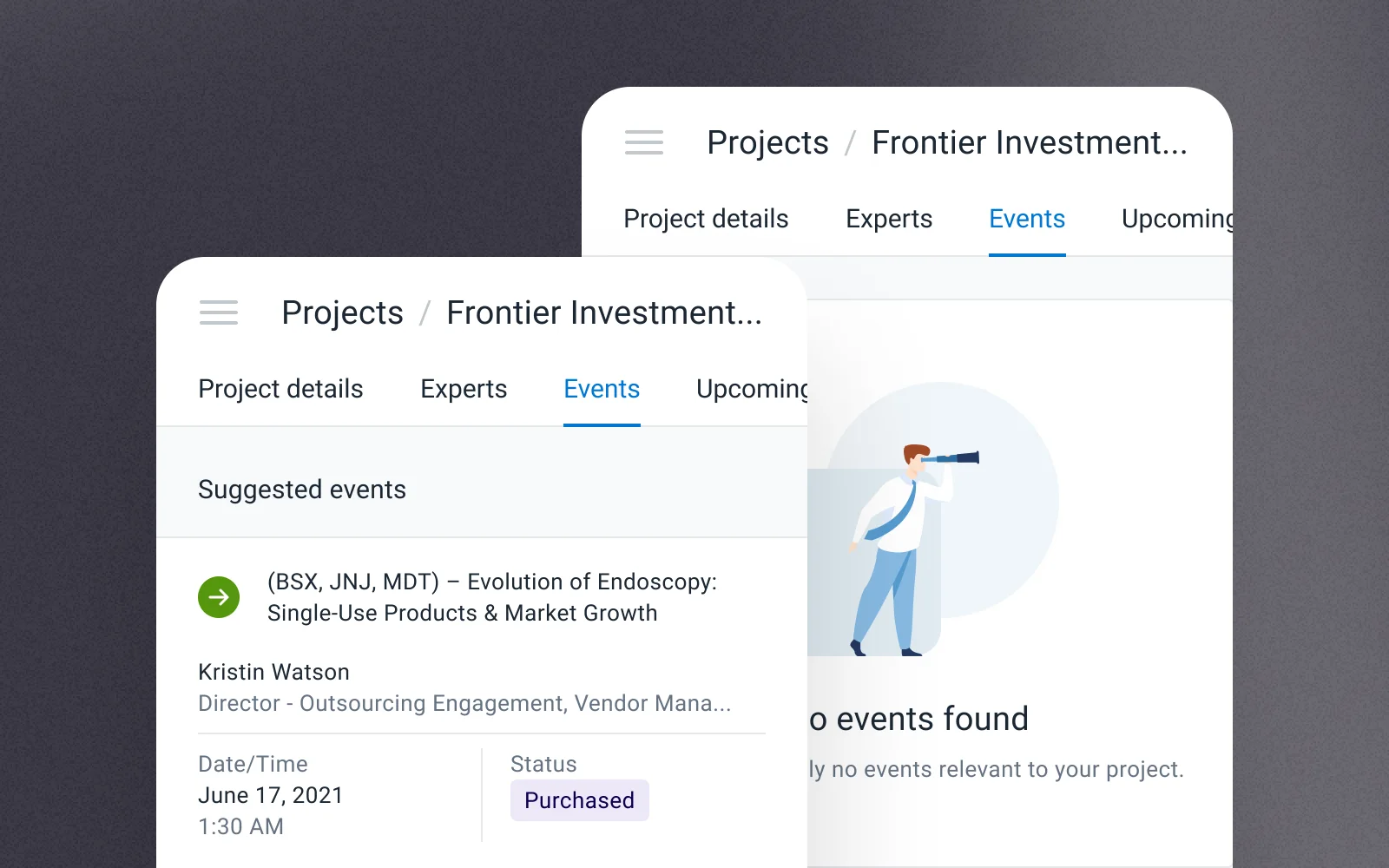
Four apps on one platform — and every screen drawn by hand was a chance for them to drift apart. I built a design system as the platform's shared language: components, patterns, and guidelines that describe behavior once, for designers and engineers alike. New screens assembled from the system instead of starting from scratch, most behavior questions were answered before they reached a BA, and any designer could pick up someone else's task mid-flight.
4 → 1
Design languages across the apps
What it changed
The platform changed how the whole organization shipped. Designers moved into strategic work instead of pixel production. Product owners stopped micro-managing design — the guidelines answered most questions before they were asked. Delivery got faster and more consistent at once, and every solution was measured against macro and micro-KPIs, with user feedback arriving straight from the apps.
The direction outlived my tenure: the intelligent expert search at the platform's core has since grown into AI Scout — the network's automated matching that now finds experts in minutes, around the clock.
What this taught me
Enterprise UX is won in the workflow, not on the screens. Once the whole cycle lived in one system, every app became simpler — none of them had to compensate for the gaps between tools. And a design system turned out to be a product decision, not a design luxury: it changed how fast the whole organization could ship.